Fiorentina and Genoa End in Tactical Stalemate
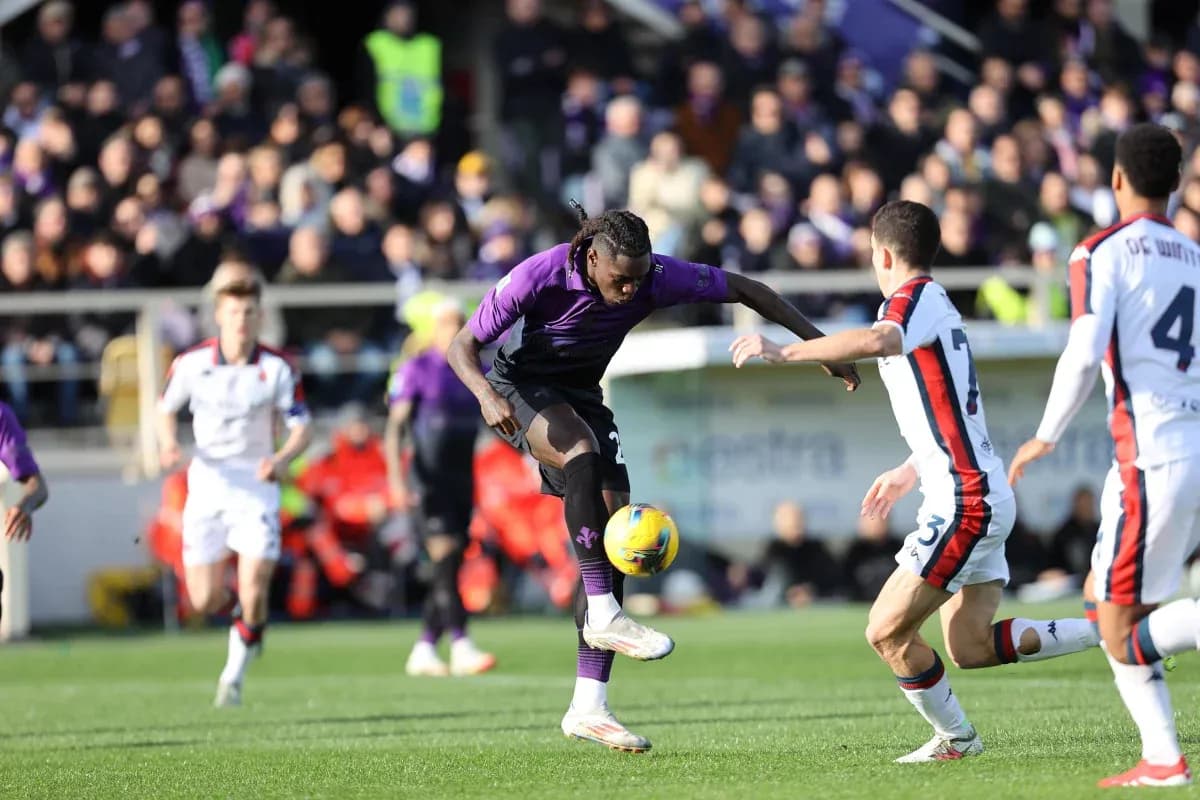
The afternoon at Stadio Artemio Franchi ended goalless, but the 0-0 between Fiorentina and Genoa felt like a tactical summit meeting between two sides whose seasons have converged in the same mid-table corridor. Following this result in Serie A’s Regular Season - 36, Genoa remain ahead in the standings on 41 points in 14th, with Fiorentina just behind on 38 points in 15th. Both have spent the campaign walking the fine line between safety and anxiety: Genoa with a goal difference of -8 (40 scored, 48 conceded overall), Fiorentina with -11 (38 for, 49 against overall).
The scoreline mirrored their seasonal DNA. Heading into this game, Fiorentina were a side of stalemates and narrow margins: 14 draws in 36 matches overall, scoring 1.1 goals per game both at home and in total, and conceding 1.1 at home and 1.4 overall. Genoa arrived with similar offensive output – 1.1 goals per game overall, 1.1 on their travels – but a slightly tighter defensive record at 1.3 goals against per match both home and away. The result was a contest where structure, not chaos, dictated the rhythm.
I. The Big Picture – Shapes and Intent
Paolo Vanoli doubled down on Fiorentina’s most familiar identity, rolling out the 4-3-3 that has been his most-used structure this season (13 league matches with that shape). D. de Gea anchored the back line behind a defence of Dodo, M. Pongračić, L. Ranieri and R. Gosens. In front, a narrow midfield triangle of R. Mandragora, N. Fagioli and C. Ndour was tasked with both screening and progressing, while the front three of F. Parisi, R. Braschi and M. Solomon were asked to stretch Genoa horizontally.
Daniele De Rossi answered with Genoa’s hybrid pragmatism: a 3-4-2-1, a system they have used 9 times this season, morphing between back three and back five depending on the phase. J. Bijlow stood behind a trio of A. Marcandalli, L. Ostigard and N. Zatterstrom, with a hard-working midfield line of M. E. Ellertsson, Amorim, M. Frendrup and Aarón Martín. Ahead of them, J. Ekhator and Vitinha supported lone striker L. Colombo, forming a rotating triangle that tried to pin Fiorentina’s centre-backs while exploiting the half-spaces.
The match became a negotiation between Fiorentina’s desire to build from the back and Genoa’s comfort in defending in layers. Fiorentina, who had kept 6 clean sheets at home and failed to score at home only 4 times heading into this game, again found themselves in a familiar pattern: defensively solid, offensively blunt.
II. Tactical Voids – Absences and Discipline
The absentees added subtle but significant voids. For Fiorentina, M. Kean – their leading scorer this Serie A season with 8 goals overall – was unavailable with a calf injury. His absence stripped Vanoli of his most proven penalty-box presence and vertical runner. Without Kean, the front line lacked a reference point capable of converting half-chances into goals, a crucial issue for a side averaging only 1.1 goals per game overall.
T. Lamptey’s knee injury further reduced Fiorentina’s capacity for explosive wide overlaps from full-back, pushing more responsibility onto Dodo and Gosens to provide width and crossing threat.
Genoa, meanwhile, travelled without several creative and transitional pieces. T. Baldanzi (thigh injury), M. Cornet and S. Otoa (both listed as inactive), Junior Messias (muscle injury) and B. Norton-Cuffy (thigh injury) all missed out. Baldanzi’s absence removed a natural link player between midfield and attack, while Messias’ omission deprived De Rossi of a one-v-one specialist who could unpick a compact block. It was no surprise that Genoa, who had failed to score 6 times away and 14 times overall heading into this game, once again leaned on structure rather than individual inspiration.
From a disciplinary standpoint, both squads carried reputations into this fixture. Fiorentina’s season-long yellow card distribution showed a pronounced late-game spike: 25.00% of their yellows arriving between 76-90 minutes, a sign of fatigue or late desperation. Genoa, by contrast, were most combustible between 61-75 minutes, where 24.59% of their yellows clustered. Yet in this particular match, the narrative of cards never escalated into chaos; the historical risk never fully materialised into a meltdown.
III. Key Matchups – Hunter vs Shield, Engine Room
The “Hunter vs Shield” duel was, paradoxically, defined by an absent striker and a present wall. With M. Kean sidelined, Fiorentina’s attacking burden fell on a more collective front. Parisi and Solomon tried to attack the channels around Genoa’s back three, but they ran into a unit that, on their travels, had conceded only 24 goals in 18 matches heading into this fixture – an average of 1.3 away goals against.
At the heart of Fiorentina’s shield stood M. Pongračić, Serie A’s most-booked player this season with 11 yellow cards overall. His aggression is both weapon and risk. Over the campaign he blocked 23 shots, a statistic that underlines his willingness to step in front of danger. Against Genoa’s front three, his duel with L. Colombo was central: Colombo seeking to pin and roll, Pongračić stepping in front, sometimes at the edge of legality.
Alongside him, L. Ranieri provided a calmer counterweight. His season profile – 8 yellow cards but also 11 blocked shots and 24 interceptions overall – speaks to a defender who reads danger early. Together, the pair embodied Fiorentina’s defensive identity: proactive, occasionally overzealous, but ultimately effective in this match.
In the “Engine Room”, the battle was more subtle. For Genoa, Aarón Martín – one of Serie A’s top assist providers with 5 overall – started as a wide midfielder but functioned as a deep playmaker. His 714 passes and 60 key passes overall before this fixture underline how much Genoa’s progression flows through his left foot. He also brought defensive steel, having made 41 tackles and blocked 11 shots overall this season. His task was twofold: lock down his flank against Dodo and Solomon, and serve as the outlet when Genoa broke.
Opposite him, Fiorentina’s midfield trio tried to control tempo rather than carve open Genoa. Mandragora offered the first outlet from the back four, Fagioli looked to connect to the forwards, and Ndour gave vertical running. But without Kean’s presence and with Genoa’s midfield screen – particularly Frendrup’s energy and Amorim’s positioning – the spaces between the lines rarely opened.
IV. Statistical Prognosis – What the Numbers Say
If we project this fixture through the season-long numbers, the 0-0 feels mathematically coherent. Fiorentina’s home profile heading into the game was that of a side perfectly balanced between scoring and conceding: 20 goals for and 20 against at home in 18 matches, with a home average of 1.1 goals scored and 1.1 conceded. Genoa’s away record was similarly modest: 19 scored and 24 conceded in 18 away fixtures, averaging 1.1 for and 1.3 against.
Both teams had identical clean sheet totals overall (9 each), and both were flawless from the spot this season: Fiorentina scoring all 6 of their penalties, Genoa all 5, with neither side missing from 11 metres. That reliability from the spot never came into play at the Franchi, but it underscores how much this match was decided in open play, where neither side’s xG profile – inferred from modest scoring averages and strong defensive phases – suggested a high-scoring spectacle.
Following this result, the prognosis for both is clear. Fiorentina remain a draw-heavy, structurally sound side whose main upgrade must come in the final third, especially when their leading scorer is absent. Genoa confirm their identity as a disciplined, shape-first team, difficult to break down on their travels but still lacking a consistent cutting edge.
In tactical terms, this was a stalemate that made sense: two mid-table structures, two disciplined defences, and a scoreboard that simply reflected the season-long numbers written into both squads.