Atalanta Triumphs 3-2 Over AC Milan in Serie A Showdown
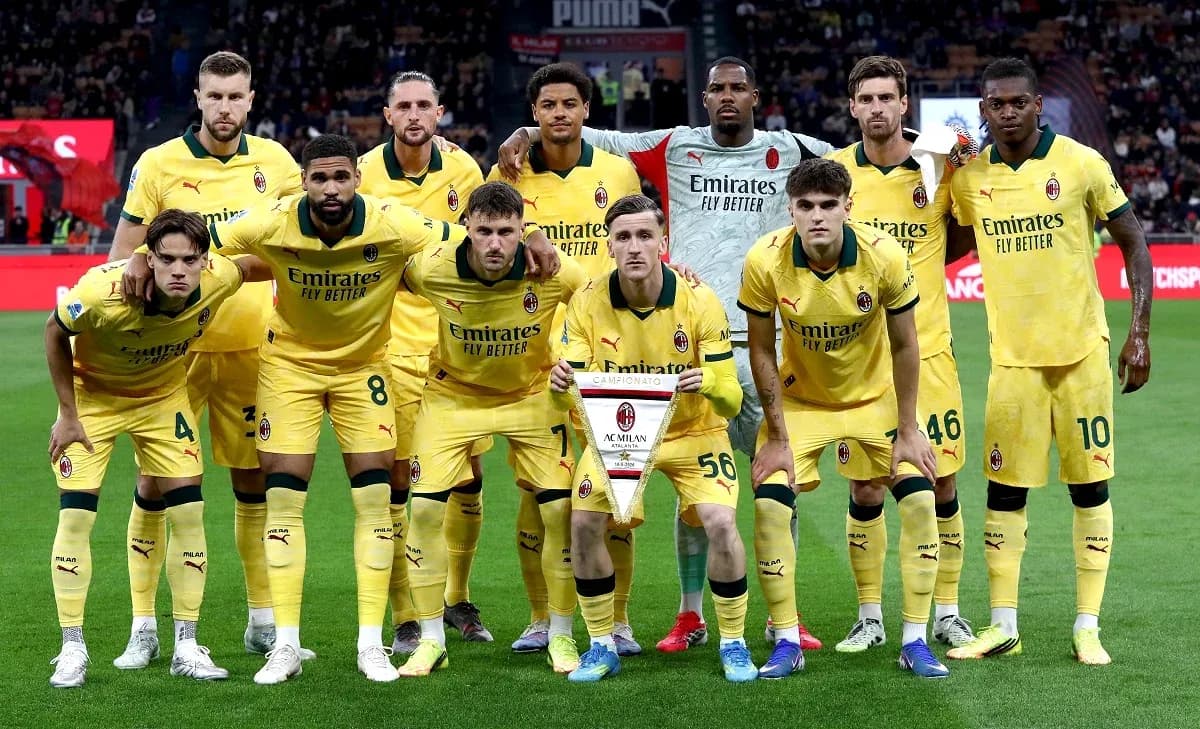
Under the grey May sky of San Siro, a wild Serie A night unfolded into a 3-2 Atalanta win that said as much about the squads as it did about the scoreline. Following this result, AC Milan remain a Champions League-chasing force in 4th with 67 points and a goal difference of 18, but the edges of their form – “LLDWL” heading into this game – are beginning to fray. Atalanta, 7th with 58 points and a goal difference of 16, left Milan with three points that keep their European ambitions very much alive.
I. The Big Picture – Structures and Identities
Both coaches leaned into their seasonal DNA. Massimiliano Allegri stayed loyal to the 3-5-2 that has been his default – Milan have used it in 32 league matches – trusting the structure that has delivered 50 goals in total at an average of 1.4 per game. Raffaele Palladino mirrored the back three, rolling out Atalanta’s familiar 3-4-2-1, the shape they have used 32 times in Serie A, with the same statistical punch: 50 goals in total, again at 1.4 per game.
Milan’s season has been built on balance: 19 wins, 10 draws, 7 defeats from 36 matches, with only 32 goals conceded overall at 0.9 per game. At home they have been solid if not dominant, with 9 wins from 18 and 24 goals scored at 1.3 per game, conceding 19 at 1.1. Atalanta arrived as one of the division’s most consistent travellers: 6 away wins, 7 draws and only 5 defeats, scoring 25 and conceding 20 on their travels, averaging 1.4 goals for and 1.1 against away from Bergamo.
On the night, the scoreline – 0-2 at half-time, 2-3 full-time – felt like a collision between those profiles: Milan’s resilience and late surges against an Atalanta side whose away game thrives on verticality and punishing transitions.
II. Tactical Voids – Absences and Discipline
Both squads were notably reshaped by absences. Milan were stripped of experience and incision: Luka Modric was out with a broken cheekbone, Christian Pulisic sidelined by a muscle injury, and Fikayo Tomori suspended after a red card. That trio removes control between the lines, direct running from the right, and front-foot defending in the back three. Allegri’s answer was to push responsibility onto Sandro Tonali–style profiles within his existing squad: here, that mantle fell on Adrien Rabiot and Samuele Ricci in the middle, with Alexis Saelemaekers and Davide Bartesaghi asked to stretch the pitch as wing-backs.
Atalanta had to cope without Berat Djimsiti (hamstring) and L. Bernasconi (injury), trimming Palladino’s options in the defensive rotation. In a system that leans heavily on the back three’s timing and aggression, losing Djimsiti in particular nudged more responsibility onto Giorgio Scalvini and Isak Hien.
Disciplinarily, both teams carried known volatility into this fixture. Milan’s yellow-card distribution shows a pronounced late-game spike: 25.42% of their cautions come between 76-90 minutes, and another 15.25% from 91-105. Atalanta mirror that late-edge: 22.81% of their yellows arrive in 61-75 and another 22.81% in 76-90, with 15.79% from 91-105. Both sides are also no strangers to red: Milan’s reds are spread across 16-30, 46-60 and 91-105, while Atalanta’s come early (0-15) and very late (76-90). It is no surprise that this match descended into a stretched, emotional second half as Milan chased and Atalanta countered.
III. Key Matchups – Hunter vs Shield, Engine Room vs Enforcer
The defining duel was always likely to be Atalanta’s cutting edge against Milan’s normally tight back line. In total this campaign, Milan have conceded only 32 goals – 19 at home – while Atalanta have scored 50, splitting their output evenly: 25 at home, 25 on their travels.
At the tip of Palladino’s structure, Nikola Krstovic started as the reference point. Across the season he has 10 league goals and 5 assists, with 74 shots (33 on target). He is more than a finisher; 20 key passes and 5 assists underline his ability to drop in and connect, a crucial trait when flanked by creators like Charles De Ketelaere and Giacomo Raspadori. De Ketelaere, with 3 goals, 5 assists and a hefty 969 completed passes at 78% accuracy, is the conduit: 60 key passes and 100 dribble attempts (49 successful) show a player who lives between the lines, constantly testing the seams of a back three.
Milan’s shield against that came from their own trio: Koni De Winter, Matteo Gabbia and Strahinja Pavlovic. Without Tomori’s recovery pace, the line had to be more conservative, but that caution invited Atalanta’s front three to receive in pockets rather than solely in behind. Once Atalanta went 2-0 up by the interval, those spaces only widened as Milan pushed.
In the other direction, Rafael Leao was Milan’s primary hunter. With 9 goals and 3 assists this season, 45 shots (24 on target) and 55 dribbles attempted (25 successful), he remains the Rossoneri’s chaos agent. His duel with Scalvini on the left side of Atalanta’s defence was central to Milan’s second-half resurgence. When Milan tilted the game in his direction, the visitors’ back three had to retreat five to ten metres deeper, compressing their own counter lanes.
Behind Leao, Rabiot and Ricci formed the engine room. Rabiot’s ability to carry from deep and Ricci’s metronomic passing were tasked with outplaying a rugged Atalanta pairing of Marten De Roon and Ederson. De Roon’s screening allowed De Ketelaere to stay higher, while Ederson’s box-to-box energy helped Atalanta break Milan’s central press and find Krstovic early.
IV. Statistical Prognosis – What This Result Tells Us
Following this result, the numbers still point to two sides built on similar foundations but at different emotional stages of the season. Both average 1.4 goals scored per match in total. Both concede 0.9 overall. Milan’s home profile – 24 scored, 19 conceded – suggests a team that usually edges fine margins at San Siro. Atalanta’s away ledger – 25 scored, 20 conceded – describes a side comfortable in open, exchange-heavy matches.
On the balance of seasonal xG profiles implied by their shot volumes and goal returns, neither side is wildly overperforming; instead, this 3-2 feels like the upper limit of what their combined attacking talent can produce when structure gives way to chaos. Milan’s 15 clean sheets in total and Atalanta’s 13 underline that such a wide-open contest is the exception rather than the rule.
Yet the late-game trends matter. Milan’s propensity for late yellow cards, combined with Atalanta’s own spikes in the final quarter-hour, hints at a recurring pattern: when the match state becomes urgent, both teams drift away from control into emotion. Here, that tilt favoured Atalanta, whose front three were better equipped to exploit the stretched spaces as Milan chased the comeback.
Tactically, the takeaway is stark. Milan’s 3-5-2, so stable across 32 league outings, is vulnerable when stripped of Tomori’s aggression and Modric’s control, and when Pulisic’s directness is missing from the right. Atalanta’s 3-4-2-1, by contrast, can survive defensive absences as long as De Ketelaere and Krstovic remain on the pitch to bind transitions.
In the story of the season, this 3-2 feels like a warning for Milan and a statement for Atalanta: the structures are sound, but in the games that tilt into chaos, it is the sharper, braver front line that writes the final line of the script.