Tottenham and Leeds Share Spoils in Tactical Stalemate
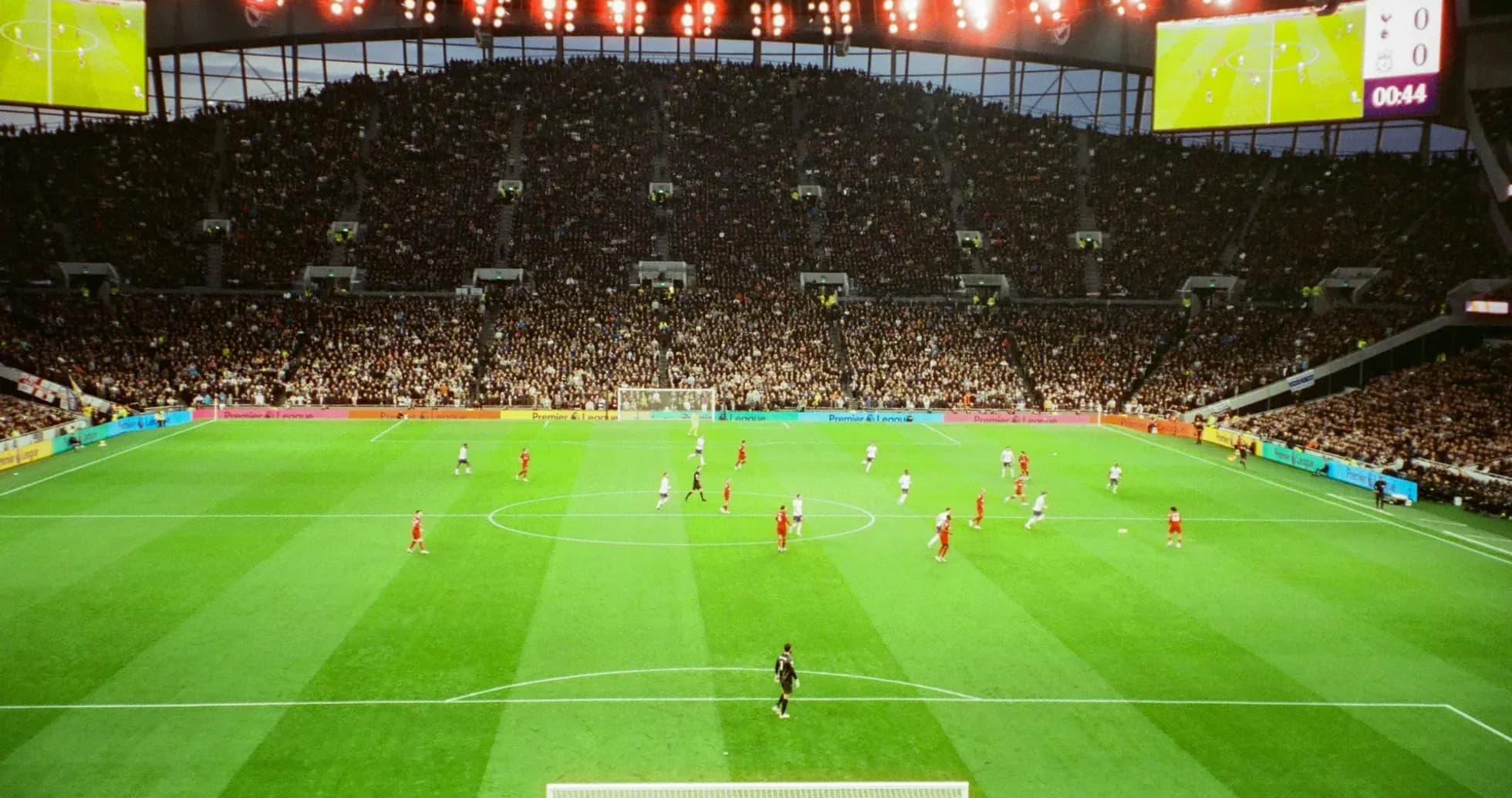
Tottenham and Leeds shared a 1-1 draw at Tottenham Hotspur Stadium in a match where contrasting structures produced almost identical attacking output. Tottenham’s 4-2-3-1 under Roberto De Zerbi delivered territorial control and volume of chances, but Daniel Farke’s 3-5-2 gave Leeds enough central stability and transition threat to earn parity, reflected in the near-identical xG: 1.32 for Tottenham, 1.26 for Leeds.
Tottenham’s shape was textbook De Zerbi: A. Kinsky as the first playmaker, a back four of Pedro Porro, Kevin Danso, Micky van de Ven and Destiny Udogie, with João Palhinha and R. Bentancur as the double pivot. Ahead, R. Kolo Muani, C. Gallagher and M. Tel supported Richarlison. With 57% possession and 426 passes (341 accurate, 80%), Spurs built patiently, using Porro and Udogie high and wide to pin Leeds’ wing-backs and create a 2-4 base in possession.
Leeds’ 3-5-2 was clearly designed to congest the middle. Joe Rodon, Jaka Bijol and Pascal Struijk formed the back three in front of K. Darlow, screened by a central trio of A. Stach, Ethan Ampadu and A. Tanaka, with J. Justin and D. James as wide midfielders and a front pair of D. Calvert-Lewin and B. Aaronson. Their 43% possession and 335 passes (240 accurate, 72%) underline a more direct, vertical plan, leaning on early passes into the front two and wide runners rather than long settled spells.
First Half
The first half followed that script. Tottenham’s 14 corner kicks across the game speak to sustained pressure, especially from wide overloads and second balls around the Leeds box. Spurs generated 16 total shots, 13 from inside the box, but only 3 on target – an indicator of Leeds’ compact penalty-area defending and last-ditch blocks (6 blocked shots for Tottenham, only 1 for Leeds). De Zerbi’s side frequently found Gallagher and Kolo Muani between the lines, but Leeds’ back three collapsed aggressively, forcing rushed finishes or deflections.
Individually, Palhinha’s role was central to Tottenham’s structure. He acted as the single reference in rest defence when Bentancur pushed higher, stepping into Leeds’ passing lanes toward Ampadu and Calvert-Lewin. His Yellow Card for Foul at 66' underlines the combative edge of that role, repeatedly halting Leeds transitions at source. Earlier, Kevin Danso’s Yellow Card for Foul at 41' highlighted how exposed Spurs’ centre-backs could become when both full-backs advanced simultaneously; Leeds’ front two looked to spin into the channels whenever Tottenham lost the ball with their line high.
Second Half
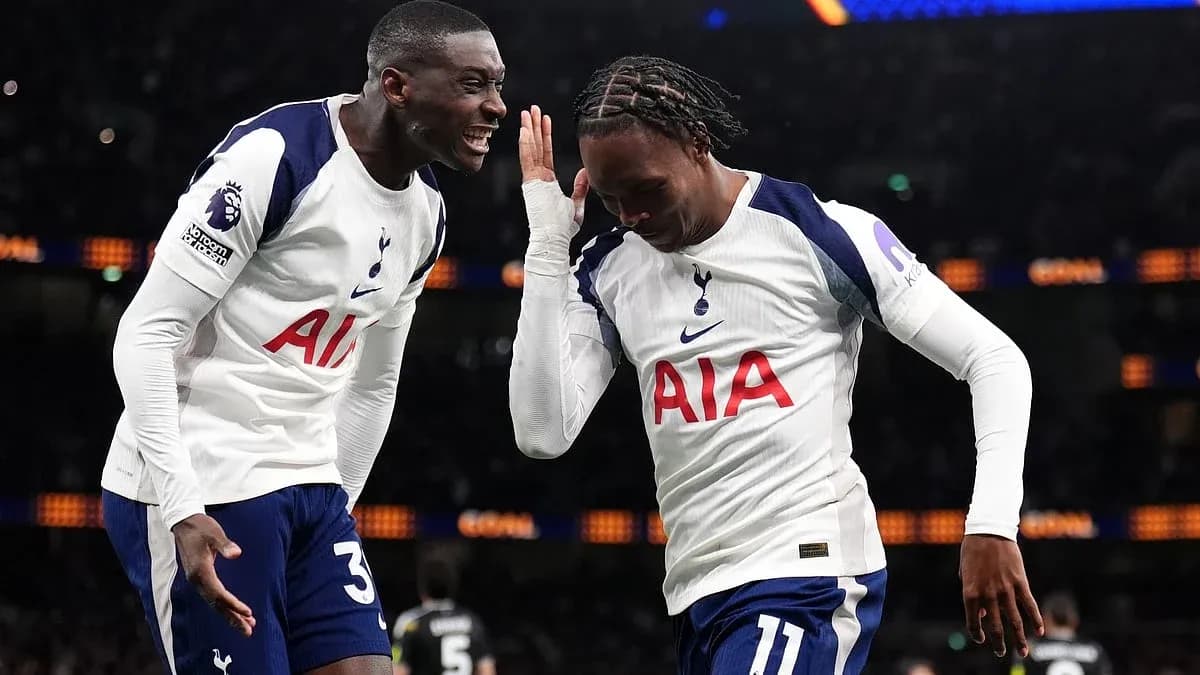
The attacking breakthrough came from M. Tel, whose positioning from the left of the three behind Richarlison was a constant problem. His Normal Goal at 50' rewarded Tottenham’s insistence on attacking the half-spaces rather than crossing blindly. Tel’s tendency to drive inside from the left dragged Rodon out of the line, opening small but crucial gaps. Even without an official assist, the goal emerged from the cumulative effect of Spurs’ structural pressure: repeated entries into the box, second-phase possession from corners, and Leeds being forced deeper.
Leeds’ response was tactical as much as emotional. Farke’s first wave of changes – S. Bornauw (IN) came on for P. Struijk (OUT) at 56', then L. Nmecha (IN) came on for B. Aaronson (OUT) and W. Gnonto (IN) came on for D. James (OUT) in a double move at 63' – refreshed both the back line and the front line. Bornauw gave extra aerial presence and aggression against crosses, while Nmecha and Gnonto offered more direct running and penalty-box occupation than the starting wide and support players.
The turning point was structural and psychological: VAR’s intervention to confirm a penalty. At 71', a penalty for Leeds was confirmed by VAR with Ethan Ampadu the focal player in the decision. This sequence revealed Leeds’ tactical adjustment: more runners attacking the space behind Tottenham’s aggressive full-backs and centre-backs, forcing duels inside the box rather than settling for speculative shots. D. Calvert-Lewin’s composed Penalty Goal at 74' levelled the match and validated that shift.
From there, discipline and control became central. Joe Rodon’s Yellow Card for Foul at 79' reflected Leeds’ need to disrupt Tottenham’s attempts to reassert rhythm after the equaliser. For Spurs, the late-game management of energy and structure came through substitutions: L. Bergvall (IN) came on for R. Bentancur (OUT) at 81', J. Maddison (IN) came on for M. Tel (OUT) at 85', and D. Spence (IN) came on for D. Udogie (OUT) also at 85'. Bergvall added fresh legs and vertical running from midfield, Maddison provided a more refined final ball between the lines, and Spence allowed Porro to continue high while maintaining defensive cover on the opposite flank.
Pedro Porro’s Yellow Card for Foul at 82' was symptomatic of Tottenham’s full-backs defending large spaces in transition. As Spurs pushed for a winner, Porro was often left to defend wide counters almost alone, and tactical fouls became a tool to stop Leeds breaking into open grass.
In goal, both keepers’ numbers tell a nuanced story. A. Kinsky made 3 saves for Tottenham, with a goals prevented figure of -0.49, indicating that Leeds’ finishing slightly outperformed the quality of chances faced from his perspective. Conversely, K. Darlow for Leeds recorded just 1 save but the same -0.49 goals prevented, suggesting that Tottenham’s shooting either missed the target or was blocked before reaching him, and that the one goal conceded was slightly below the expected difficulty of the attempts he faced.
Statistically, the match was almost perfectly balanced in underlying threat despite Tottenham’s visual dominance. Spurs’ 16 shots to Leeds’ 11, their 57% possession, and their 14 corners versus Leeds’ 2 point to a home side in control of territory and tempo. Yet the xG balance – 1.32 to 1.26 – and the 1-1 scoreline emphasise that Leeds’ more selective, transition-based attacks were nearly as dangerous as Tottenham’s sustained pressure.
Discipline was slightly tilted towards the hosts: Tottenham collected 3 Yellow Cards (Kevin Danso, João Palhinha, Pedro Porro all for Foul) to Leeds’ single Yellow Card for Joe Rodon (Foul), total 4. This aligns with Spurs’ higher pressing line and more frequent defensive interventions in midfield and wide areas, while Leeds sat deeper and fouled more sparingly but at key moments.
Ultimately, Tottenham’s 4-2-3-1 gave them control but not enough incision in the final third, with only 3 shots on target from 16 attempts. Leeds’ 3-5-2, reinforced by well-timed substitutions and a more aggressive use of runners after the hour, converted fewer possessions into chances but with comparable quality. The draw, in both scoreline and data, reflects a tactical stalemate: structural dominance from Tottenham, strategic efficiency from Leeds.