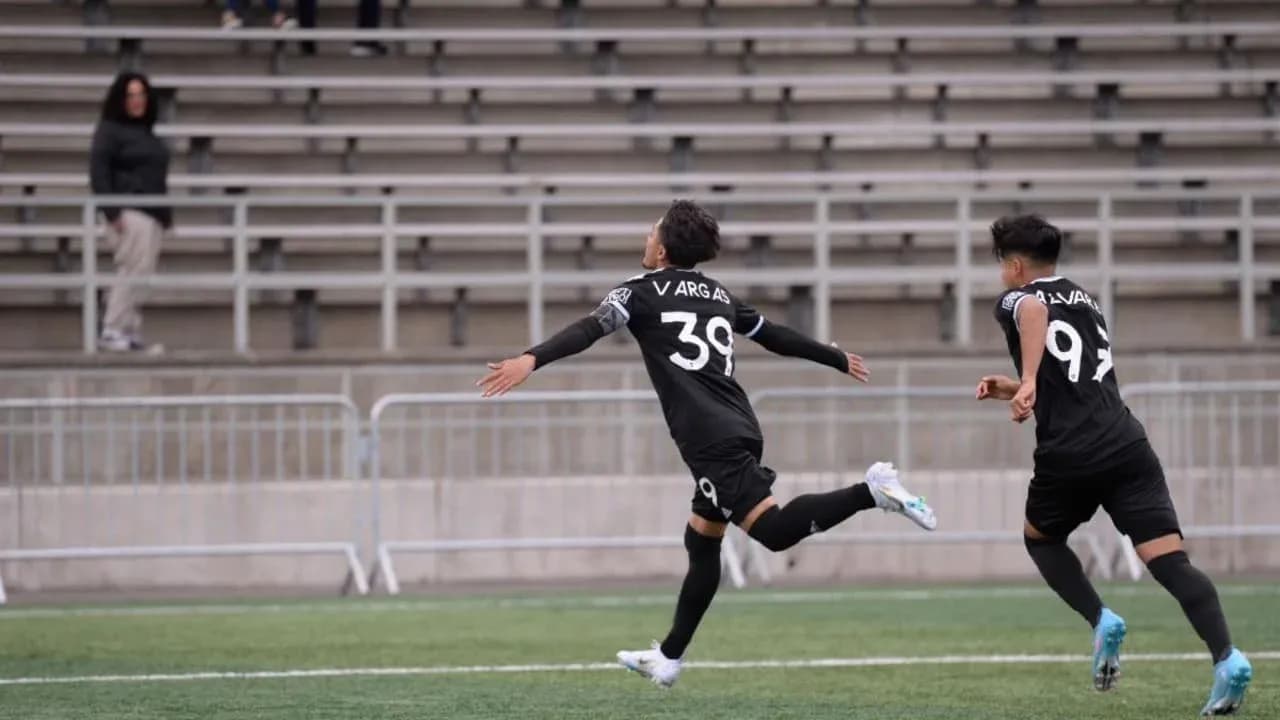
Vancouver Whitecaps II Fall to Tacoma Defiance: Analyzing the Match
Swangard Stadium emptied into the Burnaby night with a familiar feeling for Vancouver Whitecaps II: another lesson in the harsh margins of MLS Next Pro. Following this result, a 2–0 home defeat to Tacoma Defiance, the numbers and the narrative converged on the same theme – a young side still searching for balance, undone by structural fragilities that an equally youthful but more ruthless Tacoma exploited.
I. The Big Picture – contrasting trajectories in the Pacific
This was a Group Stage clash between two Pacific Division strugglers trying to claw their way toward mid-table stability. Following this result, Vancouver remain on 9 points from 11 matches, ranked 7th in the Pacific Division and 13th in the Eastern Conference snapshot, with a goal difference of -11 (15 goals for and 26 against in the standings block, -11 again with 16 for and 27 against in the broader season statistics). The story is consistent: they concede far more than they score.
Tacoma, meanwhile, sit on 11 points from their 11 matches, ranked 6th in the Pacific Division and 11th in the Eastern Conference, with a goal difference of -6 (12 goals for, 18 against). They are hardly a finished product, but their form line of WLWWL hints at a team that is beginning to string together performances, especially on their travels.
The season-long profiles set the stage for what unfolded. Vancouver’s campaign has been defined by volatility: overall they score 1.5 goals per match but concede 2.5. At home they average 1.6 goals for and 1.6 against, a mirror that suggests Swangard usually offers them a puncher’s chance. On their travels, Tacoma average 1.2 goals for and 2.2 against, a side that often suffers but can still sting opponents when the game opens up.
On this night, the script inverted for Vancouver. The home side, typically capable of at least landing blows, were held scoreless while their defensive frailties – 3.2 goals conceded on average away and 2.5 overall in the Vancouver metrics – resurfaced in key moments of disorganization and transition.
II. Tactical Voids – discipline, youth, and the missing edge
There were no listed absentees in the data, so both squads entered with their full registered complements. That made the starting selections revealing rather than enforced.
Rich Fagan entrusted a young Vancouver spine: S. Rogers in goal, a back line built around T. Wright and P. Amponsah, with M. Garnette and Y. Tsuji part of the central structure, and an attacking cohort featuring S. Deo, R. Sewell, Y. Zuluaga and M. Popovic. Trevor Wright’s presence is particularly symbolic. Listed as a defender and flagged across multiple leaderboards (top scorers, top assists, top cards) despite having yet to register a goal, assist, or card, he embodies Vancouver’s reliance on emerging talent still writing their statistical story.
Yet the broader team numbers hint at a tactical void: clean sheets are non-existent. Vancouver have not kept a single clean sheet this season, at home or away, and have already failed to score in 2 matches overall. That combination – porous at the back, inconsistent in attack – is a dangerous one, and Tacoma arrived ready to test it.
Discipline-wise, Vancouver’s season-long yellow-card profile is scattered but telling. Their bookings peak late: 18.18% of their yellows arrive between 76–90 minutes, and another 18.18% between 91–105. This late-game surge in cautions suggests a side that tires, chases games, and resorts to reactive defending. Tacoma’s yellows cluster differently, with 30.77% between 31–45 minutes and 23.08% in both the 46–60 and 76–90 windows, the mark of a team that presses in waves and is willing to foul to break rhythm.
In a tight, developmental environment like MLS Next Pro, those disciplinary patterns often map directly onto tactical identity. Vancouver’s cards say “scramble and survive”; Tacoma’s say “impose and disrupt.”
III. Key Matchups – Hunter vs Shield, Engine Room vs Enforcer
The Hunter vs Shield narrative here is less about an individual marksman and more about unit-versus-unit. Vancouver’s “shield” has been fragile: overall they concede 2.5 goals per match, with 1.6 at home. Tacoma’s “hunters” are modest in volume – just 1.3 goals per match overall, 1.2 away – but efficient when they smell blood. Their biggest away win, a 0–2 result, shows they can execute a clean, controlled away performance when the opponent leaves space.
In this fixture, the Tacoma front trio of S. Gomez, Y. Tsukanome and S. Kitafuji, supported by the creative axis of X. Gnaulati and C. Gaffney, formed a fluid, interchanging line that repeatedly asked questions of Vancouver’s defensive spacing. Without explicit positional data, the pattern is still clear: Tacoma’s midfield and wide players are used to carrying a heavy creative load in a team that has failed to score in 4 matches overall but, when it does click, can produce multi-goal bursts – as shown by their 4-1 home win and 0-2 away victory.
On the other side, Vancouver’s “engine room” of Y. Tsuji and C. Rassak was tasked with linking an attack that, heading into this game, averaged 1.6 goals at home. With no clean sheet in the bank and an opponent willing to commit numbers forward in phases, their job was as much about screening as creating. The 2–0 final suggests Tacoma’s midfield, led by M. O’Neill and C. Phoenix, won the territorial and transitional battle, repeatedly forcing Vancouver to defend facing their own goal.
IV. Statistical Prognosis – xG shadows and defensive reality
While explicit xG numbers are absent, the season-long trends allow a reasoned projection of the underlying story. Vancouver’s combination of 1.5 goals scored and 2.5 conceded overall, with zero clean sheets, points to a side whose defensive xG against is consistently high. They allow chances in volume and quality, particularly away, but the structural issues clearly bleed into home matches as well.
Tacoma, by contrast, sit at 1.3 goals for and 1.7 against overall. That narrower gap and their 2 clean sheets suggest a more stable defensive block, even if they still concede too often. Their away record – 2 wins, 3 losses, 5 goals scored and 11 conceded – is that of a team that accepts risk, pushes the line of engagement higher, and trusts its front players to convert the big chances they do create.
Following this result, the tactical verdict is stark. Vancouver must address their defensive structure first: better protection for the back line, more compact distances between units, and a clearer plan for how players like T. Wright and P. Amponsah manage the space behind them. The late-game yellow-card spikes underline a physical and tactical fatigue that can only be solved by more controlled possession and smarter pressing triggers.
For Tacoma, this 2–0 away win is a template. Their ability to strike on their travels, keep their defensive line reasonably intact, and ride the momentum of a WLWWL form pattern suggests their underlying xG trend is improving. If they can reduce the 2.2 goals conceded away closer to their 1.3 home average, they will evolve from a dangerous spoiler into a genuine playoff outsider.
At Swangard, the scoreboard told a simple story. The deeper numbers confirm it: Tacoma are learning how to win ugly; Vancouver are still learning how not to lose.