New York City II Tops New York RB II in Thrilling 3–2 Derby
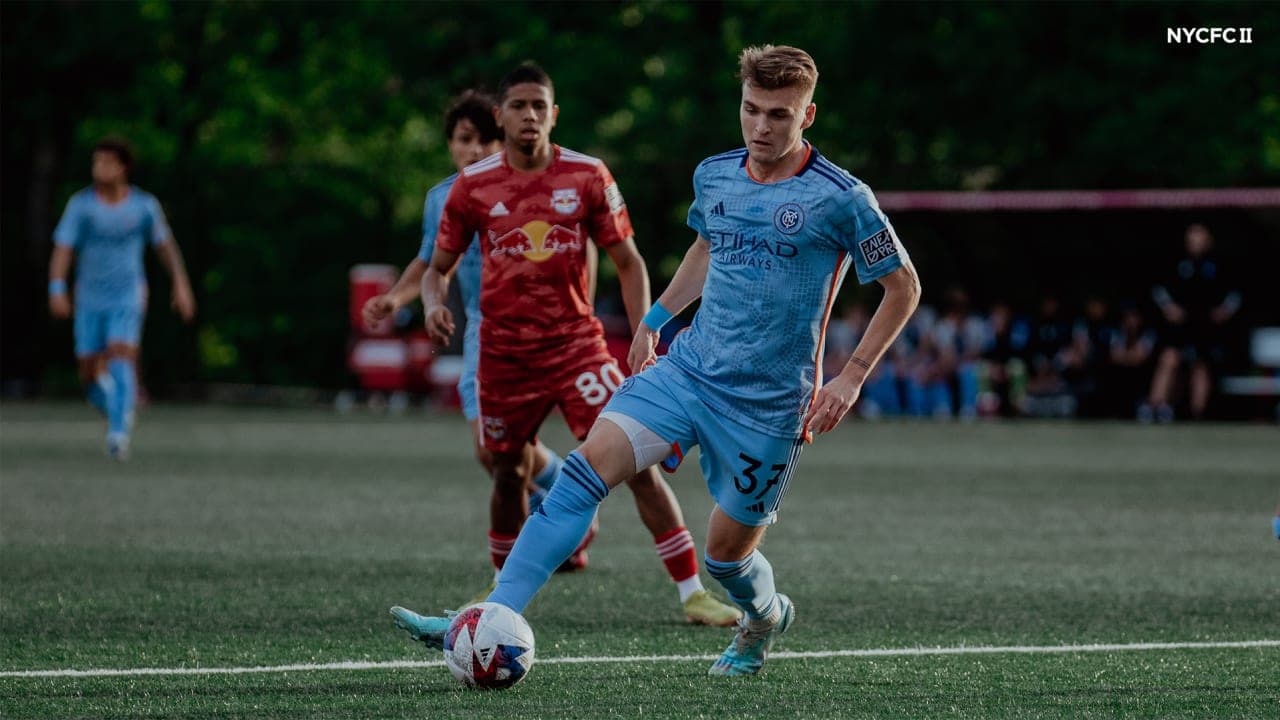
Under the lights at MSU Soccer Park, the latest chapter of the New York derby in MLS Next Pro ended with New York City II edging New York RB II by 3–2, a result that felt like a tactical ambush against the division leaders as much as a simple scoreline. Following this result, the league’s statistical landscape gives us a sharp lens through which to judge both squads: RB II as the high-octane frontrunner, City II as the volatile spoiler learning how to weaponise chaos.
I. The Big Picture – contrasting blueprints
RB II came into this fixture as the benchmark side in the Northeast Division. Across the season they have played 10 matches in total, winning 7 and losing 3, with no draws. Their overall goal difference of 10 comes from 24 goals for and 14 against, and the identity is clear: relentless attacking thrust, especially at home. At MSU Soccer Park, they have played 6 times, winning 4 and losing 2, and their home attack averages 2.8 goals per game. Even on their travels they still carry 1.8 goals on average, underscoring a system that expects to outscore rather than contain.
City II, meanwhile, arrived as an enigma. In total they have played 9 matches, winning 4 and losing 5, also with no draws. Their overall goal difference of -5 (12 scored, 17 conceded) captures the volatility: they can punch, but they bleed heavily. At home they are oddly fragile, conceding 8 in 4 matches, while away they have played 5 times, winning just once and losing 4, with 6 goals for and 9 against. On their travels they average 1.2 goals scored and 1.8 conceded, a profile of a side that must live off transition moments and opportunism rather than territorial control.
II. Tactical Voids and Disciplinary Undercurrents
There were no officially listed absentees, so both coaches had near-complete decks. Matt Pilkington’s City II leaned on a youthful core: M. Learned between the posts, with the defensive unit built around A. Campos, J. Loiola, K. Acito and K. Smith. Ahead of them, the likes of C. Flax, J. Suchecki and H. Hvatum formed the connective tissue, while D. Duque, D. Kerr and C. Danquah carried the attacking burden.
RB II’s XI, though unnamed in terms of formation, looked like a typical high-press Red Bulls construct. A. Stokes and C. Faello formed part of the defensive line, with A. Sanchez and J. Masanka Bungi around them, and D. Gjengaar and C. Harper providing width and verticality. In central zones, S. Kone and D. Cadigan offered legs and aggression, while A. Rojas, N. Worth and M. Jimenez brought the attacking edge.
Beneath the tactical shapes, the disciplinary data for the season hinted at an emotional subplot. RB II’s yellow cards cluster late: 40.00% of their cautions arrive between 76–90 minutes, with another 20.00% in the 61–75 window. They also have a single red card in the 61–75 range. City II mirror that volatility: 33.33% of their yellows come between 16–30 minutes, and another 33.33% in the 76–90 range, with their only red card also in the 76–90 window. This is a derby where the heat builds at both ends of the match – early emotional surges, then late, frayed-nerve challenges.
III. Key Matchups – Hunter vs Shield, Engine Room vs Chaos
The “Hunter vs Shield” narrative here is almost structural rather than individual. RB II’s attack in total has produced 24 goals at an average of 2.4 per game, with a striking spread: 20.83% of their goals arrive in each of the 16–30, 61–75 and 76–90 minute ranges. At home, they have scored 17 times in 6 matches, an aggressive rhythm that tends to grow as games open up.
City II’s defensive “shield” is more porous. In total they have conceded 17, at an average of 1.9 per match, and their weakest period is stark: 31.25% of the goals they concede come between 61–75 minutes, followed by 18.75% in both the 46–60 and 76–90 ranges. On their travels, that fragility is amplified by context: a young back line, led by M. Learned in goal and supported by Campos, Loiola, Acito and Smith, is asked to absorb waves against a side that rarely lets up.
This is where the derby’s script felt almost inverted. On paper, the 61–75 window is precisely where RB II’s offensive peak (20.83% of their goals) intersects with City II’s defensive trough (31.25% of goals conceded). It is the critical intersection where the leaders usually break games open. Yet City II’s 3–2 win suggests they either survived that storm or struck in transition when RB II overcommitted, flipping the expected narrative.
In the engine room, the battle was between RB II’s pressing midfield – with the energy of S. Kone and the connective play of D. Cadigan – and City II’s more rhythm-based trio of Flax, Suchecki and Hvatum. City II’s season-long attacking pattern shows 27.27% of their goals between 46–60 minutes and another 27.27% between 61–75, indicating a side that grows into matches and exploits spaces as opponents tire or chase. Against an RB II side that concedes 33.33% of their goals between 61–75 and 25.00% between 46–60, this was always going to be the battleground: City II’s second-half surges against RB II’s mid-game defensive wobble.
IV. Statistical Prognosis – what this result really says
RB II’s season numbers still depict a side with superior underlying strength. They have failed to score in 0 matches in total, carry a home scoring average of 2.8 and an overall defensive average of 1.4 goals conceded per game. Their penalty record is flawless so far, with 1 penalty in total, scored and none missed. The biggest warning light is that mid-second-half defensive softness, especially when emotions rise and cards accumulate late.
City II, for their part, remain high variance. They have failed to score in 3 matches in total and have yet to keep a clean sheet. On their travels they concede 1.8 goals on average, but their attacking minute distribution shows they are most dangerous precisely when RB II are most vulnerable. This 3–2 win is less an outlier and more a statistical manifestation of that overlap: a team that thrives in the 46–75 window punishing a leader that loosens its structure in the same phase.
In xG terms – even without explicit numbers – the pattern suggests RB II will usually generate the better chances over 90 minutes, especially at home, but City II’s punch in transition and their second-half spikes mean that in knockout-style or emotionally charged fixtures, the gap narrows sharply. Following this result, the tactical verdict is clear: RB II remain the more complete squad, but against City II they cannot simply trust volume. They must harden the 46–75 minute corridor, or this derby will continue to be decided where their offensive ambition and defensive fragility intersect.