Crystal Palace vs Everton: A 2-2 Draw That Defines Identity
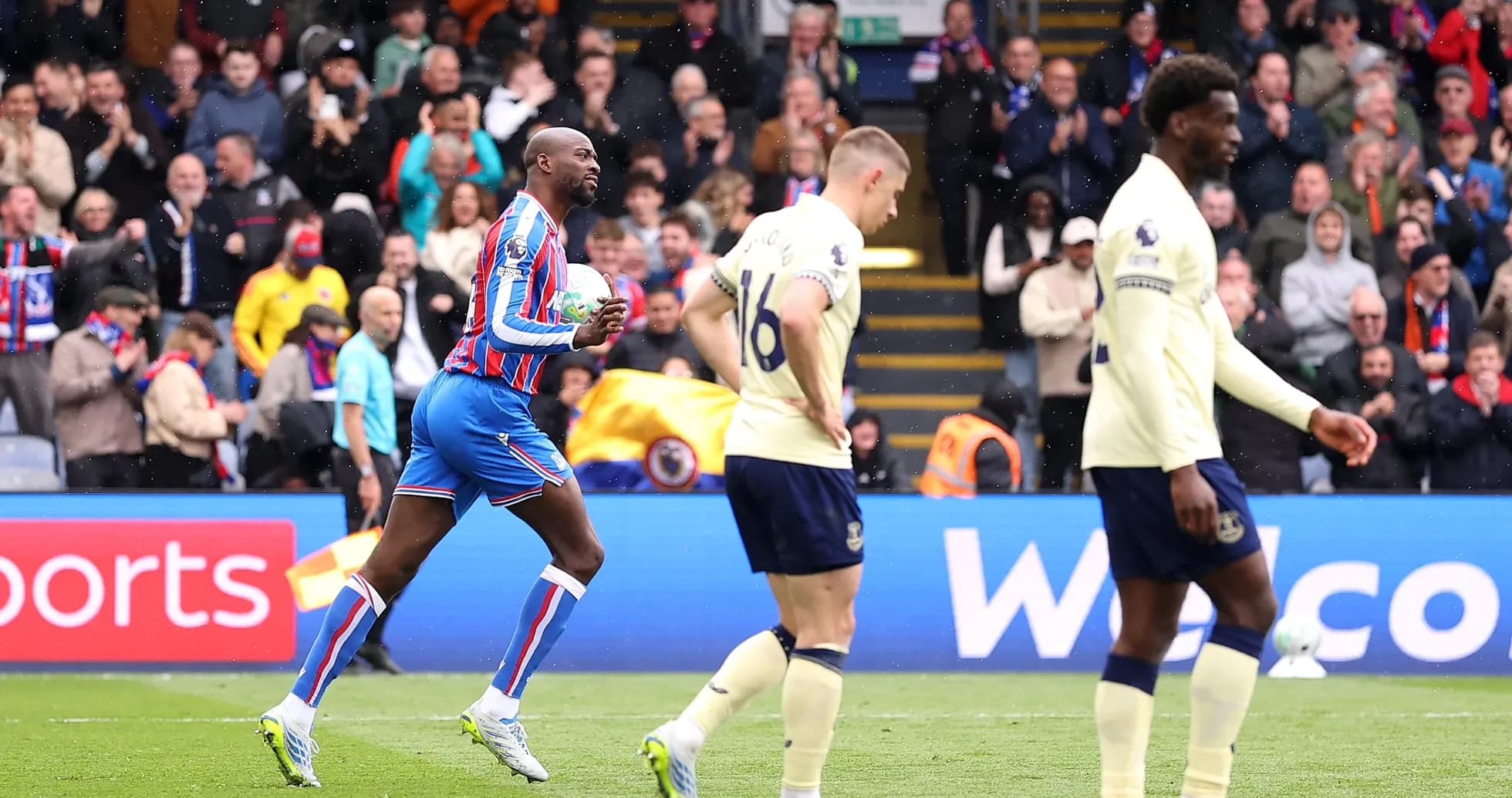
Selhurst Park had the feel of a crossroads fixture, and the 2-2 draw between Crystal Palace and Everton fit the mood of a Premier League run-in where every detail still matters. Following this result, the table snapshots underline the stakes: Palace sit 15th on 44 points with a goal difference of -6, while Everton hold 10th with 49 points and a neutral goal difference of 0. Both are clear of the drop, but neither can drift. The game became less about survival and more about identity: what these squads are, and what they are trying to become.
Palace’s seasonal DNA is clear in the numbers. Overall this campaign they have played 35 league matches, winning 11, drawing 11, and losing 13, with 38 goals for and 44 against. The goal difference of -6 reflects a side that rarely gets blown away but just as rarely dominates. At home they have been stubborn rather than spectacular: 18 played, only 4 wins but 9 draws and 5 defeats, scoring 18 and conceding 21. An average of 1.0 home goals for and 1.2 home goals against tells the story of narrow margins and small swings of momentum.
Everton, by contrast, arrive with the profile of a mid-table side that flirts with both ends of the spectrum. Overall they have played 36 league matches, winning 13, drawing 10, and losing 13, scoring 46 and conceding 46. The symmetry of that goal difference of 0 is striking: when Everton are good, they are efficient; when they are bad, they are porous. On their travels they have been quietly competent: 18 away games, 7 wins, 5 draws, 6 losses, with 21 goals scored and 22 conceded. An away average of 1.2 goals for and 1.2 goals against suggests they are comfortable in games decided by fine tactical detail.
Injury absences framed the tactical voids for both managers. Crystal Palace were without C. Doucoure and E. Guessand (both knee injuries), E. Nketiah (thigh injury), and B. Sosa (injury). That list strips Oliver Glasner of a natural ball-winning pivot, a depth forward, and a left-sided outlet, forcing him to double down on the 3-4-2-1 structure that has become his default – a shape Palace have used 31 times in the league. It places a heavy load on the starting XI: D. Henderson behind a back three of C. Richards, M. Lacroix, and J. Canvot; a hard-working midfield line of D. Munoz, A. Wharton, D. Kamada, and T. Mitchell; and a fluid front trio of I. Sarr, B. Johnson, and J. S. Larsen.
Everton’s absentees were equally defining. J. Branthwaite (hamstring), J. Grealish (foot injury), and I. Gueye (injury) were all missing. Branthwaite’s absence removes a left-footed anchor from the back line, forcing a more traditional pairing of J. Tarkowski and M. Keane. Without I. Gueye, the pure destroyer role in midfield is gone, and with J. Grealish sidelined, Everton lose one of their primary creative carriers between the lines. That places extra responsibility on J. Garner, K. Dewsbury-Hall, and M. Rohl to connect midfield to attack, with I. Ndiaye drifting from deeper zones to support Beto.
Disciplinary profiles shaped how both sides could defend aggressively. Palace’s yellow card distribution peaks between 31-45 minutes, where 19.72% of their league yellows arrive, and remains high from 46-60 minutes at 18.31%. Their red cards are concentrated between 46-60 and 61-75 minutes, each window accounting for 50.00% of their dismissals. That mid-game volatility forces Glasner to manage intensity after half-time, particularly for defenders like M. Lacroix, who already has one red card this season. Everton, meanwhile, show a different pattern: 21.74% of their yellows come between 76-90 minutes, and 20.29% between 46-60. Their red cards are late and dangerous: 25.00% in 0-15, 25.00% in 61-75, and 50.00% in 76-90. It paints a picture of a side that can lose control in closing stages, precisely when game management is most critical.
The “Hunter vs Shield” matchup in this fixture is almost paradoxical. Palace’s top scorer this campaign is J. Mateta with 11 league goals, yet he started on the bench. When he does feature, Mateta is a classic penalty-box hunter: 55 shots, 31 on target, and 4 penalties scored from 4 attempts. He thrives on quick, low crosses and second balls – precisely the kind of service Sarr and Johnson can provide from the half-spaces in the 3-4-2-1. Against an Everton defence that has conceded 22 away goals at an average of 1.2 per away match, his presence off the bench becomes a tactical lever rather than a starting point.
On the Everton side, the “Shield” is collective rather than individual. Their away defensive record – 22 conceded in 18 – is respectable, and players like J. O’Brien and J. Tarkowski are built for aerial duels and penalty-box defence. O’Brien, who has 16 blocked shots this season, is a proactive defender who steps out to engage, while Tarkowski provides the covering presence. The risk is disciplinary: O’Brien already has a red card this season, and Everton’s late-game card surge hints at potential instability under sustained pressure.
The “Engine Room” duel centres on A. Wharton and D. Kamada against J. Garner and K. Dewsbury-Hall. Garner’s numbers are elite: 7 assists in the league, 52 key passes, 115 tackles, and 9 blocked shots. He is both Everton’s primary playmaker and their main ball-winner, a rare dual role. Dewsbury-Hall adds vertical running and late box arrivals. For Palace, Wharton is the metronome, recycling possession and keeping the back three connected to the front line, while Kamada drifts into pockets to link with Sarr and Johnson. Without Doucoure, Palace lack a pure destroyer, so their central protection relies heavily on positioning and collective pressing rather than individual duels.
From a statistical prognosis standpoint, this 2-2 draw fits the underlying profiles. Palace, with an overall goals-for average of 1.1 and goals-against average of 1.3, are almost engineered for score draws when their press and transitions click. Everton’s total averages of 1.3 goals for and 1.3 against suggest that in a game where both teams are willing to trade phases of control, parity is the most likely outcome. Neither side has missed a penalty this season – Palace have scored all 7 of their penalties, Everton both of theirs – so any spot-kick was always likely to be converted rather than squandered.
Tactically, the key intersection lies in the second half. Palace’s tendency to pick up cards between 46-60 minutes collides with Everton’s strongest attacking rhythm often emerging just after the break, when Garner and Dewsbury-Hall can dictate tempo. Conversely, Everton’s late yellow and red card spikes between 76-90 minutes open the door for Palace’s bench weapons – particularly Mateta – to tilt the balance in the dying stages.
Following this result, both sides emerge with their identities reinforced rather than transformed. Palace remain a structurally ambitious side whose 3-4-2-1 can outplay opponents in phases but still leaks enough chances to keep games alive. Everton remain the league’s great equaliser: a team whose goals for and against are perfectly balanced, whose destiny is decided by moments of discipline and composure rather than pure talent. The 2-2 at Selhurst Park was less a surprise and more an affirmation of who these squads are – and a reminder that in a season defined by fine margins, the story is far from over.