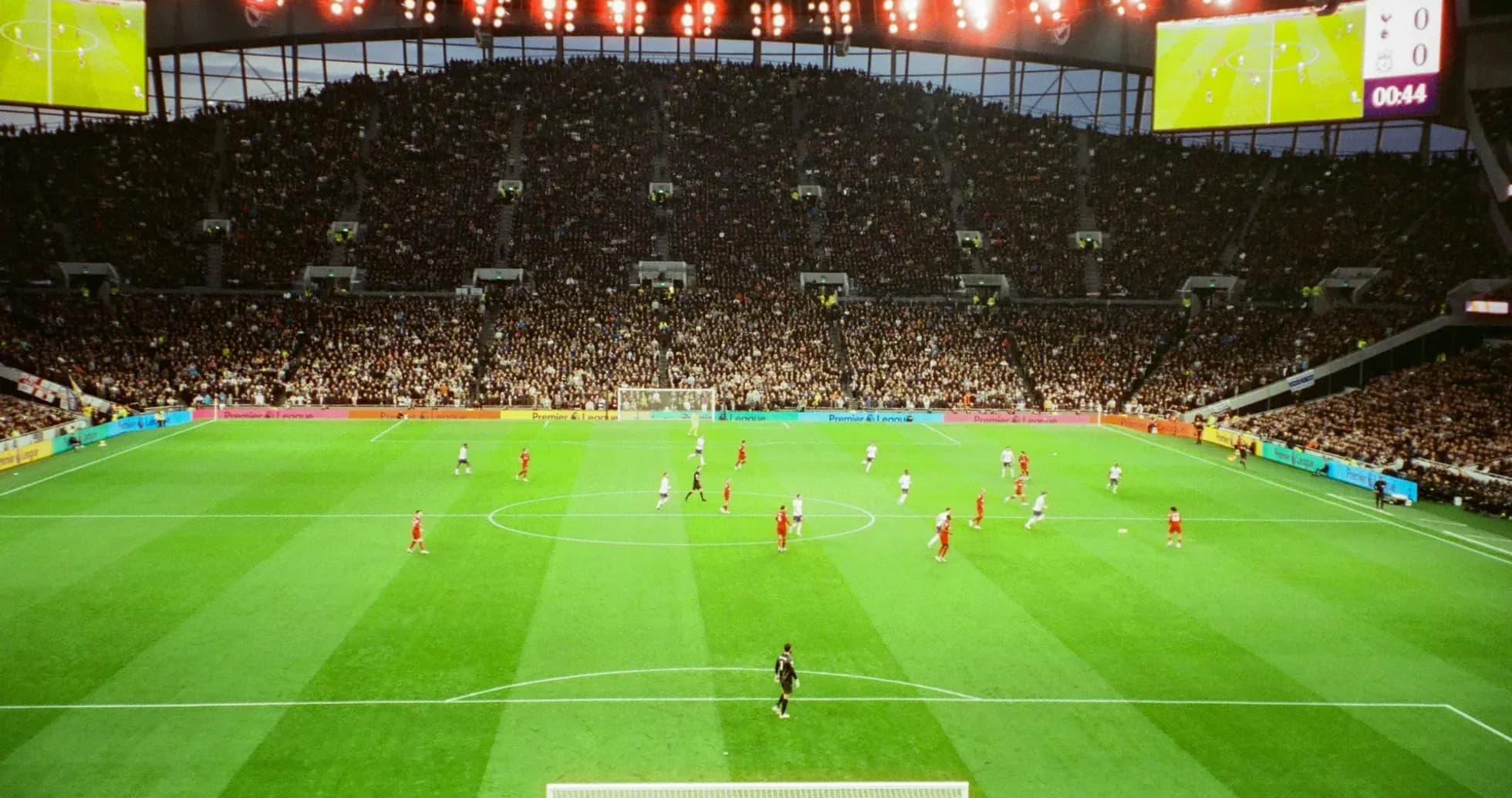
Burnley and Aston Villa Share Points in Dramatic 2-2 Draw
Under a grey Lancashire sky at Turf Moor, Burnley and Aston Villa played out a 2-2 draw that felt like a snapshot of their entire Premier League seasons compressed into 90 minutes. Following this result, the league table still shows the gulf between them: Burnley marooned in 19th with 21 points, Villa in 5th on 59 and chasing Champions League football. Yet on the day, the margins were far finer.
Both sides lined up in mirrored 4-2-3-1 shapes, but with very different emotional baggage. Burnley carried the weight of a campaign defined by defensive fragility and thin margins. Overall this season they have scored 37 goals and conceded 73, a goal difference of -36 that explains their relegation fight more starkly than any narrative could. Villa arrived with the swagger of a team that has won 17 of 36 league games, scoring 50 and conceding 46, their overall goal difference a modest but meaningful +4.
I. The Big Picture – Structure and Season DNA
Mike Jackson’s Burnley leaned into familiarity. The 4-2-3-1 has been their most-used shape this season, and here it framed a side built on energy and verticality rather than control. M. Weiss in goal sat behind a back four of K. Walker, A. Tuanzebe, M. Esteve and Lucas Pires. In front, Florentino and L. Ugochukwu formed a double pivot, tasked with shielding and springing transitions. Ahead of them, a fluid three of L. Tchaouna, H. Mejbri and J. Anthony supported lone forward Z. Flemming.
Villa mirrored the system but with a different personality. E. Martinez anchored the visitors, with M. Cash, E. Konsa, T. Mings and I. Maatsen across the back. The double pivot of V. Lindelof and Y. Tielemans was more about circulation and tempo than pure destruction. Ahead of them, J. McGinn, R. Barkley and M. Rogers floated behind O. Watkins, Villa’s cutting edge and one of the league’s top scorers with 12 goals and 2 assists in 35 appearances.
The scoreline – 1-1 at half-time, 2-2 at full-time – reflected Burnley’s season-long pattern: they average 1.0 goals for overall but concede 2.0, constantly asking their attack to do too much. Villa’s away profile is more balanced: on their travels they score 1.2 and concede 1.4 on average, a side comfortable in tight, tactical games.
II. Tactical Voids – Absences and Discipline
Both managers had to navigate significant absences. Burnley were without J. Beyer (hamstring), J. Cullen (knee) and C. Roberts (muscle injury), stripping depth and leadership from their defensive unit. The consequence was a back line that relied heavily on Walker’s experience and Tuanzebe’s recovery pace.
Villa’s own absentees reshaped their midfield. Alysson (muscle injury), B. Kamara (knee) and A. Onana (calf) were all missing, forcing Unai Emery to trust Lindelof and Tielemans as a more technical, less combative screen. It made Villa smoother in possession but more vulnerable when Burnley broke lines.
Discipline has been a season-long subplot for both clubs. Burnley’s yellow-card timing tells its own story: 19.67% of their bookings arrive between 16-30 minutes and another 19.67% between 76-90, with late pressure often pushing them into rash decisions. Red cards are spread across 31-45, 76-90 and 91-105 minutes, each accounting for 33.33% of their dismissals. It is a profile of a team that can lose emotional control at key junctures.
Individually, K. Walker embodies that edge. He has collected 9 yellow cards in 34 appearances, an aggressive full-back who tackles often (53 tackles, 10 blocked shots, 43 interceptions) and lives on the disciplinary line. J. Laurent, on the bench here, carries his own disciplinary risk with 7 yellows and 1 red this season.
Villa’s card pattern is different: 29.09% of their yellows arrive between 46-60 minutes, a team that often comes out of the break with intensity that can tip into overzealousness. Their single red card this season has come in the 61-75 window, underlining how second-half tempo can turn into jeopardy.
III. Key Matchups – Hunter vs Shield, Engine Room Battles
The headline duel was “Hunter vs Shield”: O. Watkins against a Burnley defence that has conceded 73 goals overall, including 28 at home. Watkins, with 51 shots and 31 on target this season, thrives on intelligent movement between centre-back and full-back. His 271 duels and 108 won show a forward willing to battle physically as well as run channels.
Against him, Tuanzebe and Esteve had to compress space and deny those diagonal runs, while Walker’s role was double-edged: provide width in attack yet not leave channels for Watkins to exploit. Burnley’s vulnerability in transition – underscored by conceding 2.5 goals on average away and 1.6 at home – meant any loss of structure could be fatal.
Further up the pitch, Z. Flemming was Burnley’s spearhead. With 10 league goals from midfield and 2 penalties scored from 2 taken, he is their most reliable finisher. His 5 blocked shots underline his work rate off the ball, but his primary value is as a late-arriving threat between the lines. Up against Konsa and Mings, his job was to find pockets where Villa’s double pivot could not track him.
In the “Engine Room” duel, M. Rogers was the game’s quiet conductor for Villa. Across the season he has 9 goals and 5 assists, with 1,033 passes and 43 key passes, evidence of a player who knits phases together and breaks lines. His 117 dribble attempts, with 41 successful, show how often he tests defenders 1v1. Against Burnley’s double pivot of Florentino and Ugochukwu, Rogers’ freedom to drift inside and combine with Barkley and McGinn was central to Villa’s ability to control territory.
On the Burnley side, Florentino and Ugochukwu were less about creation and more about survival: compressing central spaces, screening Watkins, and trying to spring Tchaouna and Anthony in transition. Their success or failure dictated how often Burnley could move the game away from their own box.
IV. Statistical Prognosis – What the Numbers Say About the Contest
Following this result, the numbers still paint Villa as the more sustainable project. Overall they have kept 9 clean sheets, compared to Burnley’s 4, and they fail to score in 10 matches versus Burnley’s 13. Villa’s away record – 6 wins, 6 draws, 6 defeats with 22 goals scored and 26 conceded – suggests a team that can live with volatility but usually finds a way to impose their attacking quality.
Burnley, by contrast, are defined by imbalance. At home they have 2 wins, 6 draws and 10 defeats, scoring 17 and conceding 28. Their 4 clean sheets at Turf Moor are offset by 9 home games in which they have failed to score. The 4-2-3-1 they used here has been their most frequent formation, but the underlying defensive metrics have not improved enough to change their trajectory.
In xG terms – even without explicit figures – the profiles are clear. Villa, with 1.4 goals scored on average overall and 1.3 conceded, resemble a side whose xG for and against are relatively close, relying on individual quality from Watkins and Rogers to tilt tight games. Burnley, at 1.0 goals for and 2.0 against, are a classic relegation-threatened team: their defensive xG against is likely too high, their attacking xG for too low to consistently overturn deficits.
Yet this 2-2 at Turf Moor shows why football resists pure numerical determinism. Burnley’s front four, led by Flemming, can trouble even top-five defences on the day. Villa’s away volatility means they can be dragged into chaos. Over a season, the numbers separate them. Over 90 minutes, as this match proved, the story can still be written on the pitch rather than in the spreadsheet.