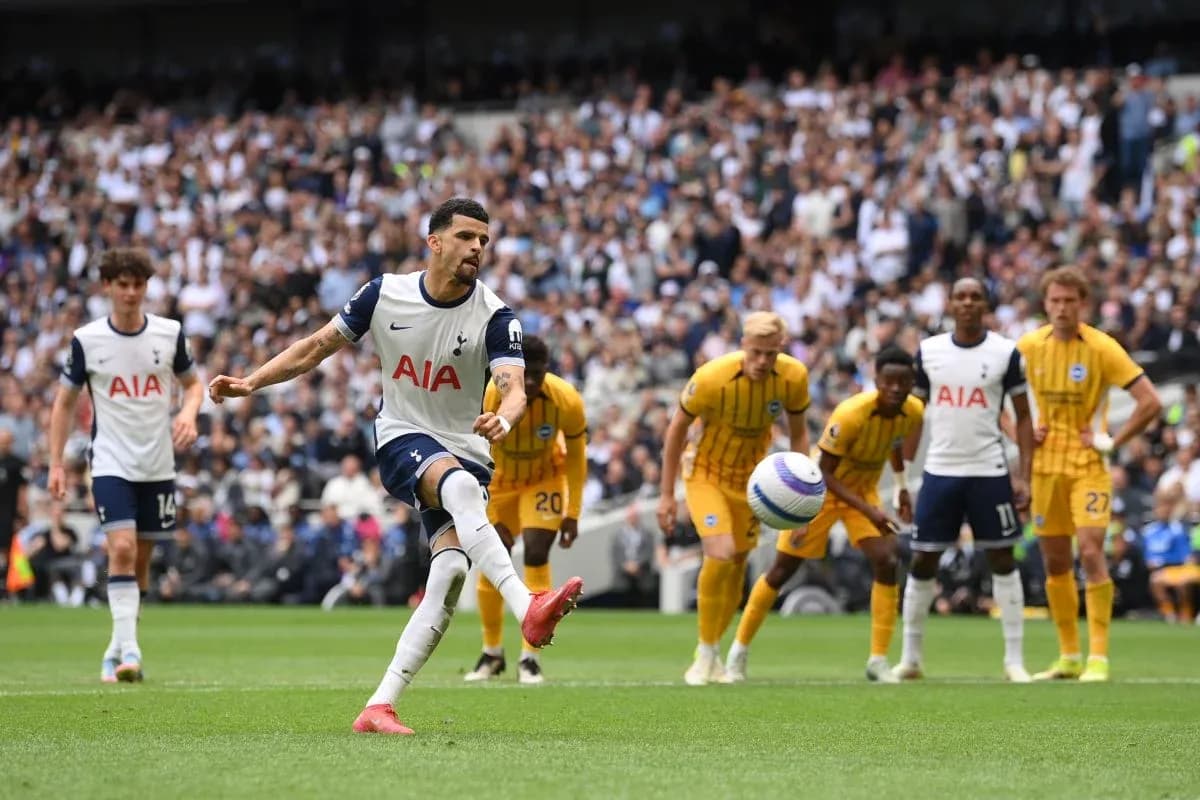
Tottenham vs Brighton: Premier League Clash with Relegation Stakes
Tottenham welcome Brighton to the Tottenham Hotspur Stadium in London on 18 April 2026 for a Premier League clash heavy with contrasting stakes and narratives. The hosts are fighting for their lives in 18th place, sitting in the relegation zone on 30 points after 32 matches, while Brighton arrive in north London in 9th with 46 points and an outside shot at pushing higher in the table.
Context and stakes
In the league, Tottenham’s season has unravelled. Across all phases they have just 7 wins from 32, with a goal difference of -11 (40 scored, 51 conceded) and a worrying recent form line of “LLDLL”. Their home record is particularly bleak: only 2 wins in 16 at the Tottenham Hotspur Stadium, with 10 defeats and 28 goals conceded. Survival is the only objective now, and home games like this are must-win territory.
Brighton, by contrast, are relatively comfortable in mid-table. Ninth place with 46 points and a positive goal difference of +6 (43 for, 37 against) reflects a side that has been inconsistent but generally effective. Their form “WWWLW” coming into this round underlines momentum: three straight wins, a blip, and another victory. While they are not in the title or top‑four conversation, a strong finish could yet secure a European push depending on how the table above them shakes out.
Tactical landscape: Tottenham’s crisis vs Brighton’s structure
Across all phases, Tottenham’s statistical profile tells the story of a side that has lost its way, especially at home. They average 1.3 goals for per game but concede 1.6, and that defensive fragility is even more pronounced in London: 1.8 goals against per home match. Clean sheets are rare (just 2 at home, 7 overall), and they have already suffered a heaviest home defeat of 1-4, underlining how quickly games can spiral against them.
Tactically, Tottenham have been searching for solutions. The 4-2-3-1 has been their primary shape (14 matches), with 4-3-3 and even three-at-the-back systems (3-4-2-1, 3-5-2) used in shorter bursts. That tactical churn reflects a manager trying to balance attacking intent with defensive security and not quite finding the answer. The disciplinary data adds another layer: a high volume of yellow cards in the middle phases of games and multiple red cards in first halves suggest emotional volatility and poor in-game control, which is a dangerous mix in a relegation fight.
Brighton, on the other hand, present a more stable tactical identity. They have leaned heavily on a 4-2-3-1 (27 matches), occasionally shifting to 4-3-3 or 3-4-2-1. Their numbers are more balanced: 1.3 goals scored and 1.2 conceded per game, with 8 clean sheets and only 7 matches in which they have failed to score. They are not spectacular, but they are structurally sound and tactically consistent.
Away from home, Brighton are solid if unspectacular: 5 wins, 4 draws, 7 defeats, with 19 scored and 20 conceded. That almost neutral goal difference away (19-20) points to a team that competes in most matches and rarely gets blown away. They are capable of winning on the road but also experienced in managing tight, attritional games.
Key absences and selection puzzles
The team news tilts the tactical board in interesting ways.
Tottenham are ravaged by injuries. They are definitely without Ben Davies (ankle), Mohammed Kudus (muscle), Dejan Kulusevski (knee), James Maddison (knee), Wilson Odobert (knee) and Cristian Romero (knee). Rodrigo Bentancur (muscle) and goalkeeper Guglielmo Vicario (groin) are both listed as questionable.
This is a brutal list. Romero’s absence strips Tottenham of their most aggressive and authoritative centre-back, while Maddison and Kulusevski are key to creativity and ball progression in the final third. Kudus and Odobert would normally add direct running and one‑v‑one threat; without them, Tottenham risk looking blunt and predictable. If Vicario does not make it, the disruption extends into the goalkeeping department, undermining build-up and defensive organisation.
Brighton have their own issues at the back. Club captain Lewis Dunk is suspended due to yellow cards, and fellow centre-back Adam Webster is out with a knee injury. Youngster S. Tzimas is also missing, while James Milner is a doubt. That leaves Brighton potentially without their first-choice central defensive pairing and a veteran utility presence. Even a struggling Tottenham side will see that as a clear area to target, especially from set plays and direct balls into the box.
Key players and attacking focal points
In the absence of Maddison and Kulusevski, Tottenham’s attacking burden falls heavily on Richarlison. The Brazilian is their leading scorer in the league this season with 9 goals and 3 assists from 27 appearances. His underlying numbers are solid: 36 shots, 22 on target, and 16 key passes despite often operating in a chaotic attacking unit. He is also heavily involved physically, with 252 duels contested and 110 won, and he draws a significant number of fouls (29). That profile makes him central to Tottenham’s ability to unsettle a patched‑up Brighton defence.
Notably, Richarlison has not taken a penalty this season (0 scored, 0 missed), so Tottenham cannot rely on him as a proven weapon from the spot. Given that the team as a whole has had no penalties in the league (0 total, 0 scored, 0 missed), they have not benefited from spot‑kick margins in tight games.
For Brighton, Danny Welbeck has been a standout. With 12 league goals, he is one of the division’s top scorers, delivering that return from 31 appearances and 1,901 minutes. His shot profile (39 total, 23 on target) shows efficiency, and he contributes to the collective with 19 key passes and respectable link play (419 passes at 79% accuracy). He also works hard defensively, with 20 tackles and 9 interceptions.
Welbeck’s penalty record this season is mixed rather than ruthless: he has scored 1 but missed 2. That matters in late‑season pressure moments, especially away from home. Brighton as a team are 3 from 3 on penalties this season, but Welbeck individually cannot be described as flawless from the spot.
Head-to-head: Brighton’s edge
Looking at the last five competitive meetings in the Premier League:
- 20 September 2025: Brighton 2-2 Tottenham (Brighton home)
- 25 May 2025: Tottenham 1-4 Brighton (Tottenham home)
- 6 October 2024: Brighton 3-2 Tottenham
- 10 February 2024: Tottenham 2-1 Brighton
- 28 December 2023: Brighton 4-2 Tottenham
Excluding friendlies, that gives Brighton 3 wins, Tottenham 1 win, and 1 draw in the last five league clashes. Brighton have scored at least twice in all five, and four of those matches saw them hit three or more. Tottenham, for their part, have scored in every one of those games but have repeatedly been exposed defensively, conceding 4, 3, 4 and 2 in four of the five.
The pattern is clear: this fixture tends to be open, with Brighton repeatedly finding ways to hurt Tottenham in transition and through structured attacking patterns, even when Spurs start well (as in the 2024 and 2025 meetings where Tottenham led but were overrun).
Tactical expectations
Given Tottenham’s precarious league position and poor home record, they are likely to approach this with urgency but also anxiety. The probable shape is a 4-2-3-1, but the absence of Maddison and Kulusevski may push the manager towards a more functional, less creative midfield, perhaps prioritising energy and defensive cover over guile. That could lead to a more direct approach: early balls into Richarlison, second balls around the box, and heavy emphasis on set pieces.
Defensively, without Romero, Tottenham’s back line loses its most aggressive front‑foot defender. That may force them to sit a few yards deeper, which in turn invites Brighton’s possession play. Tottenham’s card profile — lots of yellows in the 31-60 minute window and several reds in first halves — suggests that if they are under sustained pressure, discipline could become a major risk.
Brighton, with their 4-2-3-1 base, will likely look to control tempo through the double pivot, progress the ball into pockets between Tottenham’s midfield and defence, and isolate Welbeck against a weakened central pairing. With Dunk and Webster out, they might defend a little deeper than usual or be more conservative with full-back positioning, but their away numbers (19 scored, 20 conceded) indicate they will still back themselves to create chances.
Brighton’s strong record of clean sheets away (5) and overall (8) suggests they are capable of managing games once ahead. However, the absence of their main centre-backs could undermine that stability, especially against a physically committed forward like Richarlison.
The verdict
All the data points to a match in which Brighton should feel confident. They are 9th with strong recent form, have a clear tactical identity, and boast the better head-to-head record, with 3 wins from the last 5 league meetings and goals in every one of them. Tottenham are 18th, with a dismal home record, a negative goal difference, and a squad ravaged by injuries in key areas.
Yet the context of the table matters. Desperation can sharpen edges. Tottenham’s need for points is absolute, and Brighton’s defensive absences — particularly Dunk and Webster — offer a rare opportunity for Spurs to impose themselves physically in the box. With both sides’ season-long averages hovering around 1.3 goals scored per game and Tottenham’s defensive numbers at home poor, this has all the ingredients of another high‑chance, multi‑goal encounter between the two.
On balance, Brighton’s cohesion and recent form make them slight favourites to avoid defeat, but the combination of their makeshift defence and Tottenham’s survival urgency suggests a tight, attacking game rather than a controlled away shutout. A score draw or a narrow Brighton win feels the most logical outcome, with Richarlison and Welbeck central to how the narrative ultimately unfolds.