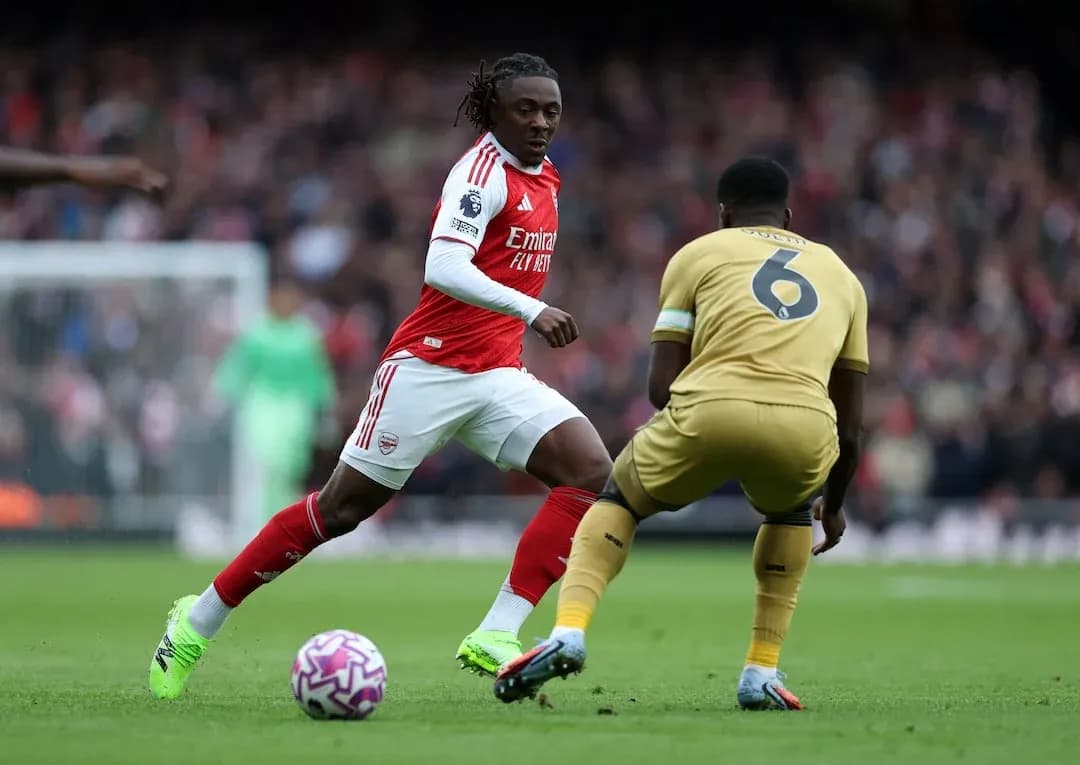
Arsenal Secures Narrow 2-1 Victory Over Crystal Palace
Selhurst Park’s final afternoon of the Premier League season closed with a narrow 2-1 win for Arsenal over Crystal Palace, a result that neatly mirrored the broader story of both clubs’ campaigns. Following this result, Arsenal ended as champions-in-waiting in everything but name on the day: 1st in the table with 85 points, powered by a ruthless attack and the division’s most balanced defensive record. Palace, by contrast, settled into 15th on 45 points, their season defined by resilience, structural discipline and a persistent struggle to turn control into goals.
I. The Big Picture – Systems and Seasonal DNA
Oliver Glasner doubled down on his structural identity, rolling out a 3-4-2-1 that has been his default: Crystal Palace used that shape in 33 of their 38 league matches. D. Henderson sat behind a back three of N. Clyne, J. Lerma and C. Riad, with D. Munoz and the young R. Cardines as wing-backs flanking a central duo of W. Hughes and D. Kamada. Ahead of them, J. Devenny and I. Sarr supported J. S. Larsen as the lone striker.
The shape reflected Palace’s season-long profile. Overall they scored 41 goals and conceded 51, giving them a goal difference of -10. At home they averaged 1.0 goals for and 1.2 against per game, a narrow margin that explains why Selhurst Park saw as many stalemates as wins. Seven home clean sheets underlined their capacity to defend space, but an equal tally of home matches without scoring revealed the other side of the coin: too often the structure was sound, the final third blunt.
Arsenal arrived as a fully formed machine. Mikel Arteta opted for a 4-2-3-1, the alternative to his more common 4-3-3, with K. Arrizabalaga in goal, a back four of M. Zubimendi, C. Mosquera, P. Hincapie and R. Calafiori, and a double pivot of C. Norgaard and M. Lewis-Skelly. Ahead of them, N. Madueke, academy product M. Dowman and G. Martinelli operated behind Gabriel Jesus.
Heading into this game, Arsenal’s season numbers were elite. Overall they scored 71 and conceded 27, for a goal difference of +44. On their travels they averaged 1.6 goals for and just 0.8 against, with 8 away clean sheets and only 2 away matches without scoring. The tactical preview wrote itself: the league’s most balanced away side against a home team that lived on a knife-edge of low-scoring contests.
II. Tactical Voids – Absences and Discipline
Both coaches had to navigate important absences. Crystal Palace were without C. Doucoure (knee injury), C. Richards (ankle injury) and B. Sosa (injury), all officially listed as missing for this fixture. The absence of Doucoure in particular stripped Glasner of his most natural ball-winning screen in front of the back three, which helps explain the choice of Lerma as a defender and a more technical double pivot of Hughes and Kamada.
Arsenal’s defensive rotation was forced by injuries to J. Timber (ankle injury) and B. White (knee injury). That pushed Arteta towards a back four built around mobility and progression rather than continuity, with Calafiori and Hincapie key to carrying the ball out and Zubimendi asked to adapt as a nominal right-back.
Disciplinary trends shaped how both sides managed risk. Across the season, Palace’s yellow cards were spread but with notable spikes: 18.42% between 31-45 minutes and another 18.42% between 46-60 and 76-90, plus a late sliver of 13.16% from 91-105. Two red cards, both arriving in the 46-75 window (one between 46-60, one between 61-75), hinted at a side that can overreach when chasing games just after half-time.
Arsenal’s bookings clustered later: 21.57% of their yellows came between 61-75 minutes and 25.49% between 76-90, with another 13.73% from 91-105. They rarely lost their heads early, but the data suggested a team willing to foul cynically to protect leads in the closing stages.
III. Key Matchups – Hunter vs Shield, Engine Room vs Enforcer
The headline “Hunter vs Shield” narrative floated just off the bench. Arsenal’s top scorer in the league, V. Gyökeres, carried 14 goals and 1 assist in 36 appearances, with 41 shots and 22 on target. His presence among the substitutes gave Arteta a devastating second-wave option if Gabriel Jesus and the starting line failed to break Palace down. For Palace, J. Mateta – 12 league goals, 56 shots, 32 on target – was also held in reserve, a reminder that Glasner could flip the game’s profile from Larsen’s link play to Mateta’s penalty-box gravity.
In defensive terms, Arsenal’s “shield” was collective rather than individual: 27 goals conceded overall, 16 of them away, and an away average of just 0.8 goals against. Palace’s attack, at 1.0 goals per home match, was always going to be tested by that compactness. The sub-plot was whether Sarr and Devenny could drag Hincapie and Mosquera into wide, uncomfortable duels, creating lanes for Larsen or, later, Mateta.
In the engine room, C. Norgaard and M. Lewis-Skelly formed a double pivot built for control and circulation. Behind them on the bench lurked M. Merino and M. Odegaard, the latter one of the league’s most efficient creators: 6 assists, 40 key passes and an 84% pass accuracy in 24 appearances. Between them, they represented Arsenal’s ability to change the rhythm and angle of attack mid-game.
For Palace, Hughes and Kamada offered a different kind of engine – more about angles and short combinations than brute control. Without Doucoure, there was no pure destroyer; instead, the plan was to defend through compact distances between the lines and to trust Lerma and Riad to step out when required.
IV. Statistical Prognosis – Edges, Margins and xG Logic
Even without explicit xG numbers, the season data sketches a clear expected-goals landscape. Arsenal’s overall scoring rate of 1.9 goals per match against Palace’s concession rate of 1.3 suggested the visitors were likely to generate and convert more high-quality chances. On their travels, Arsenal’s 1.6 goals for combined with Palace’s 1.2 goals against at home pointed towards the champions-elect finding at least one, and probably two, scoring moments.
At the other end, Palace’s 1.0 home goals for per game ran into Arsenal’s away defence conceding only 0.8. The most probable script was a low-to-moderate scoring contest where Palace would need to be ruthlessly efficient from limited opportunities – set pieces, transitions through Sarr, or late penalty-box scrambles involving Mateta.
Discipline and penalties also fed into the prognosis. Palace were flawless from the spot this season, scoring all 8 penalties they were awarded, while Arsenal converted all 4 of theirs. With neither side missing from 12 yards, any penalty decision always threatened to swing the match disproportionately.
Following this result, the 2-1 scoreline felt like the statistical midpoint of all those currents: Arsenal’s superior attacking volume and defensive solidity ultimately edging a Palace side whose structure kept them competitive but whose margins, as so often this season, were simply too fine.