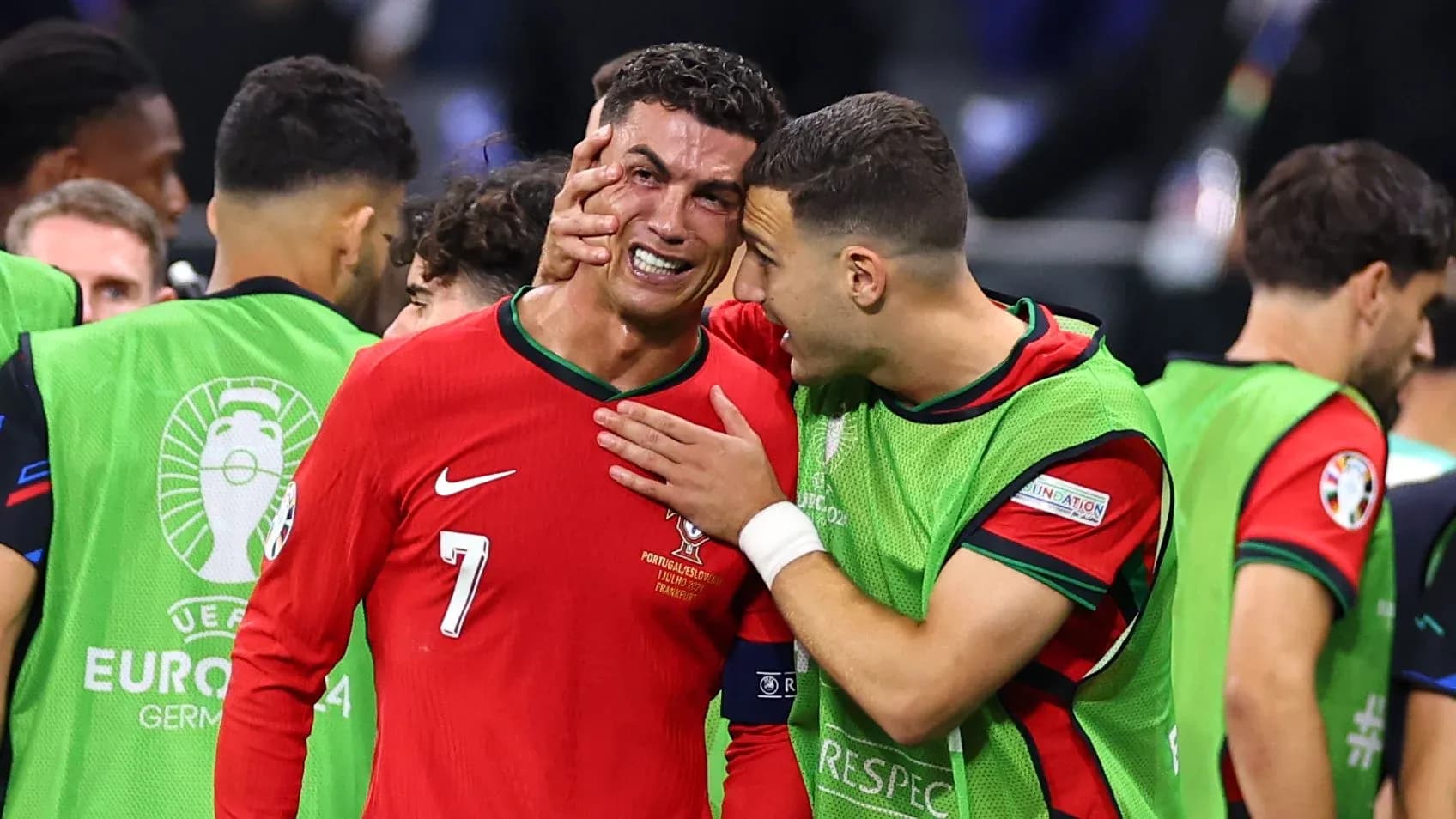
Cristiano Ronaldo's Last Chance at World Cup Glory
Cristiano Ronaldo is about to walk into football history one more time. Sixth World Cup. Forty-one years old. One last shot at the only trophy that has ever really escaped him.
In Portugal, that reality is starting to sting.
A Legend Near the Line
Inside the Portuguese Football Federation, few have watched Ronaldo’s international life as closely as Godinho, the former national team director who spent half a century in the FPF corridors. He saw the first call-up, the first step into a dressing room of giants, the first flash of that unshakable self-belief.
Now he sees something else: the end coming over the horizon.
"Let's hope he's in a position to retire – I don't know when, but the body isn't eternal – with a title of this magnitude," Godinho told Lusa, his words carrying the weight of someone who has seen generations come and go. The wish is simple but colossal: Ronaldo, World Cup in hand, walking away at the absolute summit.
The problem? The road to that summit has never looked more brutal.
The Toughest World Cup Yet
The 2026 World Cup, stretched across the United States, Canada, and Mexico, will not be kind to tired legs and aging bodies. Long-haul flights, time-zone swings, humidity, heat, and an expanded tournament format will grind down even the deepest squads.
Godinho does not sugarcoat it.
"The World Cup will be difficult ... because of the fatigue they will bring," he warned. European players will arrive off the back of another relentless club season, criss-crossing domestic leagues and continental competitions. Then they’ll be asked to adapt to a new continent in a matter of days.
"The continental change is a disadvantage, as it will be for other countries on other continents," he added. The strongest teams, the ones whose stars go furthest in the Champions League and other major competitions, will reach the tournament already stretched. Then come the "long journeys, schedule changes and climate, all of which influence performance."
His conclusion is blunt: "Careful preparation is needed. It's much more difficult to play in the United States than in Germany."
For Portugal, that means more than tactical planning. It means managing every minute of rest, every training load, every detail around a 41-year-old icon whose body has defied time but cannot outrun it forever.
From Figo’s Shadow to Portugal’s Standard
Godinho’s perspective on Ronaldo is not built on highlight reels. It comes from the early days, the raw version of the superstar.
He remembers 2003. A skinny teenager walking into a squad that still belonged to Luis Figo, Rui Costa, Fernando Couto. Names that defined a golden generation and a dressing room that did not hand out respect easily.
"It wasn't difficult to work with Cristiano," Godinho recalled. Ronaldo’s debut came at 18, against Kazakhstan, but the real test was not the opposition. It was the environment. "He had a group of players who helped him a lot to understand the dimension of where he was."
That room was ruthless when it had to be. The youngster heard "tough talk" from the senior figures, and he listened. Godinho describes him as "extraordinary," a player who soaked up advice, who learned quickly, who turned that education into the "winning mentality" that has driven two decades at the top of the game.
From the boy under Figo’s wing to the man carrying a nation’s expectations alone. Now, as the cycle closes, the same nation is trying to give him the one thing he never managed to win for them.
Group K and the Long March
Portugal’s campaign begins in Group K, and it starts in Houston on June 17 against the Democratic Republic of Congo. It is not a glamour opener, but it is a trap if taken lightly. The heat, the conditions, the emotional weight of a first World Cup game in a new format – all of it can unsettle even the favourites.
"The first game is always very important," Godinho said. Momentum in a tournament often grows from that first 90 minutes, from the feeling that the plan is working and the legs are still fresh. A win can steady everything. A stumble can shake it.
Yet Portugal have lived through a slow start before. Euro 2016 began with stutters and frustration, not fireworks, and ended with the trophy in Ronaldo’s hands in Paris. Godinho is quick to remind supporters that early perfection is not the only path to glory.
After Congo, Roberto Martínez’s side will face Uzbekistan and Colombia to complete the group stage. On paper, Portugal should advance. On grass, with fatigue, climate, and pressure in play, nothing is guaranteed.
"Everything depends on the state of mind, fatigue, and mentality," Godinho said. He believes in the quality of the squad and the organisation around it. "I am convinced that with the players and organisational capacity we can get there, but saying we are going to win is premature."
The ambition is there. The caution is deliberate.
The Last Great Chase
Ronaldo has already rewritten almost every record available to a forward. Goals, caps, longevity, nights under the brightest lights. His international career spans eras, teammates, and tactical revolutions. Yet for all of it, the World Cup has remained the missing piece.
That is why 2026 feels different. This is not just another tournament. It is a countdown.
Portugal will arrive in the Americas with a squad rich in talent and depth, built to run, press, and suffer. Around them, the staff will obsess over flights, sleep patterns, and recovery. Somewhere at the centre of it all, Ronaldo will lace his boots for a sixth World Cup, chasing the one prize that has always stayed just out of reach.
The body, as Godinho says, is not eternal. The question is simple and merciless: can Portugal find perfection in the most demanding World Cup ever, in time for their greatest player to walk away with the only medal he still lacks?