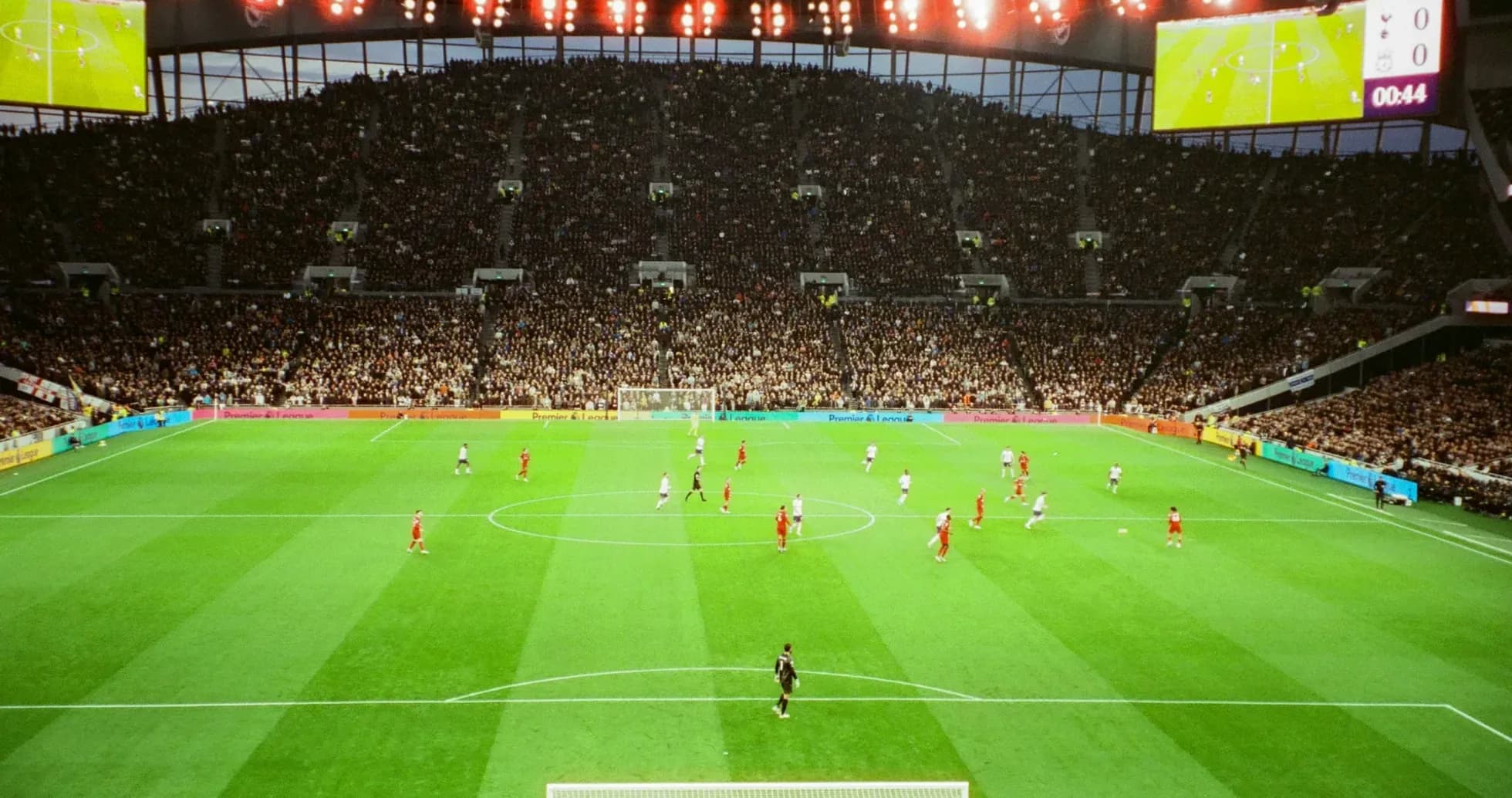
The Town Dominates Vancouver Whitecaps II 6–1 at PayPal Park
Under the lights at PayPal Park, this MLS Next Pro group-stage fixture became a statement win. The Town dismantled Vancouver Whitecaps II 6–1, a scoreline that did more than settle three points; it crystallised the contrasting identities of a ruthless home side and an away team still searching for resilience on their travels.
I. The Big Picture – Seasonal DNA laid bare
Following this result, The Town’s season-long profile looks increasingly coherent. Overall they have played 8 league matches, taking 16 points from 5 wins and 3 defeats. Their overall goal difference of 12 in the standings is built on 20 goals for and 8 against, and the underlying team statistics confirm that edge: overall they average 2.5 goals scored per match and 1.1 conceded.
At home, PayPal Park has become a laboratory for attacking excess. Across 3 home fixtures, The Town have scored 11 goals and conceded just 2. That translates into a home average of 3.7 goals for and 0.7 against. The 6–1 here matches their biggest home win of the campaign and underlines a pattern: when they get on top early, they do not ease off.
Vancouver Whitecaps II arrived with a very different story. Overall they had played 10 matches for 9 points, with a goal difference of -9 created by 15 goals for and 24 against. The team statistics shade that slightly differently, listing 16 goals for and 25 conceded, but the theme is the same: they are porous. On their travels they have been especially fragile, with 6 away fixtures yielding 0 wins, 0 draws and 6 defeats, 8 goals scored and 18 conceded. That is an away average of 1.3 goals for and a bruising 3.2 against.
The 6–1 final score did not buck those trends; it exaggerated them. The Town’s attacking ceiling at home remains one of the highest in the conference, while Vancouver’s away form continues to be a structural weakness rather than a blip.
II. Tactical Voids and Discipline – Edges in the margins
The lineups told a story of continuity rather than crisis. There were no listed absentees, so both Daniel de Geer and Rich Fagan could lean into their core groups.
For The Town, F. Montali anchored the side, with J. Heisner, A. Cano, N. Dossmann and D. Baptista forming the backbone in front of him. The midfield and forward lanes were built around the mobility of R. Rajagopal, G. Bracken Serra and E. Mendoza, with Z. Bohane, T. Allen and S. de Flores offering vertical thrust.
Vancouver’s XI, with S. Rogers, S. Deo, Trevor Wright, P. Amponsah and M. Garnette forming the defensive base, leaned on the work rate of C. Bruletti, Y. Tsuji and C. Rassak behind a front line of L. MacKenzie, D. Ittycheria and R. Sewell. On paper, this is a group that can move the ball and press in spells, but the season data hints at a side that cannot sustain defensive concentration.
Discipline has been an undercurrent in both teams’ campaigns. Heading into this game, The Town had shown a tendency to pick up yellow cards in the middle and late phases: 30.00% of their yellows came between 16–30 minutes and another 30.00% between 76–90. More striking is their red-card profile: 100.00% of their reds this season have arrived in the 31–45 window. This suggests that when The Town play on the edge, it often spikes just before half-time.
Vancouver’s yellow-card distribution is more spread but still telling. Overall, 15.79% of their yellows come in the opening 0–15 minutes, and there is a late-game surge with 21.05% between 76–90 and another 21.05% in 91–105. They do not have a red card on record, but the accumulation of cautions late in games points to fatigue and desperate defending once the structure starts to fray.
III. Key Matchups – Hunter vs Shield, Engine Room
The “Hunter vs Shield” dynamic in this fixture was less about a single star and more about a collective front line against a fragile defensive unit. The Town’s attack, averaging 3.7 goals at home, ran into a Vancouver back line that, on their travels, concede 3.2 per match and have already suffered a 6–1 away defeat this season. The repetition of that 6–1 scoreline here is no coincidence; it reflects a systemic mismatch.
Trevor Wright, who appears prominently across the league’s individual leaderboards for Vancouver, embodies their defensive hopes. Listed as a defender in the scoring and assists tables, he is clearly trusted within Fagan’s structure. But the numbers around him are unforgiving: overall Vancouver concede 2.5 goals per match, and their goals-against minute distribution shows 24.00% of goals conceded between 16–30 minutes and another 24.00% between 46–60. Those are precisely the windows where a high-tempo, front-foot side like The Town can shred a back four that is still settling or just emerging from half-time adjustments.
In the “Engine Room”, the duel between The Town’s central operators such as D. Baptista and R. Rajagopal and Vancouver’s Y. Tsuji and C. Rassak was always going to be pivotal. The Town’s overall failure-to-score rate is low (they have failed to score in only 1 match overall), which speaks to a midfield that consistently connects phases and creates chances. Vancouver, by contrast, have never kept a clean sheet this season, home or away. That combination – a side that almost always finds a goal against a side that never shuts anyone out – tilted the midfield battle toward the hosts before a ball was kicked.
IV. Statistical Prognosis – xG without the numbers
The raw xG values are not provided, but the season-long patterns allow a clear inferential verdict. A team averaging 2.5 goals for overall and 3.7 at home, facing an opponent conceding 3.2 away and 2.5 overall, is overwhelmingly likely to generate a high volume of quality chances. The 6–1 outcome is entirely consistent with a scenario where The Town’s expected goals significantly outstrip Vancouver’s, and where the visitors’ defensive structure – already leaking early and mid-half goals – collapses under repeated waves of pressure.
Vancouver’s own attacking profile is not negligible. Overall they score 1.6 goals per match, with a notably even spread across 0–15 (21.43%), 61–75 (21.43%) and 76–90 (21.43). They can hurt opponents in transition and late in halves. But against The Town’s home defensive average of 0.7 goals conceded, those flurries were always likely to produce isolated moments rather than a sustained threat.
Following this result, the trajectories diverge further. The Town consolidate their status near the top of both the Pacific Division and Eastern Conference tables, their +12 goal difference a hard numerical expression of a side that dominates both boxes. Vancouver Whitecaps II, stuck on 9 points with a -9 goal difference, remain a team whose attacking flashes cannot yet compensate for systemic defensive frailty, especially away from home.
In tactical terms, this was less an upset and more an inevitability written in the numbers. The Town simply played to type – ruthless at home, relentless in attack – and Vancouver, on their travels, once again found that their shield is not yet strong enough to withstand a hunter of this calibre.