
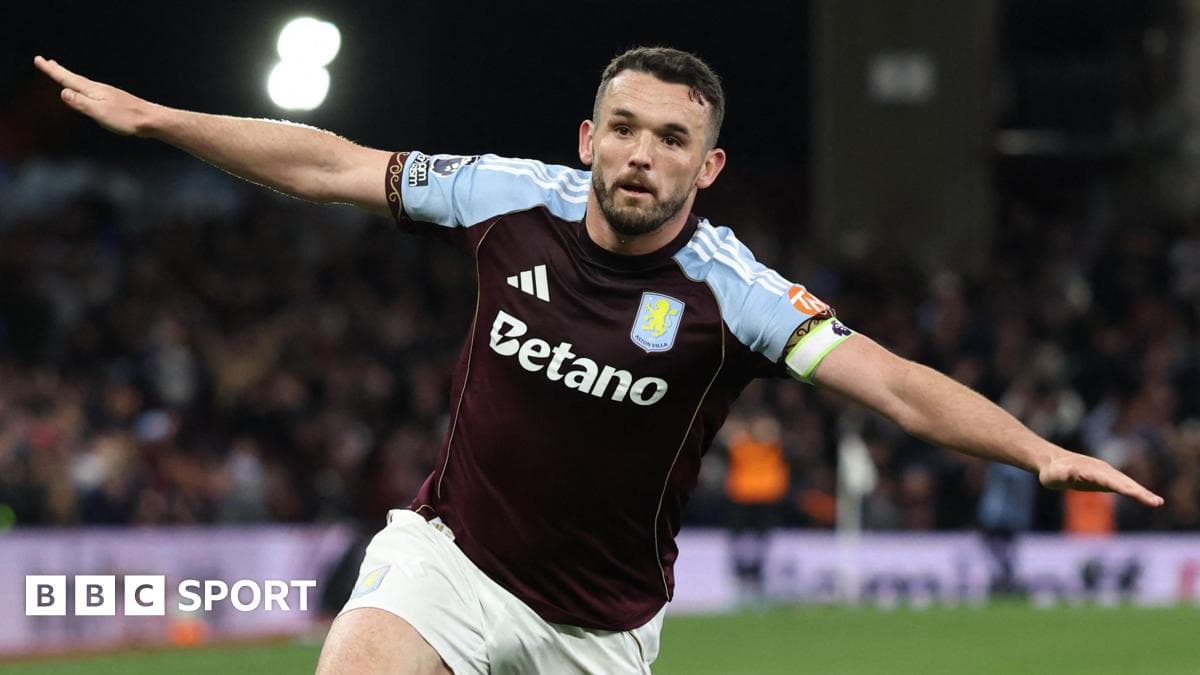
Aston Villa Return to Champions League Glory After Dismantling Liverpool
Aston Villa are back where they believe they belong. Among Europe’s elite, with the Champions League anthem heading for Villa Park once more.
The confirmation came with a statement win. Friday night’s 4-2 dismantling of last season’s champions Liverpool did more than light up the Premier League; it sealed a return to the top table and exorcised a ghost that has hung over Unai Emery’s side for a year.
From Old Trafford pain to Champions League nights
Twelve months ago, Villa’s season ended in bitterness and disbelief. They missed out on the top five on goal difference on the final day, beaten 2-0 at Manchester United in a game scarred by a key refereeing error. Thomas Bramall’s mistake denied Morgan Rogers an opener, Emiliano Martinez was sent off, and Villa’s Champions League dream died in the chaos.
It left a scar. A club that had dared to look upwards was forced to swallow a brutal reminder of fine margins.
This season, they didn’t wait for the final day or for anyone’s charity. They leapt over Liverpool into fourth, moved out of Bournemouth’s reach, and turned last year’s anguish into fuel. The wound has been stitched up with something stronger than revenge: progress.
Now comes Wednesday’s Europa League final against Freiburg in Istanbul, Villa’s first major European showpiece since lifting the European Cup in 1982. Whatever happens there, the numbers say this side has already done something extraordinary.
The league’s great overachievers
Strip away the emotion and the league table still looks like a trick of the light. According to Opta’s expected table, Villa should be 12th. Mid-table. Safe, respectable, forgettable.
Instead, they sit eight places higher and 15 points better off than the models predict. No other Premier League team is overperforming to that extent. Sunderland and Everton are the only clubs even more than two places above their expected mark. Villa are in another category entirely.
The underlying figures don’t scream juggernaut. Their 54 league goals rank only seventh, behind even 10th-placed Chelsea. They’ve taken 471 shots, ninth most in the division and fewer than any of the top six plus Chelsea. Their shots on target total sits only eighth, below the rest of the top six, Brighton and Newcastle United.
Yet when they shoot, they make it count. Their 11% shot conversion rate is bettered only by Brentford, Manchester City and Arsenal. Only Tottenham have outperformed their expected goals by more than Villa. Emery’s side have an xG of 46.42 but have scored 7.58 more than that suggests, a ruthless edge built not on volume, but on precision.
Crucially, that xG total is the lowest among the top six. Every other side in that bracket has generated at least 58 expected goals. Villa are punching above their statistical weight and landing clean.
They’ve also found a weapon from distance. Fifteen of their league goals have come from outside the box – 28% of their total. Only Bournemouth and Fulham even clear the 20% mark. When Villa hit from range, they don’t do it for show.
Curiously, for all that overperformance, they have been wasteful in one key area. They’ve created 84 big chances and scored just 24 of them, a 29% conversion rate that is the lowest in the league. Nottingham Forest, by contrast, have put away 46% of their big openings.
So this isn’t a freakish run of every chance going in. It’s more nuanced than that: a team that doesn’t create as much as its rivals, but finds different ways to hurt you and maximises the right moments.
Emery’s demanding edge
Balancing that with a deep European run would test any squad. Villa have juggled Thursdays and Sundays and still driven themselves to a Europa League final and a Champions League return.
“I am so demanding. Competing on Thursdays and Sundays are not excuses,” Emery said, a line that has quietly become a mantra around the club.
He talks about objectives being met over three years, about a club still trying to improve, about building “our own way” to stand up to the best in England and Europe. There is no sense of arrival, no self-congratulation. Just a coach with a clear picture in his head of where this is going and how far there still is to climb.
That clarity has been vital, because the context behind Villa’s rise makes their achievement even starker.
Walking the financial tightrope
Since Emery took charge in 2022, Villa have not behaved like a club throwing money at the problem. Only Wolves, Brentford, Brighton and Everton have a lower net spend. Villa’s figure sits at £73.5m, a modest outlay for a team muscling into the Champions League places.
They have had to tiptoe along the line of the Premier League’s profit and sustainability rules. Every signing, every sale has carried a calculation.
The image of May 2024 tells its own story. As the players and fans celebrated Champions League qualification, Emery and head of football operations Damian Vidagany sat at the end-of-season dinner with a different concern: how to avoid a PSR breach.
The answer, in the end, was painful but simple. Douglas Luiz left for Juventus in a £43m deal pushed through at speed. Jacob Ramsey had already gone to Newcastle for £40m the previous summer. Inside the club, there is an acceptance that another major name may have to be sacrificed this year.
Morgan Rogers, signed from Middlesbrough for £16m two years ago, has blossomed. If he shines at the World Cup with England, Villa know they could ask for close to £100m. It is the reality of their current model: Champions League football strengthens their bargaining position, but regular high-value sales remain the most straightforward way to stay on the right side of the rules.
The financial stakes are obvious. Villa posted a £17m profit for 2024-25, the season they played in the Champions League, after losing nearly £90m the year before. In 2022-23, they recorded a £120m loss. The difference European football makes is not abstract; it is written across the balance sheet.
Building a club to match the team
On the pitch, Villa are ahead of schedule. Off it, they are racing to catch up.
The club has driven hard to increase revenue, a push that has not always gone down well with supporters facing higher ticket prices. But the result is stark: income has climbed to £378m. Villa Park is being reshaped to fit the club’s new ambitions.
Work has started on rebuilding the North Stand, due for completion by the end of next year. The expansion will take capacity to just over 50,000. The new Warehouse entertainment venue at the stadium is already finished. Both will swell matchday revenue and help close the financial gap to the established Champions League regulars.
The scramble to improve has played out in the transfer market too. Villa spent months working on a move for Conor Gallagher, only to see Tottenham find the cash to sign the Atletico Madrid midfielder. For all their progress, Villa have still felt like a club operating with the handbrake on.
Part of the frustration lies in the rulebook itself. Premier League and Uefa financial regulations do not align. England’s top-flight clubs have voted to move to a squad-cost ratio model next season, allowing teams to spend up to 85% of their income on player costs. Uefa’s limit is 70%.
Vidagany has been clear that football needs regulation, but equally clear that the current split between domestic and European frameworks creates tension for clubs trying to compete on both fronts.
Villa have had to live inside those constraints while trying to break into a closed circle. That they have done so, and reached the Champions League for the second time in three years, changes the conversation.
The handbrake may not be fully off yet. But for the first time in a generation, Aston Villa can accelerate with the road opening up in front of them.



