Sweden's Dominant Start in World Cup 2023 Against Tunisia
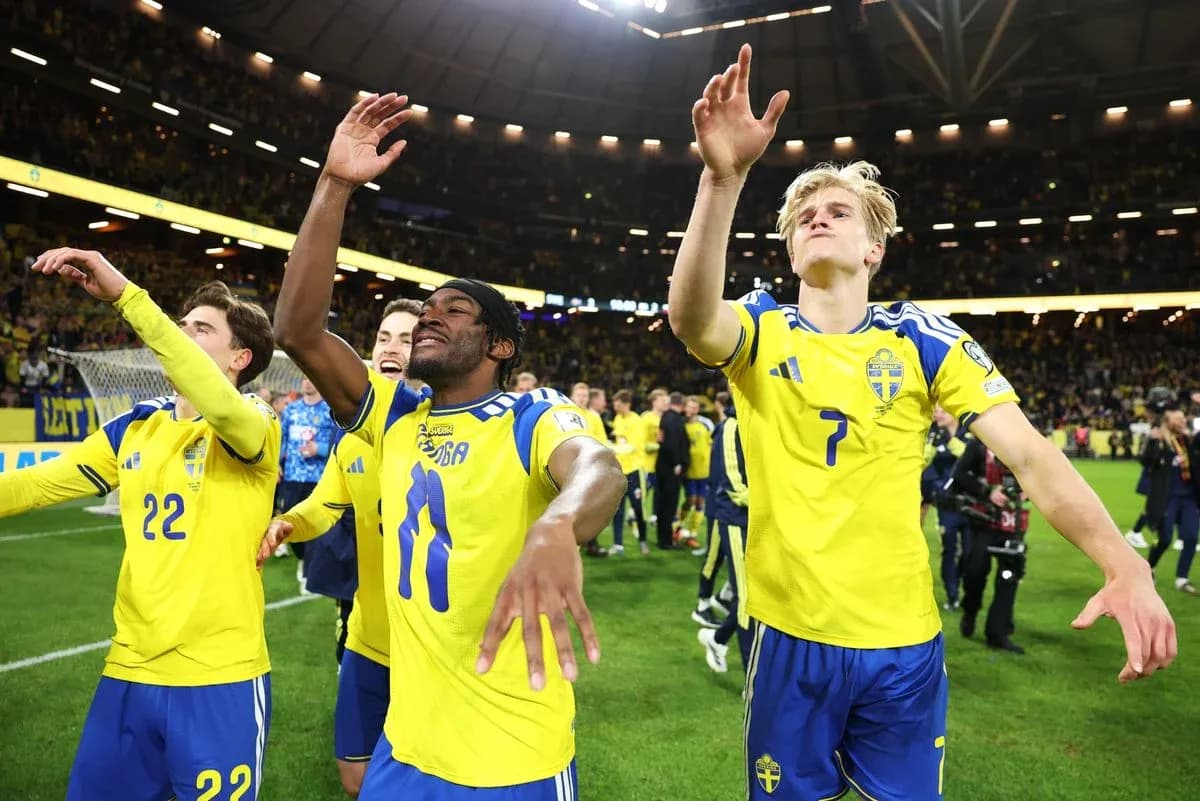
Under the lights of Estadio BBVA in Monterrey, Sweden’s World Cup campaign opened with a statement win that felt bigger than the 5–1 scoreline over Tunisia. Following this result, Sweden sit top of Group F with 3 points and a goal difference of +4, their attacking blueprint clearly imprinted on the tournament from matchday one. Tunisia, bottom of the group with 0 points and a goal difference of -4, leave the pitch knowing this was not just a defeat but a structural exposure of their 5-3-2.
I. The Big Picture – Sweden’s new identity, Tunisia’s early crisis
Graham Potter rolled out a bold 3-1-4-2, trusting a back three of V. Lindelof, I. Hien and G. Lagerbielke to anchor a side designed to dominate central zones and overload the half-spaces. In total this campaign, Sweden have played 1 match, winning it 5–1; all of those goals for and against have come at home, where they average 5.0 goals scored and 1.0 conceded.
In contrast, Sabri Lamouchi’s Tunisia arrived with a conservative 5-3-2, looking to compress the pitch horizontally and hit on breaks through E. Saad and A. Slimane. On their travels, Tunisia’s entire World Cup story so far is this single 5–1 defeat, with away averages of 1.0 goal for and 5.0 against. The gulf between the two sides’ attacking ceilings and defensive resilience was laid bare over 90 minutes.
II. Tactical Voids – Structures under stress, discipline under control
Sweden’s lineup was stable, with no listed absences and a clear spine: K. Nordfeldt in goal, J. Karlstrom as the single pivot, and the twin spearhead of V. Gyökeres and A. Isak. With no cards recorded in their seasonal data so far, Sweden’s aggression was channelled into pressing and duels rather than rash challenges.
Tunisia’s disciplinary profile tells a small but telling story: their only yellow card of the tournament to date came in the 46–60' window, with 100.00% of their yellows concentrated in that phase. It hints at a side that emerges from half-time trying to raise intensity, but perhaps doing so reactively and late, once the game is already tilting away.
Structurally, the real void for Tunisia lay between their wing-backs and outside centre-backs. The line of five – A. Abdi, M. Ben Hamida, M. Talbi, O. Rekik, Y. Valery – was often pinned deep by Sweden’s front two, leaving the midfield trio of R. Khedira, E. Skhiri and H. Mejbri isolated and forced into long lateral shifts. Without data on individual defensive actions, the pattern is still clear from the outcome: conceding 5 goals away, with no clean sheets in total, exposes a block that struggled to compress vertically.
Sweden, for their part, accepted risk. With only three at the back and J. Karlstrom screening, the wing-backs and advanced midfielders pushed high. The absence of any clean sheets in total (0 so far) suggests that this Swedish side is built to outscore rather than suffocate opponents, a trade-off that looked more than acceptable here.
III. Key Matchups – Hunter vs Shield, Engine Room duel
Hunter vs Shield
The “Hunter” role for Sweden is shared, but two figures stand out. Y. Ayari, listed as a midfielder, has already become one of the World Cup’s early headline acts. Heading into the next fixtures, he has 2 goals in total from 2 shots on target, with a rating of 8.6 across 90 minutes. He is not a traditional ten; he is a vertical runner who arrives in the box, timing his movements off the work of the front two.
Alongside him, A. Isak and V. Gyökeres form a devastating tandem. Isak, with 1 goal and 2 assists in total, is operating as a complete attacker: 2 shots, both on target, 17 passes at 82% accuracy, and 2 key passes. Gyökeres mirrors that productivity: 1 goal, 1 assist, 4 shots (2 on target) and 4 key passes from 19 total passes at 84% accuracy. Together, they stretch and puncture defensive lines.
Against them, Tunisia’s “Shield” has already cracked. In total this campaign, they have conceded 5 goals away, with an away average of 5.0 goals against and no clean sheets. The back five that started – Chamakh behind Valery, Rekik, Talbi, Ben Hamida and Abdi – could not prevent repeated penetrations between the lines. Without any recorded penalty incidents, Tunisia’s damage came from open play, where their structure was meant to be strongest.
Engine Room – Playmaker vs Enforcer
In midfield, the duel was about control more than crunch. For Sweden, Y. Ayari is the creative fulcrum from deeper zones: 27 passes, 2 key passes, and 3 tackles with 1 interception underline a two-way presence. He is not just a scorer; he disrupts and restarts attacks, making him the de facto playmaker from the right interior channel.
J. Karlstrom, though not present in the individual stats block, is the positional “Enforcer” in front of the back three. His task is to screen, recycle and allow Ayari, G. Gudmundsson, B. Nygren and A. Bernhardsson to push high.
Tunisia’s response in the engine room comes from E. Skhiri and R. Khedira. Their mandate in a 5-3-2 is to close those half-spaces and deny Ayari the freedom to turn. Yet the scoreboard and Sweden’s attacking output suggest they were outnumbered and outmanoeuvred, with H. Mejbri forced to think more about defensive coverage than progression.
IV. Statistical Prognosis – Sweden’s attacking wave vs Tunisia’s fragile block
Following this result, the numbers sketch a clear tactical prognosis for the group moving forward. Sweden’s total average of 5.0 goals for and 1.0 against is unsustainably high as a long-term baseline, but it reveals a side that will continue to create volume and high-quality chances. With no penalties taken or missed in total, their threat is coming from structured patterns and combinations rather than set-piece variance.
Tunisia’s total averages – 1.0 goal for, 5.0 against – frame a team whose current defensive solidity is far from tournament standard. The lack of clean sheets and the heavy away defeat underline that their 5-3-2, as currently executed, is not providing the low-block security it promises on paper.
If we project forward on xG logic, Sweden’s front three of Isak, Gyökeres and Ayari, supported by impact players like M. Svanberg (1 goal from 1 shot in 13 minutes) and L. Bergvall (1 assist in 25 minutes), should consistently generate strong Expected Goals figures against most defences. Tunisia, unless they tighten their spacing and protect the channels in front of their centre-backs, are likely to concede high xG chances again.
The tactical story of this match, and the early group narrative, is simple: Sweden’s aggressive, fluid 3-1-4-2 has arrived as an attacking force, while Tunisia’s five-man back line has been exposed as a vulnerable shield. The numbers back the eye test – one side is built to surge, the other must urgently learn how to absorb.