Spain's Tactical Domination Over Argentina in World Cup Final
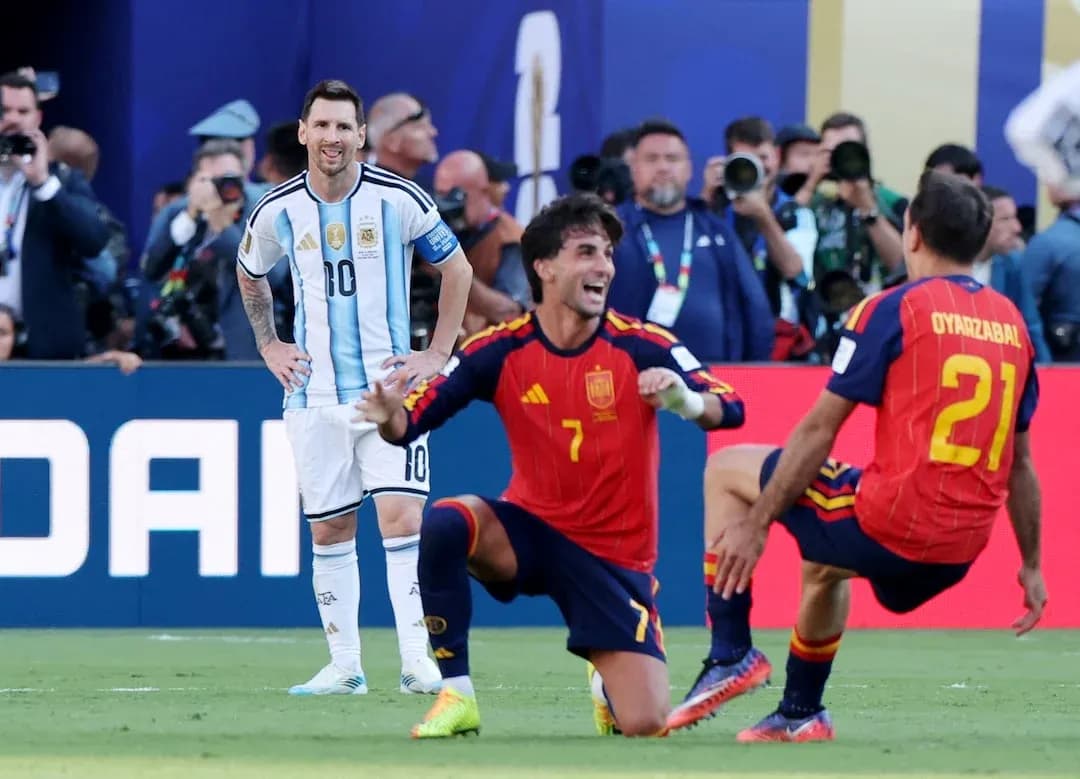
Spain’s 1-0 extra-time win over Argentina at MetLife Stadium was a tactical domination built on territorial control, structural patience and superior physical management over 120 minutes. In a World Cup Final that went to extra time but not penalties, Spain’s 65% possession, 20 total shots and 852 passes contrasted starkly with Argentina’s ultra-reactive, low-output plan that produced just 2 shots and no efforts on target. The match became a test of whether Argentina’s deep 4-4-2 block and emotional edge could resist Spain’s positional play; in the end, sustained pressure, numerical superiority in midfield and intelligent wing use broke them down, with Ferran Torres deciding the title in extra time.
I. Executive Summary
Spain set up in a 4-2-3-1 under Luis de la Fuente, using Rodri and Fabián Ruiz as a double pivot to monopolise central spaces and control tempo. Argentina, in Lionel Scaloni’s 4-4-2, accepted a passive role from the outset, defending in a compact mid-to-low block and hoping transitions through Lionel Messi and Julián Alvarez would compensate for their lack of ball. Across 120 minutes, Spain’s structure repeatedly pinned Argentina back, while Argentina’s discipline frayed: they finished with 6 yellow cards and 1 red, and never once tested Unai Simón with a shot on goal.
II. Scoring Sequence & Disciplinary Log
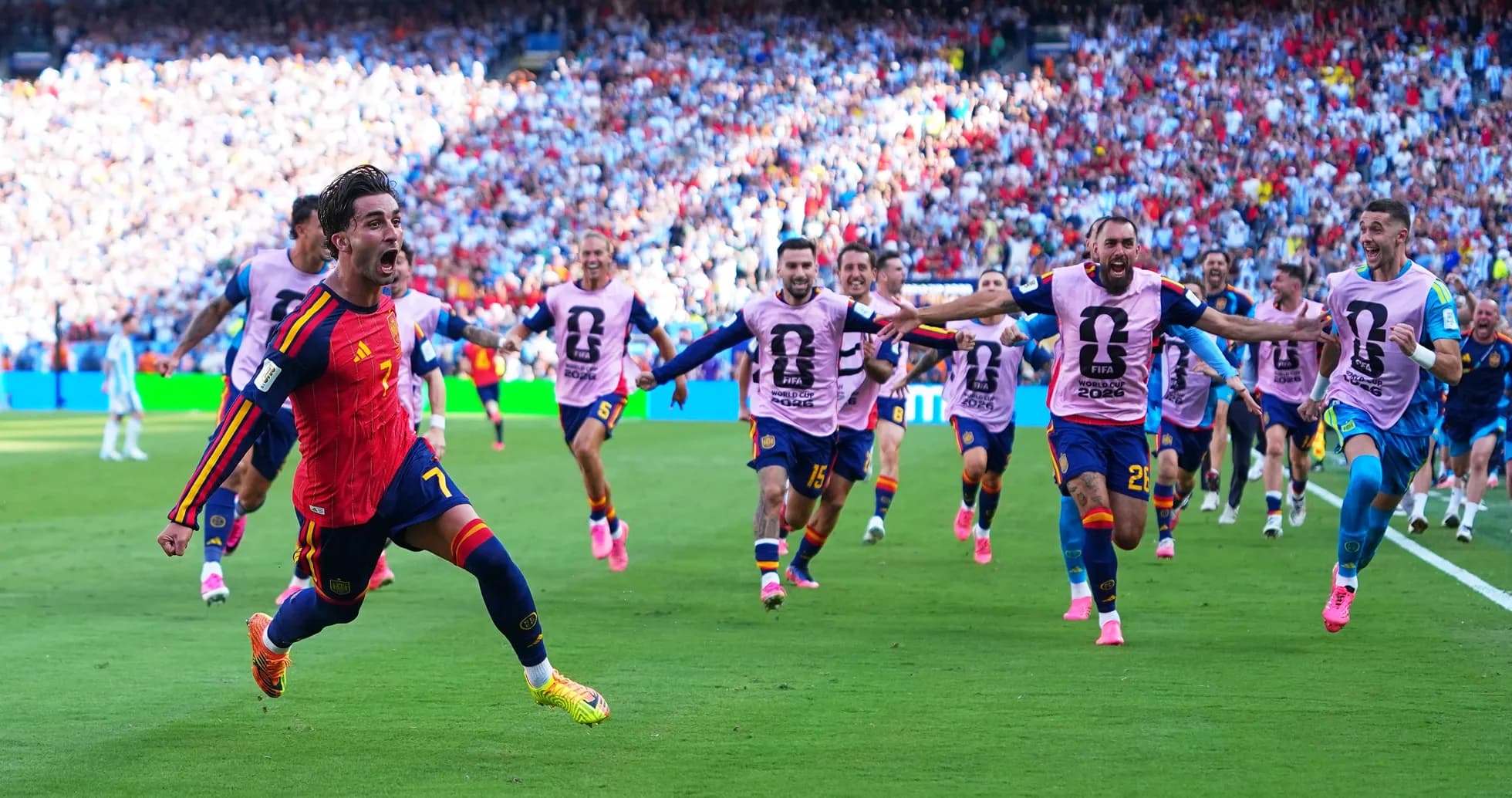
There was only one goal, but it came after a long strategic siege. At 106', Ferran Torres (Spain) — assisted by Nico Williams — made it 1-0, the decisive strike in extra time after Spain had spent the entire evening incrementally stretching and isolating Argentina’s back line. That goal aligned with the statistical pattern: Spain generated 12 shots on goal and an xG of 1.94, while Argentina finished with xG of just 0.22.
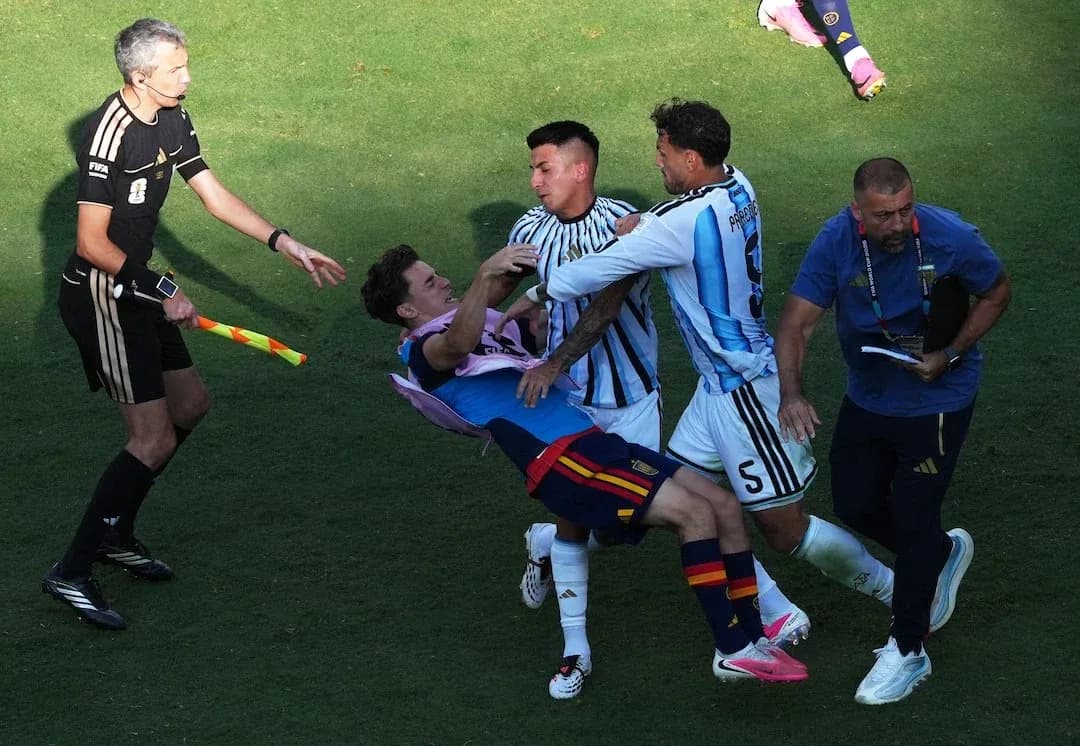
Discipline was heavily skewed towards Argentina and shaped the tactical story. Chronologically:
- -5' Cristian Romero (Argentina) — Argument
- 41' Lisandro Martínez (Argentina) — Foul
- 52' Leandro Paredes (Argentina) — Unsporting behaviour
- 83' Enzo Fernández (Argentina) — Argument
- 90+3' Enzo Fernández (Argentina) — Foul (second booking)
- 90+3' Enzo Fernández (Argentina) — Foul (Red Card)
- 111' Alexis Mac Allister (Argentina) — Foul
Spain received no cards at all. The late dismissal of Enzo Fernández at 90+3' left Argentina to survive extra time with ten men, further deepening their block and limiting any capacity to counter-attack or hold the ball.
III. Tactical Breakdown & Personnel
Spain’s 4-2-3-1 functioned as a high-possession, high-control machine. With 852 total passes and 762 accurate (89%), they circulated the ball relentlessly, using Rodri and Fabián Ruiz to anchor rest defence and ensure immediate counter-pressing whenever possession was lost. The double pivot allowed the full-backs Pedro Porro and Marc Cucurella to push high, creating a 2-4-4 shape in sustained attack: centre-backs Pau Cubarsí and Aymeric Laporte held the halfway line, while the full-backs provided width, freeing Lamine Yamal and Alex Baena to drift inside and overload half-spaces.
Between the lines, Dani Olmo and later Pedri and Mikel Merino offered constant receiving options behind Argentina’s midfield four. Spain’s 9 shots inside the box highlight how frequently they managed to penetrate the last line, either via cutbacks from wide or third-man combinations through the central channel. The three blocked shots indicate Argentina’s centre-backs and double pivot often defended deep in their own area, absorbing last-ditch situations rather than preventing entries altogether.
Out of possession, Spain’s pressing was measured rather than manic. With Argentina completing only 463 passes (357 accurate, 77%), Spain’s first line guided play wide, then collapsed aggressively on the ball-carrier. Crucially, Spain committed 21 fouls — a high number — but did so without crossing disciplinary thresholds; they controlled transitions through tactical fouling and counter-pressing, not reckless challenges.
Argentina’s 4-4-2, with Messi and Julián Alvarez up front, was designed for compactness and counter-threat but rarely left its shell. The wide midfielders Nicolás González and Alexis Mac Allister were pinned deep by Spain’s full-backs, effectively creating a back six in long phases. Rodrigo De Paul and Enzo Fernández were overrun centrally by Spain’s numerical superiority; Argentina’s midfield line was constantly forced to shuttle horizontally, which contributed to fatigue and late fouls.
Substitutions from Scaloni underlined a reactive, damage-limitation approach. Early, Lisandro Martínez went off for Nicolás Otamendi (44'), then Nicolás González for Leandro Paredes (46'), adding bite and experience in central areas. Later changes — Nahuel Molina for Gonzalo Montiel (58'), Facundo Medina for Cristian Romero and Giuliano Simeone for Rodrigo De Paul (both 70'), and Marcos Senesi for Julián Alvarez (102') — reflected a shift towards defensive solidity and fresh legs, but none of these moves altered Argentina’s inability to progress the ball or escape pressure.
For Spain, Luis de la Fuente’s changes were proactive and attacking. Pedri (IN) came on for Fabián Ruiz (OUT) and Ferran Torres (IN) for Mikel Oyarzabal (OUT) at 62', adding verticality and penalty-box presence. Nico Williams (IN) for Alex Baena (OUT) and Mikel Merino (IN) for Dani Olmo (OUT) at 75' injected pace and fresh energy between lines, directly influencing the winning goal: Williams’ assist to Ferran at 106' was the product of this renewed wide threat. In extra time, Martín Zubimendi (IN) for Rodri (OUT) and Eric García (IN) for Aymeric Laporte (OUT) at 99' ensured Spain maintained defensive concentration and physical freshness against any late Argentine counters.
In goal, Unai Simón (Spain) was almost a pure build-up piece rather than a shot-stopper; Spain’s statistics list 0 goalkeeper saves and 1.81 goals prevented, illustrating that Argentina’s few attempts were of very low quality and that Spain’s defensive structure forced shots from poor locations or denied them altogether. Emiliano Martínez (Argentina), by contrast, was under siege: he made 11 saves and also posted 1.81 goals prevented, an outstanding individual performance that kept Argentina alive long after the defensive system had been stretched to its limits.
IV. The Statistical Verdict
The numbers frame this Final as a tactical rout decided late rather than a balanced contest. Spain’s 20 total shots to Argentina’s 2, and 12 shots on goal against 0, reflect complete control of chance creation. Their xG of 1.94 versus Argentina’s 0.22 confirms that the 1-0 scoreline actually flatters Argentina; Emiliano Martínez’s 11 saves and identical 1.81 goals prevented to Unai Simón’s underline how much heavier the workload was for Argentina’s goalkeeper.
Possession (65% to 35%) and passing volume (852 vs 463) show Spain dictating rhythm and territory, while Argentina’s 25 fouls, 6 yellow cards and 1 red card reveal a side increasingly defending on the edge just to stay in the game. Spain’s clean disciplinary record, combined with their ability to sustain intensity into extra time, speaks to superior control — both emotional and tactical. In the end, the Final was won not by a moment of chaos but by the logical consequence of 120 minutes of structured, high-level positional play.