K League Players Demand Shift to Fall-Spring Season Amidst Rising Summer Heat
South Korea’s leading players have thrown down a clear challenge to their own league: stop playing through the brutal peak of summer or risk the game itself.
The Korea Pro Footballers Association (KPFA) has urged the K League to rip up its long‑standing calendar and switch to a Fall–Spring season, arguing that the country’s escalating heat is now a direct threat to player welfare and the league’s standing abroad.
“The K League must transition to the Fall-Spring schedule to protect players from the worsening climate crisis and punishing summer heat,” the union said in a statement this week, “and to maintain the league’s leadership within Asia and its global competitiveness.”
This is not a theoretical debate. It’s coming off the back of one of the most ferocious summers South Korean sport has faced.
Earlier this month, Yangsan, in the southeast, hit 42.5 degrees Celsius (108.5 Fahrenheit) – the highest temperature in decades of official records. Authorities told residents to stay indoors. The country’s baseball league didn’t hesitate: it shut down for a full week as the mercury climbed.
Football carried on.
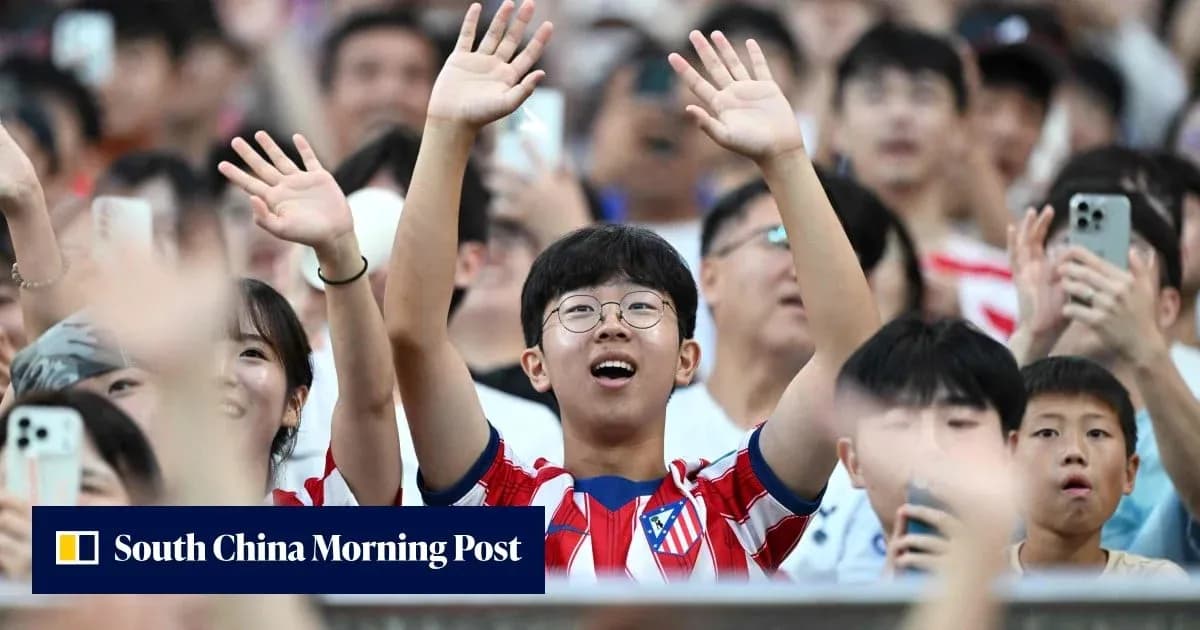
The heat has already started to leave its mark on the stands as well as the pitch. A Manchester City pre-season friendly against a K League All Star side last week drew a smaller crowd than expected, with the sweltering conditions cited as a major factor. Only when City met Atletico Madrid on Sunday did a full house finally turn up.
Even the nights have offered little relief. Seoul just came out of a run of 17 straight tropical nights, when temperatures never dipped below 25 degrees Celsius. For players asked to train, travel, and compete through that kind of oppressive humidity, the KPFA’s warning lands with extra weight.
Right now, the 2026 K League campaign is set to run from February 28 to December 6, locking in the traditional spring-to-winter domestic schedule. In the current climate, that means long, punishing stretches of football in July and August, precisely when the country is baking.
The union’s call to move to a Fall–Spring format would drag South Korea closer to many European calendars and away from the summer-heavy structure that has defined much of Asian football. It is a logistical headache, a commercial question, and a cultural shift all at once.
But as the temperatures rise and the fixture list refuses to budge, one issue now sits front and centre: how long can the K League afford to ignore a summer that is only getting hotter?