Saudi Arabia and Uruguay Share Points in Tactical Draw
Under the Miami lights at Hard Rock Stadium, Saudi Arabia and Uruguay opened their World Cup 2026 journeys with a 1–1 draw that felt less like a settled verdict and more like the first chapter of an evolving tactical duel. Following this result, both sides sit on 1 point in Group H, Uruguay ranked 1st and Saudi Arabia 2nd, each with a goal difference of 0 after 1 match played.
I. The Big Picture – Two Identities, One Stalemate
Saudi Arabia arrived as nominal hosts on the night, and their data profile matches what unfolded on the pitch. Heading into this game they had played 1 home fixture in total this campaign, drawing it, scoring 1.0 goal at home on average and conceding 1.0. The 4-4-2 chosen by Georgios Donis was conservative in shape but ambitious in intent: a compact block that could spring quickly into the channels.
Uruguay, designated as the away side, mirrored that statistical symmetry on their travels: 1 away match, 1 draw, 1 goal scored and 1 conceded, with away averages of 1.0 for and 1.0 against. Marcelo Bielsa’s 4-2-3-1, however, brought a very different energy: structural aggression, fluid rotations, and a clear aim to pin Saudi Arabia back with layered pressure rather than pure possession for its own sake.
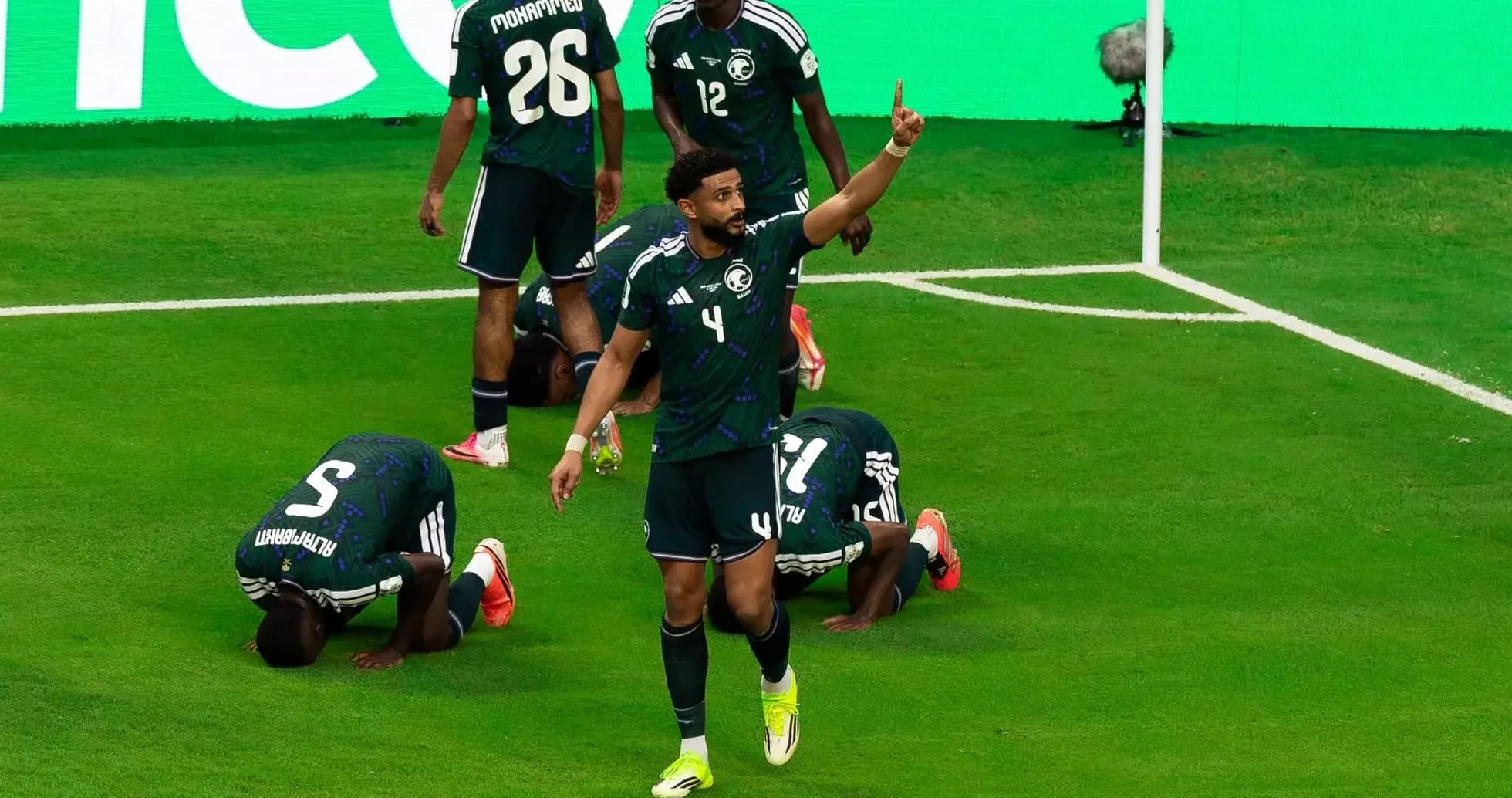
The first half belonged, psychologically at least, to Saudi Arabia. They went in 1–0 up at half-time, a lead that validated Donis’ decision to trust his defensive line and double pivot. Uruguay’s late equaliser in the second half restored balance, but the underlying narratives were already clear: Saudi Arabia as disciplined disruptors, Uruguay as relentless accelerators still searching for full cohesion.
II. Tactical Voids – Where the Space Really Was
Neither side reported formal absences in the data, so the “voids” were less about missing personnel and more about structural choices.
For Saudi Arabia, the most intriguing gap was between their double pivot and the forward line. M. Kanno and A. Al Khaibari formed a stable central platform, but at times the distance to the front two—F. Al Buraikan and M. Al Juwayr—left transitions underpowered. The wide midfielders, S. Al Dawsari on the left and M. Abu Al Shamat on the right, were often forced to carry the ball long distances, which suited Uruguay’s pressing traps.
Defensively, though, Saudi Arabia were impressively intact. The back four of S. Abdulhamid, A. Al Amri, H. Tambakti and M. Al Harbi stayed narrow, almost daring Uruguay to cross. With no red cards in total this campaign and only a single yellow card shown to Saudi Arabia in the 31–45 minute window (100.00% of their bookings so far), Donis’ side combined aggression with control. The fact that their disciplinary spike came just before half-time hints at a team willing to disrupt rhythm in key moments but not lose its head.
Uruguay’s tactical void was more subtle: the space between their double pivot and the advanced midfield trio. M. Ugarte and R. Bentancur anchored the centre, but with F. Valverde, F. Vinas and M. Araujo all looking to attack different pockets, there were moments when the structure tilted too far forward, leaving the back four exposed to direct balls toward Al Buraikan and Al Juwayr. Yet Uruguay’s disciplinary record remains spotless so far—no yellow or red cards in any time range—suggesting a controlled aggression that Bielsa will be pleased with.
III. Key Matchups – Hunter vs Shield, Engine Room vs Engine Room
Hunter vs Shield
For Saudi Arabia, the “hunter” role is shared rather than individualised. With 1 goal scored at home in total this campaign and no penalties taken, they rely on collective movement rather than a single penalty-box specialist. F. Al Buraikan’s positioning in the 4-4-2 was about running channels and dragging centre-backs away, while M. Al Juwayr dropped into pockets to link with the midfield.
Their “shield” is clearer: the centre-back pairing of A. Al Amri and H. Tambakti, screened by Kanno and Al Khaibari. With only 1 goal conceded at home in total and no clean sheets yet, they are statistically average but structurally promising. The way they narrowed space for D. Nunez, forcing him away from central zones, was a quiet victory in itself.
On Uruguay’s side, D. Nunez is the obvious spearhead of the 4-2-3-1. With 1 away goal in total for the team and no penalties taken, his threat is built on volume of runs rather than set-piece dependency. Behind him, Valverde’s late arrivals and Vinas’ half-space drifting constantly tested Saudi Arabia’s lines. Yet Uruguay’s own shield—S. Caceres and M. Olivera, flanked by G. Varela and M. Vina—could not quite prevent Saudi Arabia from finding that first-half breakthrough, underlining that their defensive mechanisms are still bedding in.
Engine Room
The most compelling duel lay in midfield. Kanno and Al Khaibari versus Ugarte and Bentancur was a contrast in styles: Saudi Arabia’s pair focused on maintaining horizontal compactness and simple progression, while Uruguay’s duo tried to dictate tempo and trigger pressing waves.
Valverde’s role as the advanced conduit tilted the balance. When he dropped closer to Ugarte and Bentancur, Uruguay formed a three-man carousel that finally began to pull Saudi Arabia’s block out of shape. That shift, more than any single substitution, paved the way for the second-half equaliser.
IV. Statistical Prognosis – What This Draw Really Says
Following this result, both teams share identical topline numbers: 1 match, 1 draw, 1 goal scored, 1 conceded, goal difference 0. No penalties taken, none scored, none missed. Clean sheets remain at 0 for both; neither has failed to score yet.
The absence of detailed xG figures forces us to read the game through structure and flow rather than pure metrics, but the pattern is clear. Saudi Arabia, with a home average of 1.0 goal for and 1.0 against, look built for tight margins and controlled risk. Uruguay, matching those averages away, project as a side whose underlying attacking ceiling is higher than the scoreline currently shows, but whose defensive synchronisation is still catching up.
From a tactical forecasting lens, Saudi Arabia’s path forward in Group H will depend on whether they can add one more attacking layer—perhaps by connecting Al Dawsari more consistently with the front two—without compromising the compactness that kept Uruguay at bay for long stretches. Uruguay, meanwhile, must refine the distances between their lines so that their 4-2-3-1 can suffocate opponents without leaving the back four exposed to direct transitions.
In a group that already feels delicately balanced, this 1–1 was less a missed opportunity than a declaration of intent from both sides: Saudi Arabia as disciplined spoilers with room to grow in the final third, Uruguay as high-octane contenders still sharpening the edges of a potentially formidable machine.