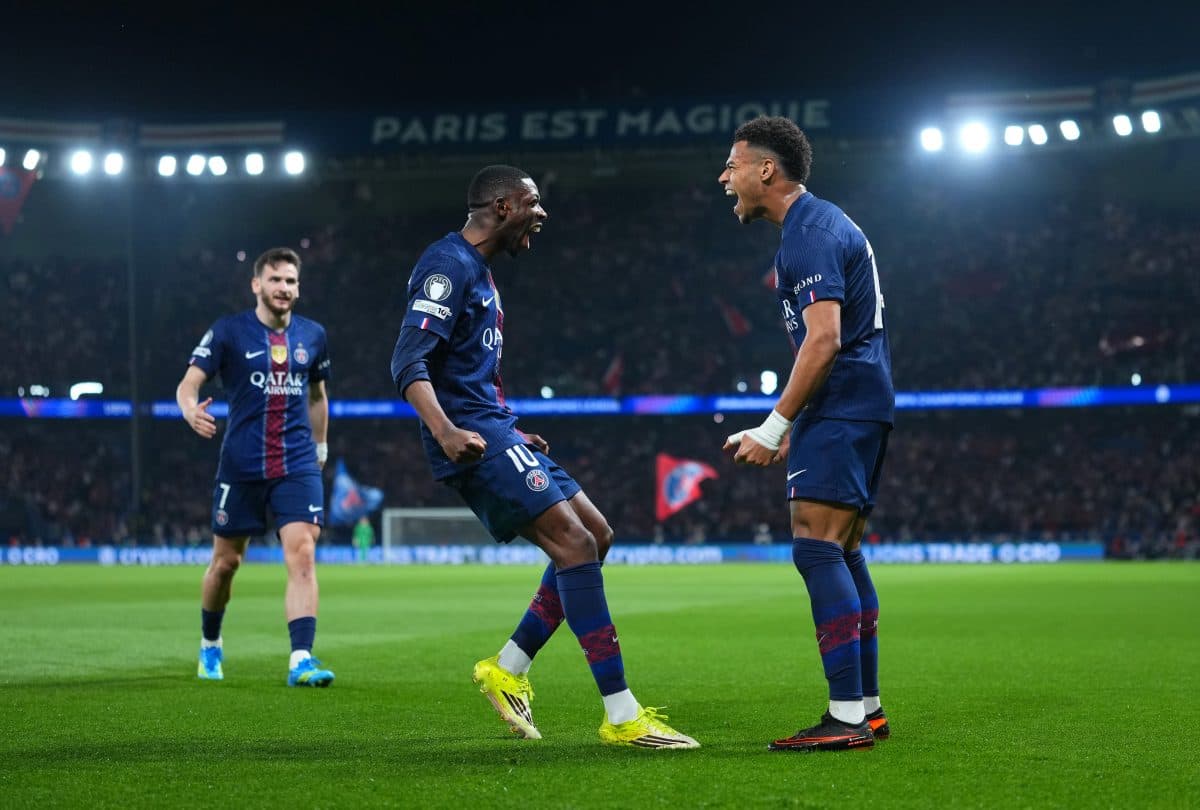
PSG Dominates Liverpool 2–0 in Champions League Quarter-Final
Paris Saint Germain used the Parc des Princes to impose a controlled, territorial dominance in this UEFA Champions League quarter-final, beating Liverpool 2–0 in a match that felt more one-sided than the scoreline. With 74% possession and an 18–3 shot advantage, Enrique Luis’s side translated structural superiority into a steady, suffocating performance rather than a chaotic shootout, taking a 1–0 lead into halftime and closing it out 2–0 in regulation.
Executive Summary
The contest was defined by PSG’s 4-3-3 positional play against Liverpool’s 3-5-2, with the home side repeatedly pinning the visitors into a low block. An early strike from Désiré Doué at 11' set the tone, and Khvicha Kvaratskhelia’s second-half finish on 65' gave numerical expression to a control that was already evident in the data. Liverpool’s attack never registered a shot on target, and their 0.18 xG underlined how effectively PSG denied central access and transition moments. The halftime score of 1–0 reflected not just a lead but a clear territorial and technical grip that only tightened after the interval.
Scoring Sequence & Disciplinary Log
The breakthrough arrived on 11', when D. Doue finished a PSG move with a normal goal, capitalising on the home side’s early pressure and width. There was no assist recorded, but the pattern was emblematic: PSG circulating high, forcing Liverpool’s back three to defend deep and narrow before exploiting space around them.
Liverpool’s attempts to disrupt this rhythm quickly spilled into disciplinary trouble. Joe Gomez was booked on 28' for a foul, a yellow card that reflected Liverpool’s growing reliance on last-ditch interventions as PSG’s forwards received between the lines. Three minutes later, on 31', Alexis Mac Allister also saw yellow for a foul, further constraining Liverpool’s ability to press aggressively in midfield; any further mis-timed challenge risked a red, so their line had to retreat.
The second goal arrived on 65', again for PSG. K. Kvaratskhelia scored a normal goal, this time assisted by J. Neves. The pattern was cleaner and more constructed: Neves stepping into a half-space to receive, then supplying Kvaratskhelia with the kind of service that Liverpool’s own forwards never enjoyed. That strike effectively sealed the tie given Liverpool’s lack of threat.
On 71', a potential turning point for PSG was neutralised when VAR intervened: a penalty initially indicated for an incident involving Warren Zaïre-Emery was cancelled. Instead of adding a third, PSG had to settle for continued control in open play.
Substitution activity began on 78' and was clustered, reflecting both coaches’ attempts to adjust the game state. For PSG, D. Doue (OUT) made way for Lee Kang-In (IN) on 78', a like-for-like change that preserved the 4-3-3 structure but added fresh control and combination play between lines. Liverpool responded with a four-player reshuffle at the same 78' mark: H. Ekitike (OUT) was replaced by C. Gakpo (IN); D. Szoboszlai (OUT) came off for C. Jones (IN); M. Kerkez (OUT) was replaced by A. Robertson (IN); and F. Wirtz (OUT) made way for A. Isak (IN). This was a full-scale attempt by Arne Slot to introduce more direct running and box presence without abandoning the 3-5-2 framework.
PSG’s second substitution came on 88', with O. Dembele (OUT) replaced by L. Hernandez (IN). This was a clear game-state shift: an attacking winger off for a defender, morphing PSG into a more conservative, back-five capable unit to close out the final minutes and manage Liverpool’s late aerial and direct play.
Liverpool’s final change arrived at 90+1', when J. Frimpong (OUT) was replaced by T. Nyoni (IN). This late move added fresh legs in midfield but came too late to alter the attacking trajectory; by then, PSG’s control phases and deeper block were firmly in place. No further cards were issued after the first-half yellows to Gomez and Mac Allister.
Tactical Breakdown & Personnel
PSG’s 4-3-3 was textbook positional play. Matvey Safonov in goal was almost a spectator from a shot-stopping perspective, registering 0 saves; his main function was as an extra outfield player in restarts, helping PSG build calmly against Liverpool’s first line. The centre-back pairing of Marquinhos and Willian Pacho, flanked by Achraf Hakimi and Nuno Mendes, created a flexible back four that often morphed into a 3+2 in build-up: one full-back (often Hakimi) pushed high while the opposite side tucked in, enabling PSG to keep five players behind the ball even as they attacked with numbers.
In midfield, J. Neves, Vitinha, and Warren Zaïre-Emery were the structural core. Neves, in particular, was pivotal: his assist to Kvaratskhelia on 65' encapsulated his role as the deep-lying connector, receiving under pressure and threading vertical passes into advanced zones. Vitinha operated as a shuttler, linking wide triangles, while Zaïre-Emery alternated between supporting the press and making late runs—one of which led to the cancelled penalty on 71'.
The front three of Désiré Doué, Ousmane Dembélé, and Khvicha Kvaratskhelia stretched Liverpool horizontally and vertically. Doué’s goal at 11' came from exploiting the space between Liverpool’s right centre-back and wing-back, while Dembélé’s constant width on the opposite flank forced Miloš Kerkez and the left side of Liverpool’s block to stay pinned. Kvaratskhelia, nominally wide left, often inverted to receive in the half-space, which is precisely how he was able to profit from Neves’s assist.
Liverpool’s 3-5-2 was designed to create a stable back three of Joe Gomez, Virgil van Dijk, and Ibrahima Konaté, with wing-backs Jeremie Frimpong and Miloš Kerkez providing width. In practice, the structure was pushed so deep by PSG’s possession that it often resembled a 5-3-2. The midfield trio of Dominik Szoboszlai, Ryan Gravenberch, and Alexis Mac Allister struggled to get tight enough to PSG’s midfield without leaving massive gaps behind them. The early bookings for Gomez and Mac Allister further reduced Liverpool’s capacity to press with full aggression.
Up front, Florian Wirtz and Hugo Ekitiké were starved. With only 3 total shots and 0 on target, Liverpool’s forwards rarely received in advantageous positions. PSG’s central defenders could step in aggressively, knowing that Liverpool’s wing-backs were too deep to provide immediate support. The second-half substitutions—Gakpo, Jones, Robertson, and Isak—were clearly intended to add verticality and crossing threat, but PSG’s late switch, bringing on L. Hernandez for Dembélé, allowed the hosts to match Liverpool’s width and defend crosses with an extra natural defender.
Goalkeeper Giorgi Mamardashvili was Liverpool’s most statistically active defensive player in the last line, making 4 saves. That number, combined with PSG’s 6 shots on goal, underlines that while the scoreline was only 2–0, the margin could have been wider without his interventions and some wasteful PSG finishing.
The Statistical Verdict
The xG values—2.2 for PSG against 0.18 for Liverpool—perfectly mirror the tactical story. PSG’s high-volume, high-territory approach generated consistent chances, especially from inside the box (12 shots inside the area), while Liverpool were reduced to speculative efforts (only 1 shot inside the box, 2 from outside). The lack of any Liverpool shot on target confirms that their 3-5-2 never translated into meaningful central occupation or successful transitions.
Possession (74% vs 26%) and passing data (744 total passes for PSG at 92% accuracy versus 253 passes at 75% for Liverpool) highlight an Overall Form on the night where PSG were technically and structurally superior. Their Defensive Index was equally strong: conceding just 3 shots and no shots on goal, with Safonov untested in terms of saves. Liverpool, by contrast, had to rely heavily on their goalkeeper and back line; 4 saves from Mamardashvili and 12 fouls committed, including 2 yellow cards (Gomez 28', Mac Allister 31'), indicate a reactive, last-ditch defensive posture.
Set-piece numbers (3 corners for PSG, 1 for Liverpool) further reinforce how rarely Liverpool established sustained pressure in the final third. With no red cards and all disciplinary actions confined to those two first-half yellows, the match never descended into chaos. Instead, it remained a controlled exhibition of PSG’s capacity to dominate territory, tempo, and chance quality in a high-stakes Champions League quarter-final.