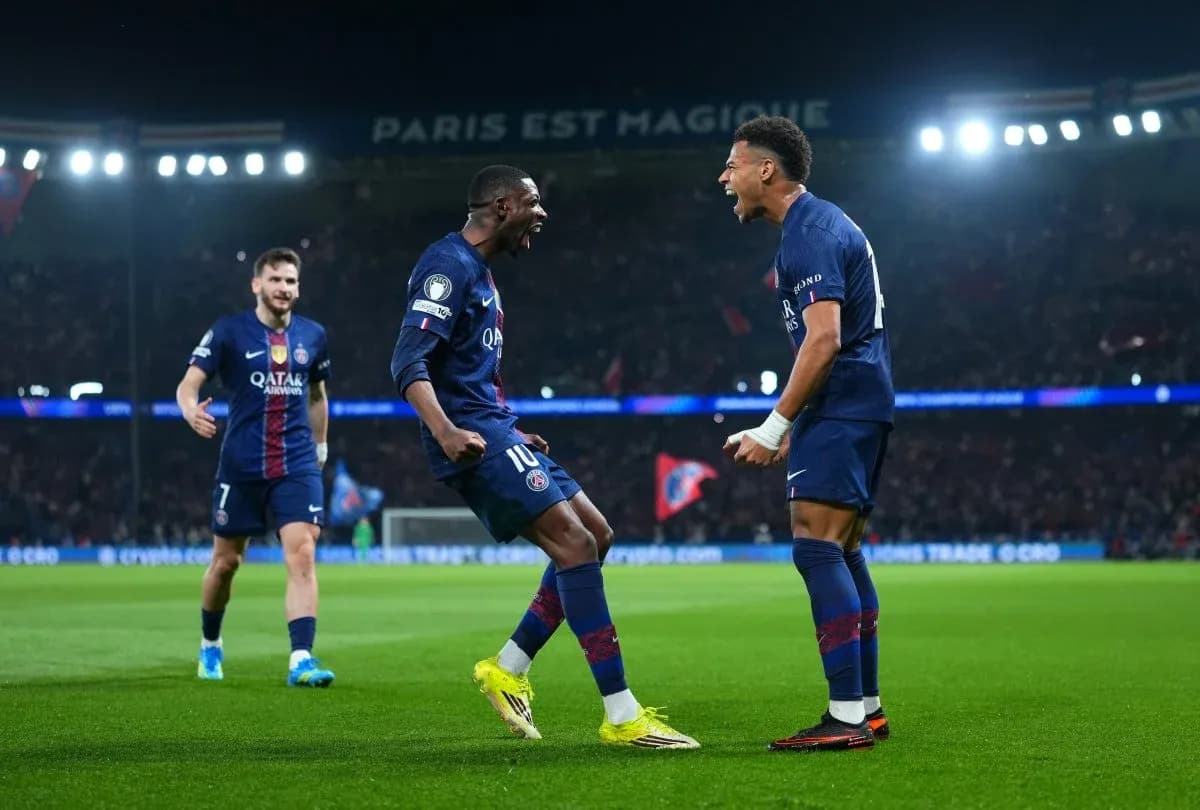
Paris Saint Germain Dominates Liverpool in Champions League Quarter-finals
Paris Saint Germain seized control of their UEFA Champions League Quarter-finals tie with a composed 2–0 victory over Liverpool at Parc des Princes, delivering a statement performance built on dominance of the ball and ruthless moments in the final third.
Enrique Luis’ side, coming from a mid-table position in the overall Champions League standings (11th) but firmly in the European qualification battle, outclassed a Liverpool team that arrived in Paris ranked 3rd and very much part of the title race and Champions League spots battle. On the night, though, the Premier League side were suffocated: they failed to register a single shot on target and were pinned back for long spells by PSG’s relentless possession game.
The tone was set early. With just 11 minutes played, Paris Saint Germain struck the opener. D. Doue found space and finished clinically to make it 1–0, capitalising on Liverpool’s hesitancy at the back. It was a goal that rewarded PSG’s early pressure and immediately tilted the tie in their favour.
Liverpool tried to respond, but their attempts to transition through midfield repeatedly broke down against the trio of João Neves, Vitinha and Warren Zaïre-Emery, who controlled the rhythm. Frustration began to creep into Arne Slot’s side, and it showed in their discipline.
In the 28th minute, J. Gomez went into the book for tripping, a necessary foul as PSG broke into space. Just three minutes later, at 31 minutes, A. Mac Allister was also shown a yellow card for another tripping offence, emblematic of Liverpool’s struggles to live with the speed and technical sharpness of the hosts between the lines.
PSG went into half-time 1–0 up, having monopolised the ball and territory. By the end of the night they would finish with 74% possession, 744 total passes and an impressive 92% passing accuracy, underlining how completely they controlled proceedings. Their 18 total shots, including 6 on goal and 6 blocked, reflected a steady stream of pressure rather than a chaotic onslaught, with Liverpool clinging on more in structure than in genuine defensive command.
The second half followed a similar pattern, with PSG probing patiently and Liverpool struggling to turn rare recoveries into meaningful attacks. With their expected_goals figure at just 0.18 and only 3 total shots (none on target), the visitors never seriously threatened Matvey Safonov’s goal; the PSG goalkeeper finished the match without a single save to make.
The decisive second goal arrived in the 65th minute. After another spell of controlled buildup, K. Kvaratskhelia scored, assisted by J. Neves, doubling the advantage and giving numerical expression to PSG’s superiority. The move encapsulated the home side’s evening: patient circulation, a sharp vertical pass, and a cold-blooded finish.
At 2–0, Slot moved to reshape his team, but it was Enrique Luis who made the first change. In the 78th minute, Lee Kang-In came on for D. Doue, the goalscorer receiving a deserved ovation after a lively display on the right.
Liverpool reacted with a sweeping quadruple substitution at the same 78-minute mark in an attempt to salvage momentum. A. Robertson came on for M. Kerkez, adding fresh legs and crossing ability on the left. Moments later in the same substitution window, C. Gakpo came on for F. Wirtz, A. Isak came on for H. Ekitike, and C. Jones came on for D. Szoboszlai, as Slot injected energy and attacking options across the front and midfield lines.
Yet the pattern of play barely shifted. PSG’s structure without the ball remained compact, and with it they continued to dictate tempo, their expected_goals tally closing at 2.2, perfectly in line with the 2–0 scoreline. Liverpool’s goalkeeper Giorgi Mamardashvili, by contrast, had to be alert, making 4 saves to prevent an even heavier defeat; his work aligned with PSG’s 6 shots on goal and highlighted how much more dangerous the hosts were.
Enrique Luis made another late adjustment in the 88th minute, when L. Hernandez came on for O. Dembele, adding defensive solidity on the flank to see out the game and protect the clean sheet.
Deep into stoppage time, Liverpool made one final change. At 90+1 minutes, T. Nyoni came on for J. Frimpong, a late roll of the dice that had no time to influence the outcome.
Statistically and tactically, this was a commanding display from Paris Saint Germain. Their 6 blocked shots underscored the aggression and organisation of their defending, while Liverpool managed just 2 blocked efforts at the other end. With the win, PSG’s overall Champions League record improves from 21 goals for and 11 against to 23 scored and 11 conceded, reinforcing their attacking reputation while tightening up defensively. Liverpool, meanwhile, move from 20 goals for and 8 against to 20 scored and 10 conceded, a reminder that even contenders in the title race can be made to look ordinary on European nights.
As the Quarter-finals tie moves forward, PSG carry both a two-goal cushion and the psychological edge, having outplayed one of Europe’s heavyweights in almost every department at Parc des Princes.