Arsenal Dominates Sporting CP in Champions League Quarter-Final
Under the lights of Estádio José Alvalade, this quarter-final felt like a clash of footballing ideologies as much as a straight knockout tie: Sporting CP’s expansive, front-foot 4-2-3-1 against an Arsenal side that has quietly become the most ruthless machine in this season’s Champions League.
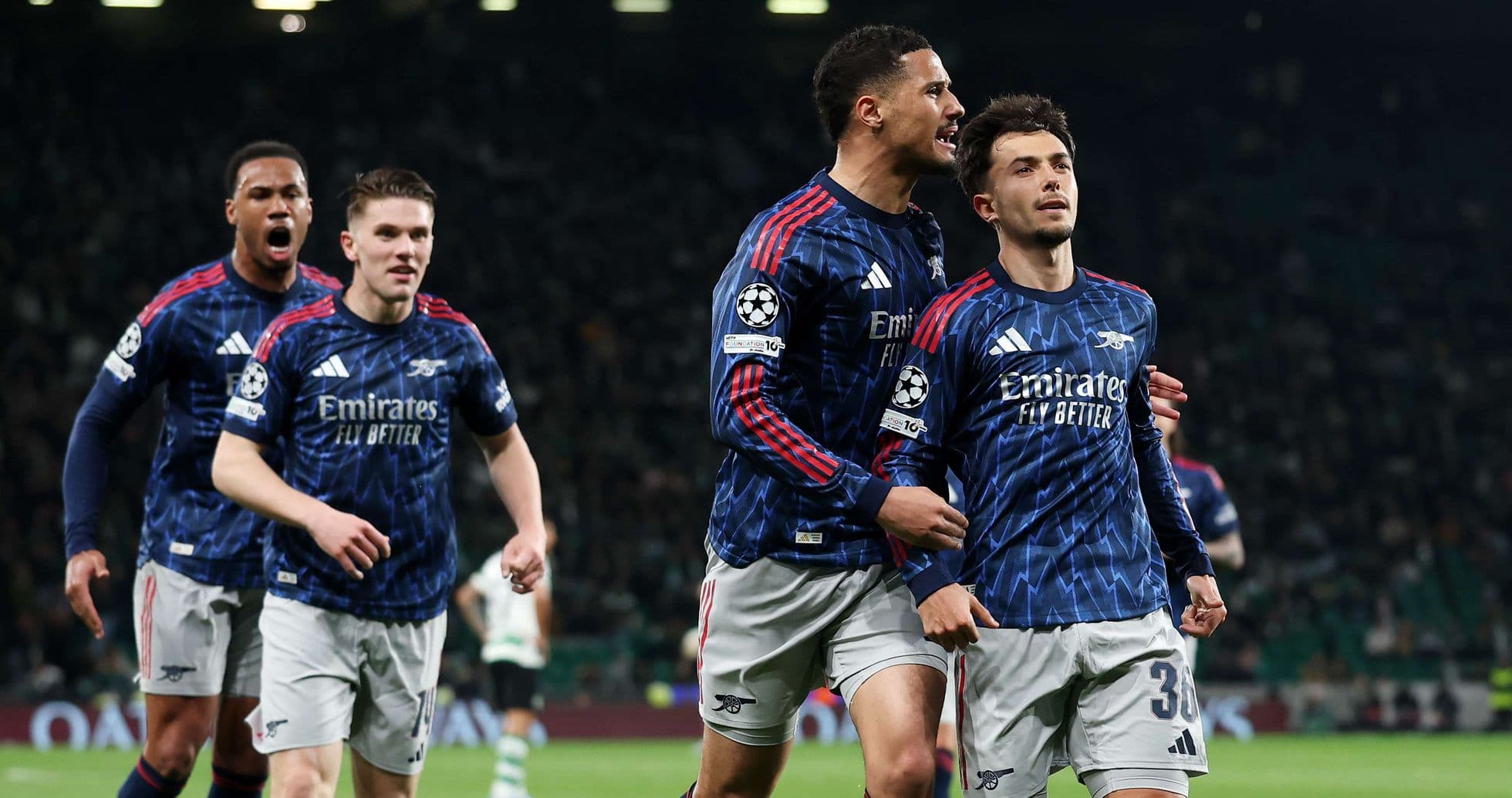
Arsenal arrived in Lisbon as the competition’s statistical benchmark. Top of the standings with 24 points from eight games, they had won every match to date, scoring 23 and conceding just 4. Across the broader campaign, that dominance only hardens: 10 wins and a draw from 11, 27 goals scored and just 5 against, with 7 clean sheets split between home and away. They are a 2.5 goals-per-game juggernaut that concedes only 0.5 on average, and they underlined that superiority with a controlled 1-0 victory here.
Sporting, for their part, are no soft touch. Seventh in the overall Champions League table with 16 points from eight games (5 wins, 1 draw, 2 defeats), they had been perfect at home in the group and knockout phase to date: four wins from four, 11 goals scored and only 3 conceded. Their season-long home profile is similar: 6 home fixtures, 5 wins, 1 defeat, 16 goals for and 4 against, an average of 2.7 scored and just 0.7 conceded in Lisbon. This was not a side accustomed to being shut out on their own pitch.
That context makes Arsenal’s 1-0 away win feel even more significant. They walked into one of Europe’s more hostile, productive home environments and dismantled Sporting’s attacking rhythm without ever needing to turn the night into a shootout.
Rui Borges stayed loyal to his 4-2-3-1, but it was a system forced into improvisation. The absence list was brutal in key zones. M. Hjulmand, ranked third in the competition for yellow cards and a central figure in Sporting’s midfield structure, was suspended for accumulation. His statistical footprint this season has been enormous: 598 passes at 92% accuracy, 18 tackles, 5 blocked opponent attempts and 17 interceptions. He is the classic enforcer-pivot, committing 12 fouls but also drawing 21, a player who dictates tempo and breaks up play. Removing that presence against Arsenal’s technically refined midfield was always going to create a tactical void.
On top of that, Borges was without F. Ioannidis (knee), Luis Guilherme (ankle), G. Quenda (foot) and N. Santos (injury). It stripped Sporting of variety between the lines and options to change the game from the bench. The coach turned to Hidemasa Morita and J. Simoes as the double pivot, with G. Catamo, Trincao and P. Goncalves supporting L. Suarez. The structure remained aggressive, but the bite and balance that Hjulmand brings in transition simply were not there.
Arsenal had their own absentees, but their depth insulated them. E. Eze, P. Hincapie, M. Merino, B. Saka and J. Timber all missed out, taking away one of Mikel Arteta’s most explosive wide threats and a left-sided centre-back option. Yet the visitors still rolled out a starting XI that looked like a Champions League favourite: David Raya behind a back four of Ben White, William Saliba, Gabriel and Riccardo Calafiori; a midfield trio of Martin Ødegaard, Martín Zubimendi and Declan Rice; and a front three of Noni Madueke, Viktor Gyökeres and Leandro Trossard.
If this tie had a headline duel, it was “the Hunter vs. the Shield” in both directions. Arsenal’s attack, averaging 2.2 goals per game away from home in the competition, ran into a Sporting side that, across the Champions League campaign, had conceded just 4 at home and kept 2 home clean sheets. Conversely, Sporting’s home scoring rate of 2.7 per game faced an Arsenal defence that had allowed only 2 away goals all tournament and collected 4 away clean sheets. Something had to give; it turned out to be Sporting’s attacking record.
The key to Arsenal’s control lay in the engine room duel. In Hjulmand’s absence, Morita and Simoes were asked to both construct and contain. Opposite them, Rice and Zubimendi formed a double barrier in and out of possession. Zubimendi’s season numbers tell the story of his role: 519 passes at 87% accuracy, 14 key passes, 8 tackles, 4 blocked opponent attempts and 8 interceptions, plus 4 yellow cards that underline his willingness to live on the disciplinary edge. Here, his positioning and Rice’s physical coverage repeatedly neutralized Sporting’s attempts to play through the middle, forcing them wide where White and Calafiori could dictate the duels.
Without Hjulmand’s vertical passing and capacity to win second balls, Sporting struggled to sustain pressure. Their season-long defensive profile already hinted at a split personality: just 4 goals conceded at home but 11 away, with an overall average of 1.4 goals against per match. That reliance on home momentum was exposed by an Arsenal side that does not allow chaos. The visitors’ defensive line, with Saliba and Gabriel at its core, has been the most miserly in the competition so far, and they added another away clean sheet to that record in Lisbon.
Discipline was another quiet hinge. Sporting’s yellow cards this season tend to cluster after the break, with 21.74% between 61-75 minutes and 17.39% in both the 31-45 and 46-60 bands, plus another 17.39% between 91-105. Arsenal’s own bookings spike even more sharply in the 61-75 window, where 33.33% of their yellows arrive, followed by 19.05% from 76-90 and 14.29% in added time. That shared tendency towards second-half fouls made the middle of the second period the danger zone: the phase where one mistimed challenge could tilt the tie. On this night, neither side tipped into red, but both midfields had to live with the constant threat of a suspension-shaping card.
From the bench, the contrast in potential game-changers was stark. Sporting could call on D. Braganca’s passing, S. Faye, R. Nel and F. Goncalves in attack, plus defensive reshuffles through E. Quaresma, R. Mangas, G. Vagiannidis and Z. Debast. But the injuries had already stripped out some of their most natural one-v-one breakers. Arsenal, by contrast, could unleash Gabriel Jesus, Kai Havertz and Gabriel Martinelli. Martinelli, in particular, loomed as the ultimate late weapon: 6 Champions League goals so far, with 2 assists, 16 shots (8 on target), 15 key passes and 16 successful dribbles from 31 attempts. His 7.31 rating and flawless penalty record to date underline how often he shifts knockout ties when legs tire and spaces open.
In the end, Arsenal did not need a chaotic flurry. They dictated tempo, exploited Sporting’s midfield void and leaned on the solidity that has carried them to the top of Europe’s statistical charts. Sporting’s home aura, built on 11 goals scored and only 3 conceded in the earlier phase, met the competition’s most complete away side and blinked.
The statistical prognosis from here is clear. Arsenal’s blend of defensive parsimony, control in the engine room and bench firepower gives them a decisive edge in a two-legged context. Sporting’s path back into the tie will require them to rediscover their home attacking punch while surviving Arsenal’s 2.2-goals-per-game away threat. Unless Borges can reconstruct a midfield capable of matching Rice and Zubimendi’s grip, and unless his wide players can finally drag Arsenal’s back four into uncomfortable territory, this quarter-final will continue to tilt towards the Premier League leaders who have, so far this campaign, looked built to dictate and not merely survive in Europe’s sharpest moments.