Portland Timbers II vs Ventura County: A Dramatic Penalty Shootout
Providence Park under the lights, 120 minutes in the legs and a penalty shootout to separate them: Portland Timbers II and Ventura County delivered the kind of Group Stage drama that felt far closer to a knockout tie. The 3–3 draw in regular time, followed by a 7–6 Ventura County win on penalties, was a meeting of contrasting seasonal identities – Portland’s volatility against Ventura’s ruthless, front-foot efficiency – and the squads on show told the tactical story as much as the scoreline.
Heading into this game, Portland sat 4th in the Pacific Division on 14 points, their goal difference locked at 0 after scoring 11 and conceding 11 overall. The underlying numbers painted them as a side permanently on the edge: at home they had averaged 1.6 goals for and 1.6 goals against, with just 1 clean sheet and 1 match where they failed to score. Ventura arrived as Pacific Division leaders on 19 points, with a goal difference of 3 built from 19 goals for and 16 against overall. On their travels they were formidable: 5 away wins from 6, scoring 12 and conceding only 7, an away average of 2.0 goals for and 1.2 against.
Jack Cassidy’s Portland selection leaned into youthful energy and fluidity rather than rigid structure. With no official formation listed, the pattern of names suggested a flexible, press-heavy side. H. Sulte anchored them in goal, with a defensive platform likely built around C. Ferguson, A. Bamford and N. Lund. The width and progression lanes looked to come from C. Ondo and L. Fernandez-Kim, while E. Izoita and V. Enriquez offered connective tissue between lines. In the final third, the presence of C. Griffith – also Portland’s leading figure across the league’s top-scorer, assist and card charts – alongside D. Cervantes and N. Santos gave Cassidy multiple profiles: a forward who can drop in, a runner beyond, and a link player who can drag defenders into awkward zones.
On the bench, the substitutes list underlined Portland’s intent to change tempo rather than shape. S. Joseph and C. Cruthers offered fresh legs in wide or advanced roles, while B. Barjolo and J. Izoita added technical options between the lines. M. Kissel and H. Mueller gave Cassidy late-game flexibility, either to chase or to protect a result. The absence of any recorded injuries or suspensions meant this was close to a full-strength, developmental group: raw, but dangerous.
Ventura County, by contrast, arrived with the clarity of a team that knows exactly what it is. Their season form – 7 wins and 4 defeats from 11, no draws at all – framed them as a high-variance, high-reward side. Their starting XI reflected that: B. Scott in goal behind a back line likely marshalled by M. Vanney and E. Martinez, with S. Hernandez and Pepe offering defensive bite and transitional speed. In midfield, B. Phan and A. Vilamitjana looked primed to dictate tempo and trigger Ventura’s trademark vertical surges, while the attacking band of V. Garcia, D. Vanney, E. Preston and J. Placias promised constant movement and interchanging positions.
Off the bench, Ventura had a different kind of weaponry. J. Rhodes and O. Aina offered directness and fresh pressing energy, while C. Gozdieski and G. Arnold could stabilise the middle third. I. Luna provided a wildcard attacking option, ideal for exploiting tired legs late in normal time or deep into extra minutes.
The disciplinary and psychological undercurrents were clear even before kickoff. Portland’s yellow-card distribution showed a team that tends to grow more combative as the game wears on: 26.32% of their cautions arriving between 61–75 minutes and 21.05% between 76–90, with another 10.53% in the 91–105 window. That late-game aggression dovetailed with their penalty profile – 9 penalties overall, 8 scored and 1 missed – a reminder that while they are confident from the spot, they are not perfect. Ventura, by contrast, had a cleaner penalty record this season: 1 taken, 1 scored, 0 missed, a small sample but emblematic of their clinical edge.
Card timing for Ventura told a different story: 31.25% of their yellows in each of the 46–60, 61–75 and 76–90 minute ranges. They tend to push the line repeatedly through the heart of the second half, a sign of a side that keeps the intensity high and is willing to accept bookings as the cost of protecting leads or disrupting opposition rhythm.
From a “Hunter vs Shield” perspective, the matchup tilted towards Ventura’s attack. Overall, they had averaged 2.0 goals per game, both home and away, with 22 goals in 11 matches. Portland, by comparison, had conceded 13 overall at an average of 1.6 per game, including 1.6 at home. The visitors’ front line of V. Garcia, D. Vanney, E. Preston and J. Placias therefore faced a defence that can be opened up if pressed relentlessly and forced into transitions.
Yet Portland’s own offensive profile meant Ventura’s back line could not relax. With 12 goals in 8 fixtures overall, Portland had averaged 1.5 goals per match, including 1.6 at home. They had also shown an ability to generate and convert penalties, and their late-game card spike suggested a team that tends to play on emotional surges – exactly the kind of mentality that can fuel comebacks in front of home support.
In the “Engine Room” battle, the narrative revolved around E. Izoita and V. Enriquez against B. Phan and A. Vilamitjana. Portland’s midfield needed to disrupt Ventura’s rhythm without surrendering control, especially given Ventura’s refusal to settle for draws. The visitors’ season-long absence of stalemates meant that once the game opened up, it was unlikely to settle; every transition had the potential to tilt the contest.
Statistically, the prognosis before a ball was kicked leaned slightly towards Ventura County. Their away record – 5 wins from 6, with 12 scored and 7 conceded – combined with a higher scoring average and more clean sheets overall (4 to Portland’s 3) suggested a side more comfortable dictating games on their travels. Portland’s even goal difference and tendency to concede as often as they score pointed to volatility.
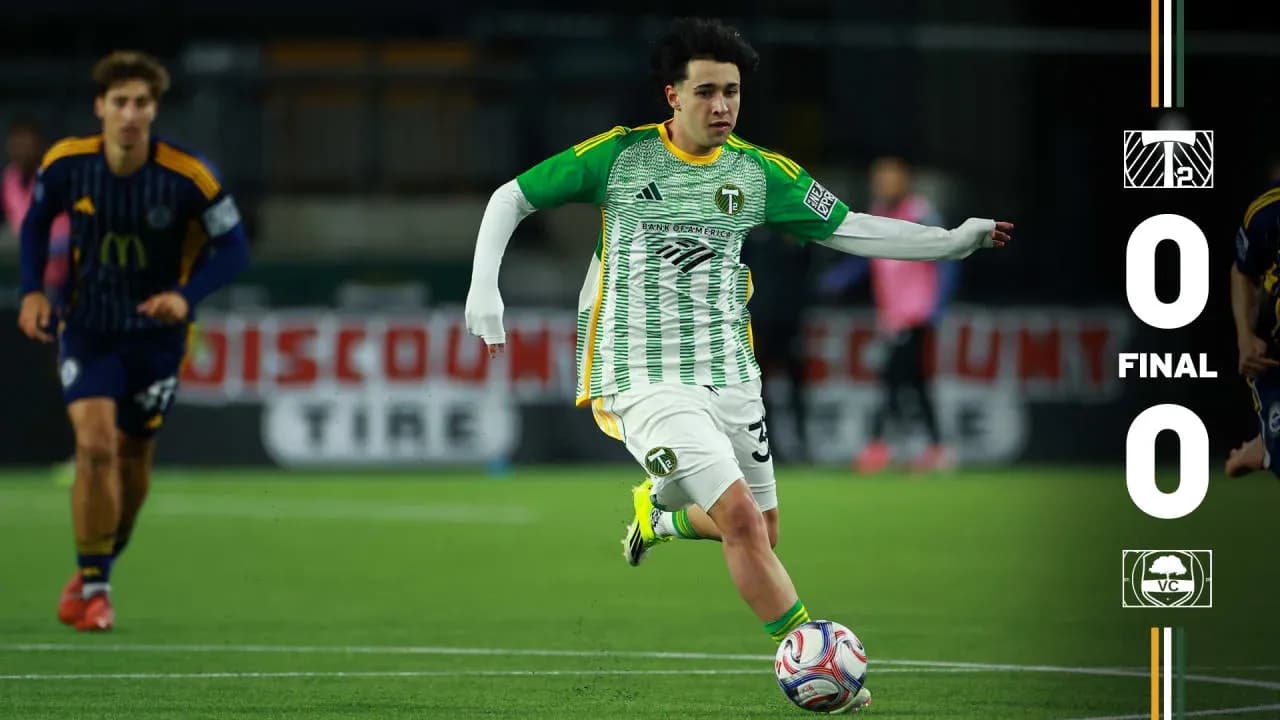
What unfolded – a 3–3 draw over 120 minutes and a 7–6 penalty defeat for Portland – was almost a perfect expression of those numbers. Ventura’s attacking edge found goals; Portland’s emotional, high-variance identity found a way to stay alive. In the end, the finer margins of penalty composure decided it, Ventura’s season-long clinical streak from the spot holding, Portland’s earlier reminder of a missed penalty in their campaign echoing faintly in the background.
Following this result, both squads leave Providence Park with their identities reinforced. Ventura County remain the ruthless travellers, comfortable in chaos and decisive from 12 yards. Portland Timbers II, even in defeat, showed a squad built for drama: young, aggressive, flawed – and capable of dragging any opponent into a long, exhausting night.