LAFC II's Statement Win Against Real Monarchs: A Clash of Styles
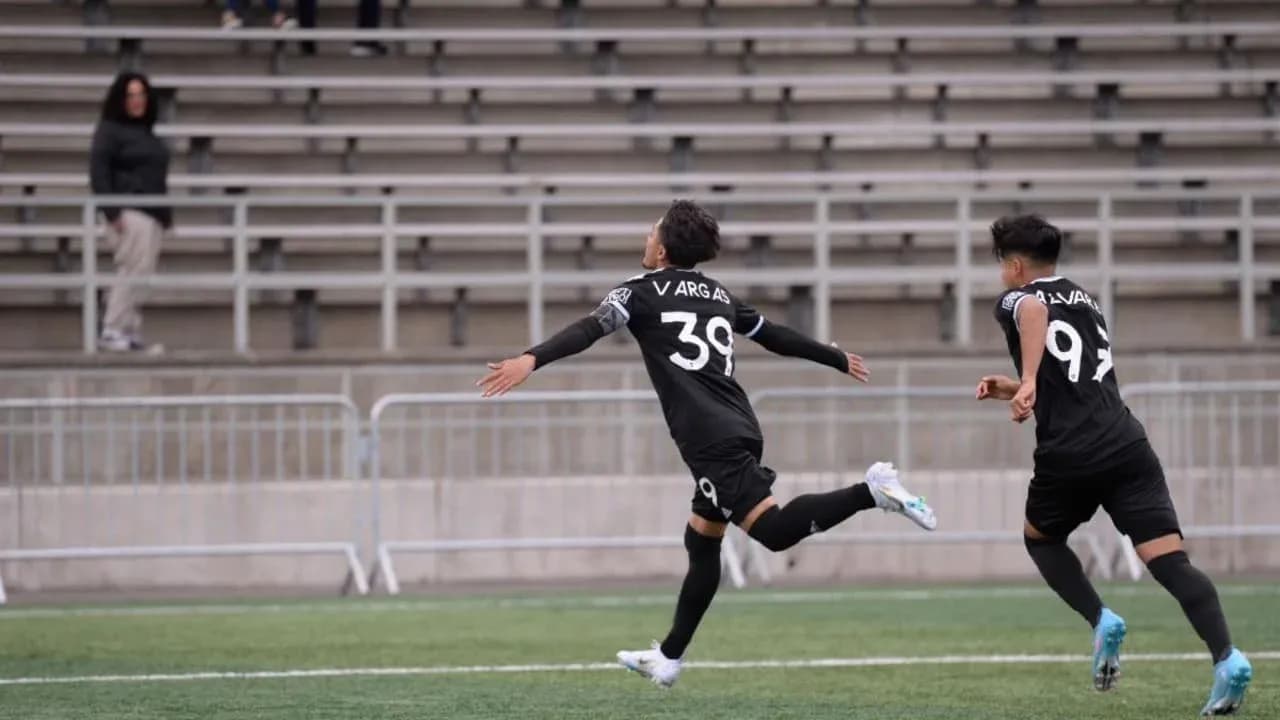
Under the lights at Titan Stadium, Los Angeles FC II’s 3–1 win over Real Monarchs felt less like a routine group-stage result and more like a statement about identity. Heading into this game, both sides were mirror images in one key respect: volatile, aggressive, and utterly uninterested in draws. LAFC II had played 10 league matches without a single stalemate, winning 5 and losing 5. Real Monarchs arrived with 4 wins and 4 defeats from 8. Someone was always going to bend; someone was always going to break.
For LAFC II, the broader season picture has been one of extremes. Overall they had scored 19 and conceded 22, a goal difference of -3, yet still sat 3rd in the Pacific Division and 6th in the Eastern Conference table with 16 points. At home they had been efficient and sharp: 3 wins from 4, 7 goals for and only 4 against. On their travels, Real Monarchs were less settled but dangerous, with 1 away win from 3 and a total of 6 goals scored and 5 conceded. This was never going to be a cautious evening.
The seasonal DNA of LAFC II is written in their timing. Heading into this game, they averaged 1.8 goals at home and 1.9 overall, with a pronounced attacking surge between 16–30 minutes, when 31.58% of their goals arrived. That middle of the first half has been their ambush window. They also spread threat across the second half, with 15.79% of their goals in each of the 46–60, 61–75, and 76–90 ranges. The flip side is a brittle defensive core: they conceded 2.2 goals per match overall, with a worrying 26.32% of those goals coming in the opening 15 minutes and another 21.05% in the 76–90 range. They start open, they finish open, and they live with the chaos.
Against that backdrop, the 2–1 half-time scoreline to LAFC II and the eventual 3–1 full-time result fit the pattern: a game tilted toward early and late drama, and a home side that trusted its firepower to outpace its flaws.
Tactical Overview
Tactically, both lineups told their own stories. LAFC II’s starting XI was a youthful, attacking group built around fluidity rather than rigid positional roles. C. Carter anchored the back line, flanked by the likes of J. Santiago and K. Nielsen, while E. Diaz and E. Ponciano formed the core of a defensive unit that has been asked to play on the front foot despite the high goals-against numbers. Ahead of them, J. Terry and S. Nava offered the connective tissue in midfield, bridging transitions to a forward line that included M. Evans, J. Machuca, M. Aiyenero, and T. Mihalic.
This is not a side that sits deep and waits. Their season-long minute distribution shows a team that wants to step on the game early and then keep creating waves. The lack of any clean sheet—home or away—heading into this fixture underlines that they accept risk as the price of expression.
Real Monarchs, under Mark Lowry, brought a different kind of volatility. Their overall profile—15 goals for and 15 against, averaging 1.9 scored and 1.9 conceded per match—suggests a more balanced chaos. They can score in bursts, as evidenced by their biggest away win of 5–0, but they are equally capable of collapsing, with a 3–1 away defeat already on the books. Clean sheets are rare (just 1 overall), and they had failed to score in 3 of 8 matches.
Their XI at Titan Stadium blended technical profiles and industrious runners. M. Kerkvliet and V. Parker were key defensive pillars, with G. Villa and J. J. Arias supporting from the back line. In midfield, G. Calderon, R. Mesalles, and F. Ewald were tasked with both shielding and progressing, while the attacking responsibility fell heavily on Lineker Rodrigues, I. Amparo, L. Moisa, and A. Riquelme. It is a group built for transitions: win the ball, break quickly, and trust their forwards to find moments of incision.
Yet structurally, Real Monarchs came into the match with their own disciplinary shadow. Their yellow card distribution shows a team that often spikes in aggression after the interval: 26.32% of their yellows arrive between 46–60 minutes, with another 21.05% in the 76–90 range and 10.53% even stretching into 91–105. They also had a red card on their record in the 31–45 range. In other words, their second halves tend to be stretched, heated, and on the disciplinary edge.
Matchup Analysis
The “Hunter vs Shield” matchup was therefore less about individual stars—no top-scorer data was available—and more about systems. LAFC II’s attack, which peaks in the 16–30 window and maintains a steady threat across the second half, confronted a Real Monarchs defense that concedes 1.9 goals per match overall and has already suffered heavy defeats. Conversely, Real Monarchs’ 2.0 away goals average ran into a home defense that had conceded only 1.0 per game at Titan Stadium but 3.0 on their travels, underlining just how different LAFC II look in their own arena.
In the “Engine Room,” the duel between LAFC II’s midfield core—players like J. Terry and S. Nava—and the Monarchs’ trio of Calderon, Mesalles, and Ewald was decisive. LAFC II’s season-long card profile shows 27.78% of their yellows between 46–60 minutes and another 22.22% in the opening 15, pointing to a team that tackles aggressively at the start of each half. That combative edge, combined with their willingness to accept a red card in the 46–60 window earlier this season, set the tone for a midfield battle that was always going to be on the limit.
From the bench, both coaches had tools to alter the rhythm. LAFC II could inject fresh legs and different profiles through C. Diaz, B. Moyado, D. Guerra, and S. Kaplan, while C. Kosakoff, E. Rodriguez, T. Babineau, and L. Goodman offered further flexibility in the attacking and defensive lines. Real Monarchs had their own response mechanisms in B. Ewing, L. Rivera, L. O’Gara, A. Uriostegui, C. Duke, J. Ottley, and D. Kropp, but the structural trends of their season—no away clean sheet beyond a single shutout, and a tendency to concede in multi-goal defeats—suggested that chasing a game at Titan Stadium would be a perilous task.
Statistical Insights
Statistically, the prognosis heading into this fixture always leaned toward goals. LAFC II’s under/over profile showed 7 of 10 matches going over 1.5 goals and 3 over 2.5, with both teams scoring frequently. They had never kept a clean sheet and had failed to score only once. Real Monarchs, with 4 wins, 4 losses, and a single clean sheet, mirrored that volatility. Add in their perfect penalty record (1 scored from 1, 100.00% conversion, 0 missed) and you get a team that can punish defensive lapses ruthlessly when given the chance.
The 3–1 final scoreline, then, feels like the logical convergence of these patterns. LAFC II’s home attacking average, their early and late scoring surges, and their willingness to trade blows combined with Real Monarchs’ fragile defensive record and combustible card profile. Following this result, LAFC II reinforce their identity as one of MLS Next Pro’s most entertaining and high-variance sides: relentless going forward, vulnerable at the back, but increasingly ruthless at Titan Stadium. Real Monarchs, for all their attacking promise, leave with a familiar story—dangerous in flashes, but still searching for a defensive structure that can withstand nights like this.