Portland Thorns W vs Utah Royals W: A Tactical 2–2 Draw Analysis
Under the lights at Providence Park, a 2–2 draw between Portland Thorns W and Utah Royals W felt less like a stalemate and more like a statement about where these two contenders stand in the NWSL Women season. Following this result, second versus third in the table looked every bit like a playoff preview: Utah carrying an overall goal difference of +8 (18 scored, 10 conceded), Portland at +6 overall (20 scored, 14 conceded), both on 24 points and both playing a brand of football that refuses to blink.
Portland’s seasonal identity is clear. Heading into this game they had been ruthless at home: unbeaten across 6 matches, with 4 wins, 2 draws, and a home defensive record of just 2 goals conceded. Their home attack averaged 1.7 goals per game, underpinned by a tactical spine that Robert Vilahamn again trusted: the familiar 4‑2‑3‑1. Utah, meanwhile, arrived as one of the league’s most balanced sides. On their travels they had lost only once in 7, with 3 away wins and 3 draws, scoring 10 and conceding 6 away. Their overall defensive record – just 10 goals conceded in 12 – made them the most stubborn visiting side Portland have faced all season.
The lineups told a story of two teams mirroring each other structurally but not in intention. Portland’s back four of R. Reyes, I. Obaze, S. Hiatt and M. Vignola set up behind the double pivot of J. Fleming and C. Bogere. Ahead of them, a creative band of three – M. Muller, O. Moultrie and P. Tordin – floated behind lone forward S. Wilson. Utah matched the 4‑2‑3‑1 shape: M. Moriya, K. Del Fava, K. Riehl and N. Rabano shielded goalkeeper M. McGlynn, with N. Miura and A. Tejada Jimenez anchoring midfield. Higher up, C. Delzer, Minami Tanaka and C. Lacasse supported K. Palacios.
If there were tactical voids, they came not from absentees – no official missing list was registered – but from the disciplinary shadows both sides brought into this fixture. Portland’s season-long card profile shows a clear late‑game edge: 25.00% of their yellow cards arrive between 61–75 minutes and another 25.00% between 76–90, hinting at a side that pushes the physical and emotional line as matches tighten. Red cards have split between the opening 0–15 and the 46–60 ranges, a reminder that their aggression can spill over both early and just after the interval.
Individually, that edge has faces. C. Bogere, starting at the base of midfield, came in with 2 yellows and a yellow‑red this season, her 35 tackles and 12 interceptions speaking to a destroyer who lives on the border of control. Out wide, R. Reyes carries a straight red in her record, yet also 6 blocked shots and 11 interceptions – a defender who throws herself into the line of fire. For Utah, the disciplinary heartbeat is A. Tejada Jimenez: 4 yellow cards, 19 fouls committed, and a central role as one of the two holding midfielders. C. Lacasse and D. Pierre‑Louis add more bite, with 3 yellows each. Utah’s team profile shows a different timing: 27.27% of their yellows between 46–60 minutes and another 27.27% between 61–75, with a solitary red card arriving in the 76–90 window. They grow combative as the second half unfolds, often walking a tightrope in the closing stretch.
Within that framework, the key matchups defined both the 2–2 scoreline and the tactical preview of how these sides will collide in future high‑stakes games.
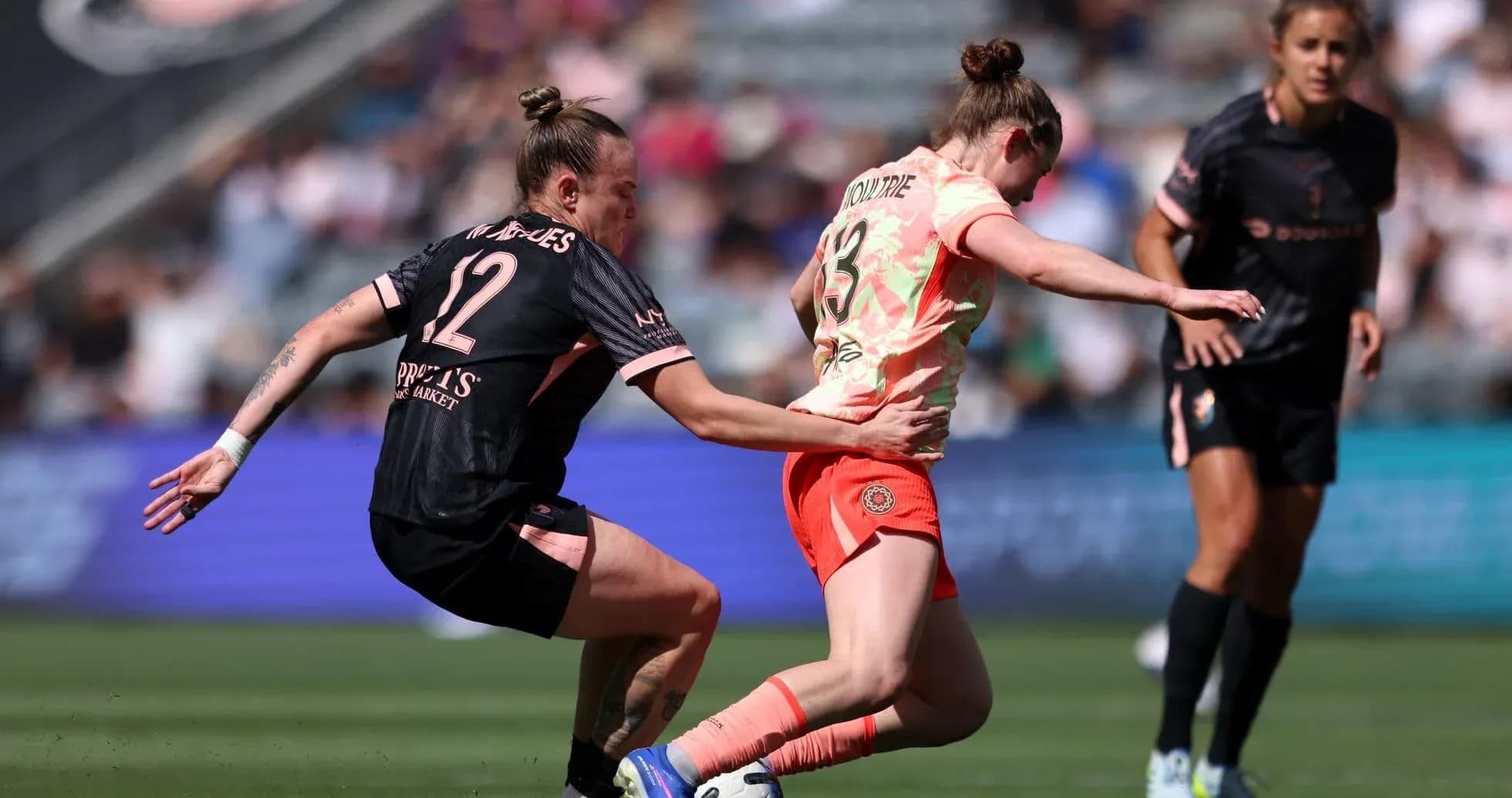
The “Hunter vs Shield” duel was embodied by O. Moultrie and C. Lacasse against two of the league’s stingiest defensive units. Moultrie entered as one of the league’s most complete attackers: 5 goals and 4 assists in 11 appearances, 15 shots with 10 on target, and 24 key passes from 301 total passes at 77% accuracy. She is not just a finisher but a tempo‑setter between the lines, and her role in the left half‑space, drifting inside from the nominal No. 10 corridor, forced Utah’s double pivot to compress centrally. That, in turn, opened lanes for P. Tordin on the right and M. Muller to arrive late.
Utah’s shield against that creativity has been collective rather than star‑driven. Conceding only 0.8 goals per game overall, and 0.9 on their travels, they rely on compact lines and disciplined timing from the likes of K. Del Fava and K. Riehl, while Tejada and Miura screen aggressively. Yet Lacasse, nominally part of the front four, is as important to their defensive press as she is to their attack. Her 26 tackles, 9 interceptions and 1 blocked shot this season make her a two‑way winger, tasked with pinning back Reyes and punishing any overzealous Portland full‑back runs.
On the other side, Utah’s own “Hunter” tandem – Lacasse and Minami Tanaka – probed Portland’s one real structural vulnerability: the gap between their adventurous full‑backs and a back line that has looked far less secure away (12 conceded on their travels) than at home (just 2 conceded). Tanaka’s 4 assists and 14 shots on target from 14 attempts, plus 14 key passes at 72% accuracy, make her the creative nerve of Utah’s attack. Operating as the central playmaker, she drifted into pockets between Fleming and Bogere, trying to draw Obaze and Hiatt out of shape and create channels for Palacios and Lacasse to attack.
The “Engine Room” battle, then, was Fleming and Bogere versus Miura and Tejada. Fleming’s calm distribution and Bogere’s ball‑winning had to cope with the constant harassment of Utah’s midfield, where Tejada’s 21 tackles and 11 interceptions are paired with a willingness to step out aggressively. The risk for Utah is obvious: that front‑foot defending, combined with their late‑game yellow and red card spikes, can leave them exposed to runners like Tordin and substitute threat R. Turner, whose 4 goals and 59 duels won mark her as one of the league’s most dangerous impact players off the bench.
From a statistical prognosis standpoint, this 2–2 felt aligned with the underlying numbers. Both teams came in averaging 1.5 goals per game overall; Portland at home and Utah away both sit at 1.7 and 1.4 goals for respectively, while conceding 0.3 at home (Portland) and 0.9 away (Utah). That convergence points to tight xG battles rather than blowouts. Portland’s 7 clean sheets overall, and Utah’s 5, underline that neither side typically lives in chaos.
Yet the draw also hinted at how thin the margins will be when these two inevitably meet with knockout stakes. Portland’s penalty record – 2 taken, 2 scored, 100.00% – suggests they are ruthless from the spot, while Utah’s 3 from 3 keeps them equally confident if a tight game descends into set‑piece drama. With both teams prone to late bookings and Utah already carrying a red in the 76–90 window this season, discipline may well be the hidden xG in any future rematch.
Following this result, the table says parity. The football says rivalry. Portland’s fortress has finally been breached; Utah’s traveling resilience has been tested by one of the league’s sharpest home attacks. The next time they meet, expect the same mirrored 4‑2‑3‑1 shapes, the same engine‑room collisions, and once again a contest where the difference between triumph and frustration may be measured not just in Expected Goals, but in who keeps their nerve when the clock ticks past 75 minutes and the cards begin to fly.