Chicago Red Stars vs San Diego Wave: A Season of Contrasts
The evening at Northwestern Medicine Field at Martin Stadium closed with the scoreline that has defined much of this NWSL Women season: Chicago Red Stars W chasing, San Diego Wave W dictating. Following this result, the table tells a stark story. Chicago sit 15th with 9 points from 12 matches, their overall goal difference at -19 after scoring just 5 and conceding 24. San Diego, by contrast, remain the league’s pace-setters, 1st with 25 points from 13 games and a positive goal difference of 6, built on 19 goals for and 13 against.
I. The Big Picture – contrasting identities
This fixture crystallised each side’s seasonal DNA. Chicago’s campaign has been defined by struggle in both boxes. Overall they average only 0.4 goals for per match and 2.0 goals against, a ratio that rarely sustains a contest against the league’s elite. At home, their attack improves slightly to 0.7 goals per game, but they still concede 1.7 on their own turf.
San Diego arrive as a fully formed contender. Overall they score 1.5 goals per match and concede 1.0, and they have been particularly ruthless on their travels: away they average 1.7 goals for and only 1.1 against, with 5 wins, 1 draw and just 1 loss in 7 away fixtures. Their season has been built on a compact 4-2-3-1 and long winning streaks; their biggest winning run stands at five consecutive victories.
Those identities were mirrored in the lineups. Chicago’s 4-1-4-1 under Martin Sjogren was conservative by necessity: K. Atkinson behind a back four of J. Bike, K. Hendrich, S. Staab and N. Gomes; a single pivot in M. Lopez Millan; and a band of four in front – M. Swanson, B. A. Pinto, J. Grosso, R. Gareis – supporting lone forward J. Huitema. It was a shape designed to compress the middle, protect a fragile defence, and play in transition.
Jonas Eidevall’s San Diego stuck to their season’s blueprint, a 4-2-3-1 that flexes into a 4-4-2 without the ball. D. Haracic anchored the side, with A. D. Van Zanten, K. Wesley, K. McNabb and P. Morroni across the back. The double pivot of K. Dali and K. Ascanio gave structure, while the attacking three – M. Barcenas, L. E. Godfrey and Dudinha – rotated around the spearhead Ludmila. It was a lineup built on technical control and vertical thrust.
II. Tactical voids – fragility and discipline
Chicago’s biggest void is not an individual absence but structural vulnerability. Overall they have failed to score in 9 of 12 league matches, including 4 of 6 at home. That chronic lack of end product forces them into low-margin games where a single mistake is often decisive. Their defensive numbers underline the pressure: 24 goals conceded overall, with 10 at home and 14 away.
Disciplinarily, Chicago’s season yellow-card profile reveals where their control slips. Their bookings cluster heavily in the 31-45' window, which accounts for 33.33% of their yellows, and another 25.00% arrive between 46-60'. That pattern suggests a team that begins games relatively composed but frays as the first half wears on and immediately after the restart, often when they are chasing possession or reacting to conceding territory.
San Diego’s discipline is more controlled but not without risk. They accumulate 23.08% of their yellows between 16-30', then spread the rest evenly across the remaining intervals from 31-90', each band between 15.38% and 15.38%. It speaks to a side that is aggressive early to set the tone but then manages the game with a measured foul profile. Importantly, neither team has seen a red card in league play, but San Diego’s left-back P. Morroni stands out with 5 yellows in 12 appearances – a persistent risk zone on that flank.
III. Key matchups – Hunter vs Shield, Engine Room
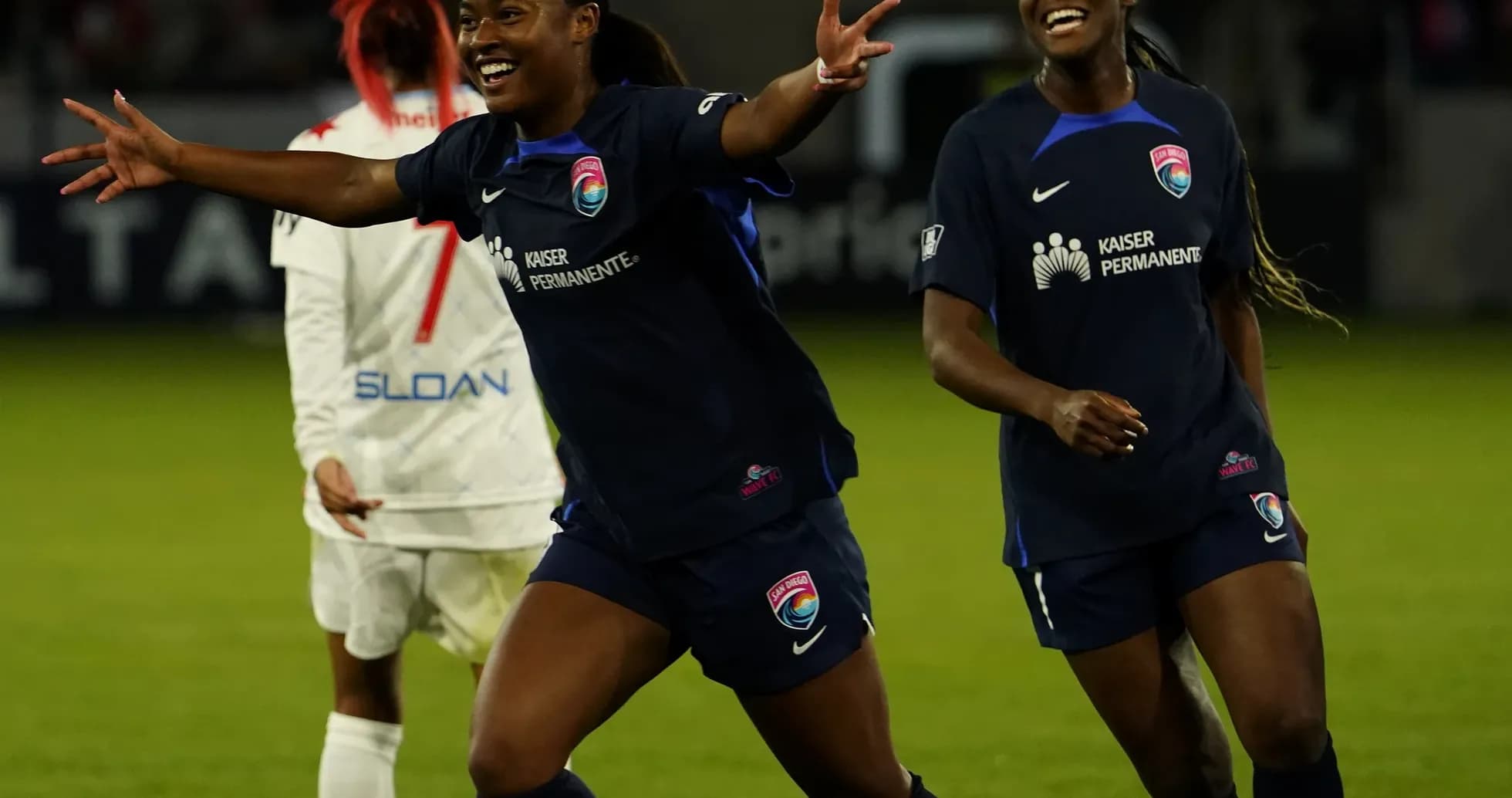
The “Hunter vs Shield” duel in this matchup revolved around San Diego’s attacking stars against Chicago’s porous defensive record. San Diego’s leading scorer Dudinha has 5 goals and 4 assists this season, supported by L. E. Godfrey with 4 goals and 3 assists. Together they have directly contributed to 9 of San Diego’s 19 overall goals.
Set against that is a Chicago back line that, overall, allows 2.0 goals per match and has only 2 clean sheets all season. At home, they concede 1.7 goals on average. The 4-1-4-1 asked Hendrich and Staab to hold a narrow central block, while Gomes and Bike were tasked with tracking the wide rotations of Dudinha and Godfrey. But San Diego’s away scoring rate of 1.7 hinted that, sooner or later, the pressure would tell – and the 0-2 full-time score simply extended the pattern.
In the “Engine Room,” the contest between K. Dali and Chicago’s central trio was decisive. Dali, with 705 passes this season at 85% accuracy and 33 key passes, is the metronome and primary progressor in San Diego’s build-up. Her partnership with K. Ascanio allowed San Diego to outnumber Chicago’s lone pivot, M. Lopez Millan, and drag B. A. Pinto and J. Grosso deeper than Sjogren would have liked. That forced Huitema to work in isolation, chasing long diagonals rather than linking with runners.
On the flanks, P. Morroni versus M. Swanson was another tactical hinge. Morroni is a high-volume defender – 32 tackles, 2 blocked shots, 10 interceptions and 100 duels contested – but her 5 yellow cards underline the risk in her aggressive front-foot style. Against a winger like Swanson, Chicago’s best hope was to tempt Morroni into overcommitting, draw fouls and create set-piece pressure. The lack of a Chicago goal again emphasised how rarely they could pin San Diego deep enough to exploit that edge.
IV. Statistical prognosis – xG logic without the numbers
Even without explicit xG values, the season data sketches a clear expected-goals landscape. Heading into this game, San Diego’s overall scoring rate of 1.5 and concession rate of 1.0, combined with Chicago’s overall 0.4 for and 2.0 against, pointed towards a multi-goal margin in favour of the visitors. San Diego’s away form – 5 wins and just 1 loss in 7, with 12 goals scored – suggested they would generate enough high-quality chances to break through, even if Chicago managed phases of compact defending.
Chicago’s only plausible route to tilting the underlying probabilities lay in defensive perfection and set-piece opportunism. Their 2 clean sheets show they can occasionally lock a game down, but the weight of evidence – 9 losses from 12 overall – argued that sustaining that level over 90 minutes against the league leaders was unlikely.
Following this result, the narrative tightens rather than shifts. San Diego Wave W continue to look like a side whose underlying metrics match their league position: structurally sound, tactically coherent, and driven by a creative axis of Dudinha, Godfrey and Dali. Chicago Red Stars W remain a team searching for a way to reconcile a diligent defensive block with a desperately blunt attack. Until they solve that equation, fixtures like this will keep following the same script.