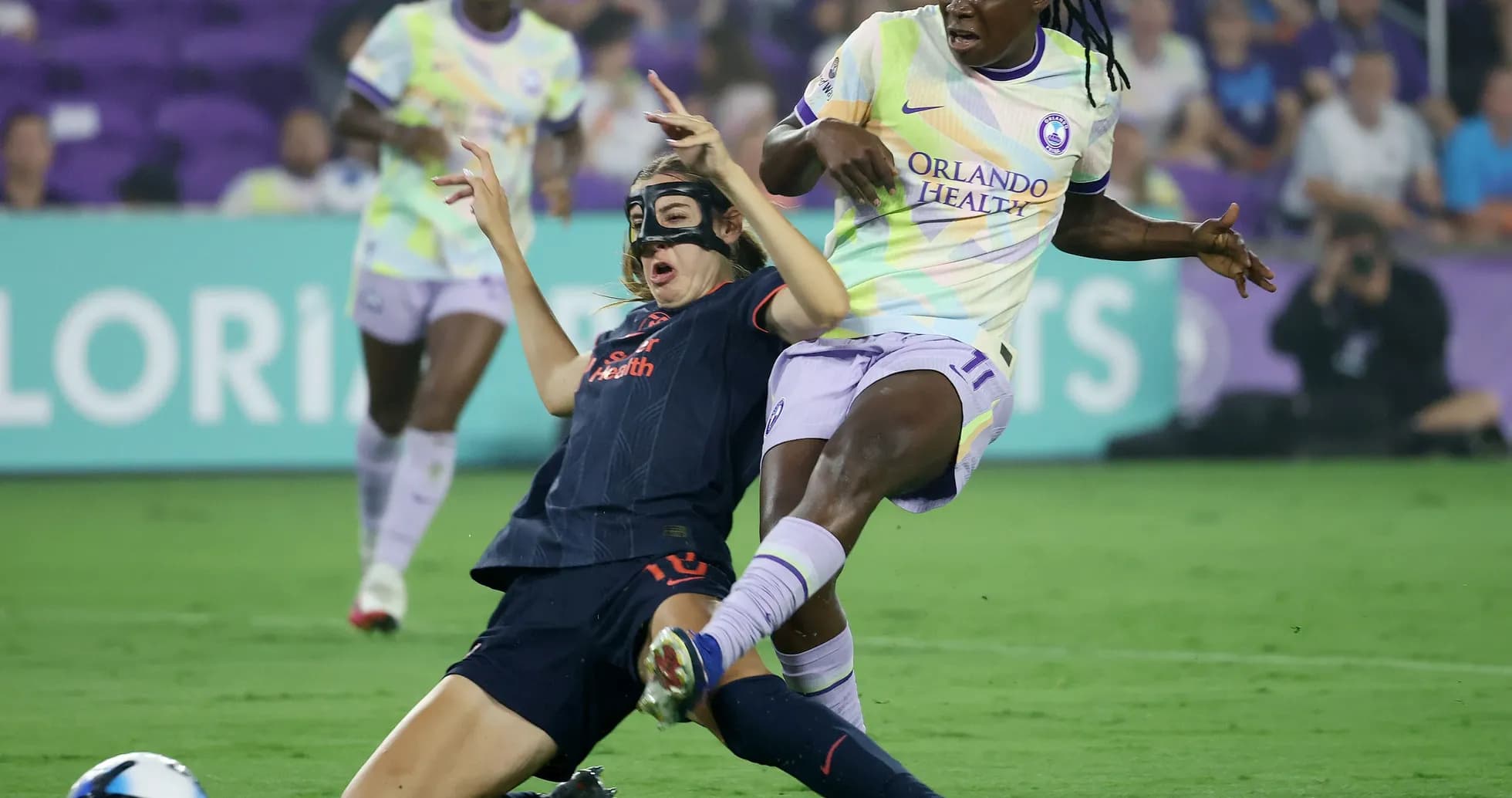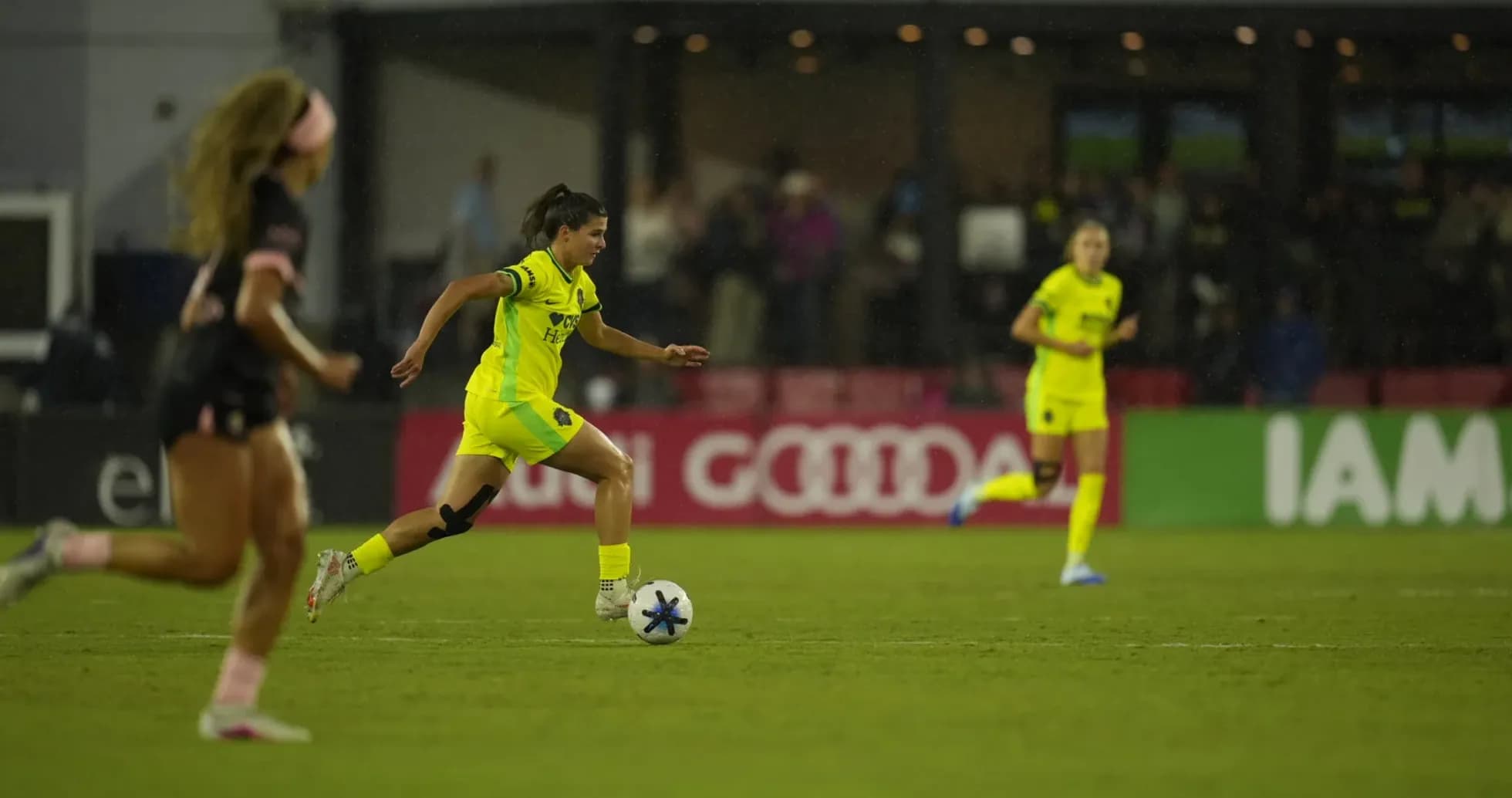
Portland Thorns W Dominate Bay FC W in 2–0 Victory
Under the Providence Park lights, this felt less like a routine group-stage date and more like a statement of hierarchy. Following this result, league leaders Portland Thorns W tightened their grip on top spot with a 2–0 win over Bay FC W, a performance that distilled their seasonal identity: control, defensive ruthlessness, and just enough incision in the final third.
I. The Big Picture – Thorns’ structure vs Bay’s ambition
Both sides mirrored each other on paper in a 4-2-3-1, but the systems behaved very differently. Portland’s version was about compression and clarity. M. Arnold anchored a back four of R. Reyes, I. Obaze, S. Hiatt and M. Vignola that has underpinned an extraordinary home record. Heading into this game, Portland had played 5 at home, winning 4, drawing 1 and conceding 0. Their home goals-against average was 0.0, and this clean sheet simply extended that perfection.
In front of them, the double pivot of C. Bogere and J. Fleming gave Portland their familiar two-speed engine: Bogere as the destroyer, Fleming as the metronome. Ahead, the line of three – M. Muller, P. Tordin and M. Alidou d’Anjou – worked between Bay’s lines, feeding lone forward S. Wilson.
Bay FC arrived as an away side that is more dangerous than their 13th place suggests. Heading into this game, they had 2 wins and 2 defeats on their travels, scoring 4 and conceding 6; a 1.0 away goals-for average against 1.5 conceded. Emma Coates kept faith with her own 4-2-3-1: J. Silkowitz in goal, a back four of S. Collins, B. Courtnall, J. Anderson and A. Denton, with C. Hutton and H. Bebar as the double pivot. The attacking trio of T. Huff, D. Bailey and R. Kundananji operated behind striker C. Girelli, a unit designed to transition quickly rather than dominate the ball.
Portland’s overall campaign numbers framed the narrative. Heading into this game, they had 7 wins from 11, with 17 goals for and 9 against, a total average of 1.5 goals scored and 0.8 conceded per match. The league table confirmed their authority: 23 points and a total goal difference of +8 (17 scored, 9 conceded). Bay, by contrast, stood on 11 points from 9, with 8 goals scored and 13 conceded – a total goal difference of -5 – and an attack that averages only 0.9 goals per game.
II. Tactical Voids and Discipline – who walked the line
There were no listed absentees, so the story of “who wasn’t there” gave way to “who dared to play on the edge.”
For Portland, discipline has been a double-edged trait all season. Their yellow-card distribution shows a late-game spike: 27.27% of their cautions arrive between 76–90 minutes, with another 18.18% between 61–75. More telling is their red-card profile: 50.00% of their reds come in the opening 0–15 minutes and 50.00% between 46–60. That volatility is personified by defenders and midfielders like R. Reyes and C. Bogere. Reyes, who has already been sent off once this season, is an aggressive front-foot defender; Bogere carries a yellow and yellow-red on her record and has committed 16 fouls across the campaign. Both started here, and both had to manage their aggression carefully as Bay tried to drag them into transitional chaos.
Bay’s disciplinary curve is more of a slow burn. Yellow cards spike late: 21.05% between 61–75, 21.05% between 76–90, and another 21.05% between 91–105. C. Hutton, with 3 yellows in 9 appearances and 13 fouls committed, embodies that combative edge in midfield. Add in T. Huff, who has already seen a yellow-red this season, and Bay’s engine room is as likely to disrupt as to create. Their lone red card this season has come in the 91–105 range, underscoring how their intensity can boil over late.
In this match, Portland’s early control and Bay’s chase-state dynamic played directly into those trends: the Thorns could lean on their structure, while Bay’s midfielders had to walk a disciplinary tightrope as they tried to claw their way back.
III. Key Matchups – Hunter vs Shield, Engine vs Enforcer
Hunter vs Shield was less about a single scorer and more about collective profiles. Portland’s attacking threat is spread: O. Moultrie and R. Turner, though not in this XI, have 4 goals each this season, while P. Tordin and S. Smith both sit on 3. Tordin, who started here in the No. 10 band, brings 3 goals and 3 assists from 11 appearances, supported by 12 fouls drawn and a willingness to occupy tight pockets. That multi-headed attack confronted a Bay defence that, heading into this game, conceded 1.5 goals per away match and had already suffered a 3–0 defeat on their travels.
The shield, in turn, was Portland’s back line and Arnold against a Bay side that has struggled to score consistently. Bay’s total of 8 goals in 9 matches – split evenly between home and away – meant Girelli and Kundananji were up against one of the league’s most miserly home units. Portland’s 5 home clean sheets in 5 before kickoff, and 7 clean sheets overall, made clear that any Bay breakthrough would be an outlier rather than an expectation.
In the Engine Room duel, the contrast was vivid. For Portland, Fleming and Bogere provided balance. Fleming’s passing range and calm in tight spaces allowed the Thorns to recycle possession and pin Bay back. Bogere, who has already blocked 2 shots this season, again acted as the screen, snapping into duels and protecting the centre-backs.
Opposite them, Hutton and Bebar formed Bay’s double pivot. Hutton’s season profile is outstanding: 366 passes at 76% accuracy, 24 tackles, 2 successful blocks and 20 interceptions. She is both playmaker and enforcer, tasked with breaking Portland’s lines while also containing Tordin and the rotating movement of Muller and Alidou d’Anjou. Huff, operating ahead of them, added vertical thrust – 7 shots this season, 5 on target, plus 11 successful dribbles – but her previous yellow-red meant every aggressive press carried risk.
Over 90 minutes, Portland’s engine simply ran cleaner. They compressed Bay’s midfield, forced long passes toward Girelli, and allowed their full-backs Reyes and Vignola to step into higher zones without leaving Arnold exposed.
IV. Statistical Prognosis – why 2–0 felt inevitable
Strip away the narrative, and the numbers explain why this fixture tilted so heavily toward the hosts.
- Portland at home: 5 played, 4 wins, 1 draw, 8 scored, 0 conceded; home averages of 1.6 goals for and 0.0 against.
- Bay away: 4 played, 2 wins, 2 losses, 4 scored, 6 conceded; away averages of 1.0 goals for and 1.5 against.
Portland’s total goal difference of +8 and Bay’s -5 set the macro context. Expected Goals data is not given, but we can infer the shape: Portland’s shot volume and efficiency, led by multi-source scorers like Moultrie, Turner, Tordin and Smith, typically produces xG in the 1.5–2.0 range at home. Bay’s attack, averaging under 1.0 goals per match, rarely generates sustained high-quality chances, especially against elite defences.
Defensively, Portland’s structure and clean-sheet record suggested a low xG conceded environment, particularly at Providence Park. Bay’s away profile – 6 goals against in 4 – hinted at defensive lapses under pressure, especially when chasing the game.
The 2–0 scoreline, with Portland ahead 1–0 by half-time and never truly dislodged, fits that statistical logic. The Thorns’ xG edge was likely clear, their defensive xG against minimal. Bay’s best path to an upset would have been early chaos or a set-piece moment; instead, they ran into a side whose seasonal DNA is built on control and a back line that, at home, simply does not bend.
Following this result, the trajectories diverge further. Portland look every inch a playoff favourite, their 4-2-3-1 now a well-rehearsed machine. Bay, for all their flashes of quality in players like Hutton, Huff and the supporting cast, remain a side whose numbers – and nights like this – say they are still searching for a stable identity against the league’s elite.