Pittsburgh Riverhounds’ 2–0 Statement Win Over Miami FC
Under the Highmark Stadium lights, Pittsburgh Riverhounds’ 2–0 win over Miami FC felt less like a routine group-stage result and more like a statement of identity. Heading into this game, both sides were tracking as playoff-calibre outfits in USL 1, but in very different ways: Pittsburgh, fifth in the table with 16 points and a goal difference of 1 (14 scored, 13 conceded overall), were the compact, grinding unit; Miami, seventh with the same 16 points but a goal difference of -4 (15 for, 19 against overall), were the volatile travellers, capable of both clean sheets and collapses.
I. The Big Picture – contrasting blueprints
Pittsburgh’s season-long DNA has been built on home edge and controlled risk. At home they had played 4, winning 3 and losing just 1, scoring 7 and conceding 4. That translated into an attacking average of 1.8 goals at home against only 1.0 conceded, a profile of a side that does not need volume to be effective. Overall, their 5 wins from 10 and 2 clean sheets showed a team that tends to keep games in a narrow band of chaos and trust their structure.
Miami arrived with a more schizophrenic profile. On their travels they had played 7, winning 1, drawing 3 and losing 3, scoring 6 and conceding 10. An away attacking average of 0.9 goals and 1.4 conceded underlined the problem: the balance of risk was tilted against them. Yet they had produced 3 away clean sheets and a biggest away win of 2–4, evidence of a side that can either suffocate or be suffocated depending on the game state.
The 2–0 full-time scoreline fit Pittsburgh’s home template almost perfectly: multi-goal output, another strong defensive display, and a match that never truly escaped their control.
II. Tactical voids and discipline – who could bend without breaking?
With no official absences listed, both coaches had the luxury of rolling out close to their preferred cores. Rob Vincent’s Riverhounds XI was anchored by N. Campuzano in goal, with a defensive spine likely centred around P. Barnes, V. Souza, O. Mikoy and L. Kelp. In front of them, the energy and balance of D. Griffin, E. Goldthorp and R. Mertz, plus the creative weight on C. Ahl and the forward thrust of A. Dikwa and S. Bassett, hinted at a side built to press selectively and then attack direct spaces.
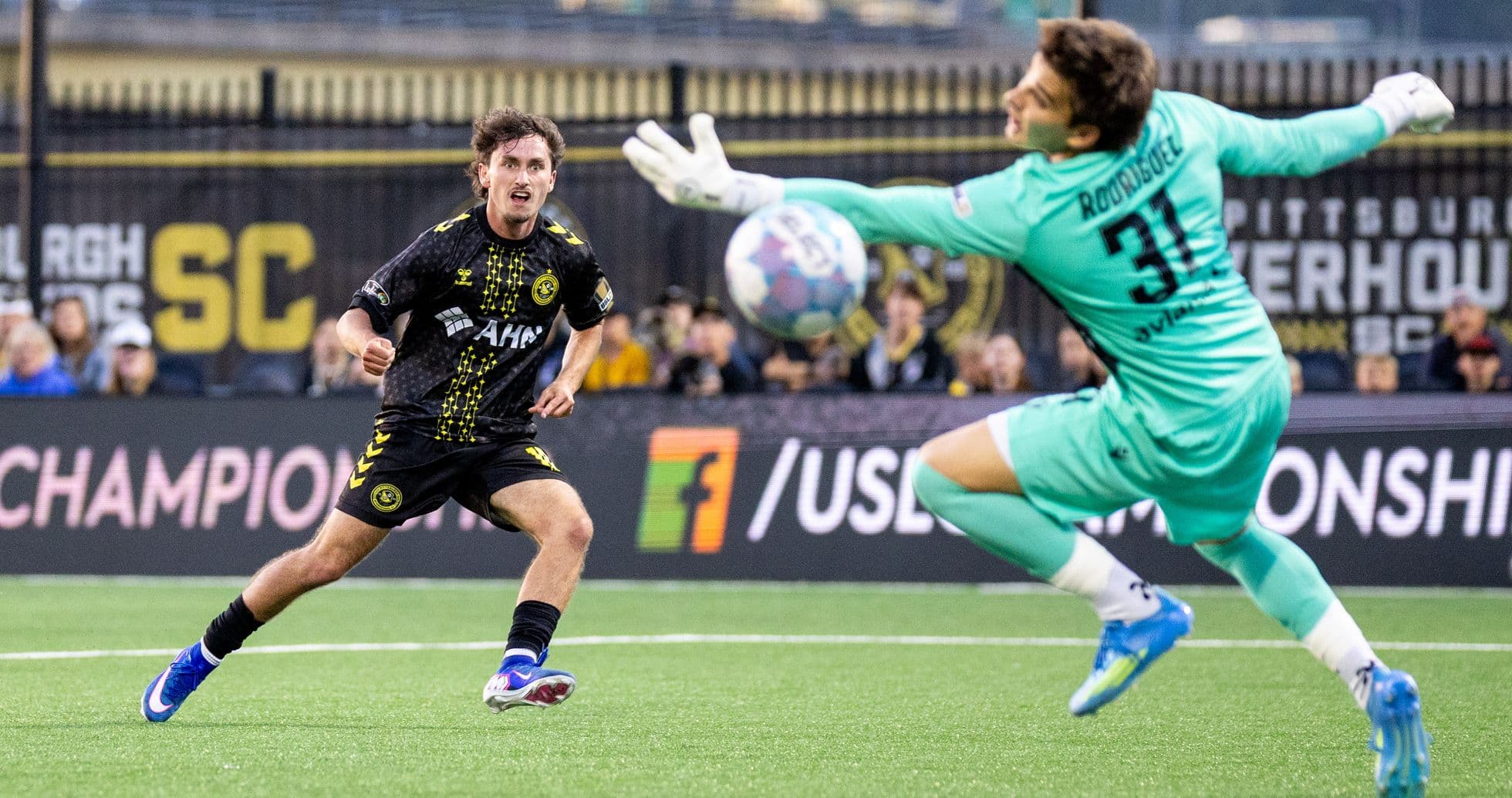
Gaston Maddoni’s Miami selection, with F. Rodriguez between the posts and a back line including B. Ndiaye, D. Knutson and A. Calfo, needed to withstand those surges. The midfield cluster of A. Milesi, G. Diaz and R. Tori, with J. Sonora and R. Da Costa supporting M. Ndongo and A. Rocha, suggested a technical core that wanted the ball but had to be wary of transition traps.
Discipline was always going to be a sub-plot. Heading into this game, Pittsburgh’s yellow-card distribution showed spikes at 31–45 minutes and 76–90 minutes, each carrying 25.00% of their cautions. That pattern implied emotional peaks either side of the interval and late on, where pressing intensity and game management collide. Miami, by contrast, were more combustible: 25.71% of their yellows came between 61–75 minutes and another 25.71% between 76–90, with a red-card incident previously occurring in the 61–75 window. For Maddoni, the danger zone was always going to be the final half-hour, when chasing a result could easily tip into indiscipline.
III. Key matchups – Hunter vs Shield, Engine Room vs Enforcer
Without explicit top-scorer data, the “Hunter vs Shield” narrative for Pittsburgh was more collective than individual. The Riverhounds’ attack, averaging 1.8 goals at home, faced a Miami away defence conceding 1.4 per game and already having shipped 10 on their travels. The numbers framed a simple question: could Miami’s back line drag this contest down to their clean-sheet level, or would it tilt toward the 4–1 and 4–3 scorelines that had defined some of their heaviest defeats?
The answer came in the form of Riverhounds’ multi-pronged threat. Dikwa’s presence as the nominal spearhead, supported by Bassett’s movement and Ahl’s link play, forced Miami’s central defenders into constant decision-making. Drop off, and Ahl could dictate in the half-spaces. Step up, and the channels opened for Dikwa and Bassett to run into. In that tension, Pittsburgh found their two goals and the rhythm of the match.
In the “Engine Room” duel, Griffin and Mertz were crucial. Their job was to disrupt the technical axis of Milesi, Diaz and Tori before it could connect to Sonora and Da Costa. With Pittsburgh having failed to score only once at home this season and Miami having failed to score 4 times away overall, the midfield battle was less about artistry and more about whose structure would allow their forwards to receive the ball facing goal. The Riverhounds’ compactness, especially with Goldthorp offering an extra layer between lines, repeatedly forced Miami’s creators into lateral passes rather than penetrative ones.
IV. Statistical prognosis and what the result tells us
Following this result, Pittsburgh’s profile as a playoff-calibre, home-strong side is reinforced. Their overall attack at 1.4 goals per game and defence at 1.3 conceded remain modest on paper, but the home split is where their edge lies: 7 goals for and 4 against at Highmark Stadium, with a biggest home win of 2–0 now echoed by this scoreline. Their penalty record, 2 taken and 2 scored overall, underscores a clinical streak when opportunities arise, even if none were needed here.
For Miami, the loss fits a worrying away pattern. Overall they score 1.3 goals per game and concede 1.6, but the away slice is more stark: 6 for and 10 against, with their biggest away loss of 4–1 hinting at a side that can unravel once behind. Their 3 away clean sheets show the defensive ceiling, yet the floor remains low when the midfield shield is pierced and they are forced to chase.
If we project forward purely from the numbers and this performance, Pittsburgh look like a side built for knockout football: tight margins, reliable home production, and a discipline profile that spikes but rarely spills into reds. Miami, for all their technical ability and occasional defensive solidity, will need to tame that late-game card surge and find a way to translate their home attacking average of 1.8 goals into something more threatening on their travels.
On this night, the Riverhounds’ structure, depth and collective “Hunter” mentality overwhelmed Miami’s fragile “Shield”. In a playoff landscape where one bad half can end a season, Pittsburgh’s 2–0 feels like more than three points; it feels like a rehearsal for the kind of controlled, ruthless performance that wins 1/8 finals.