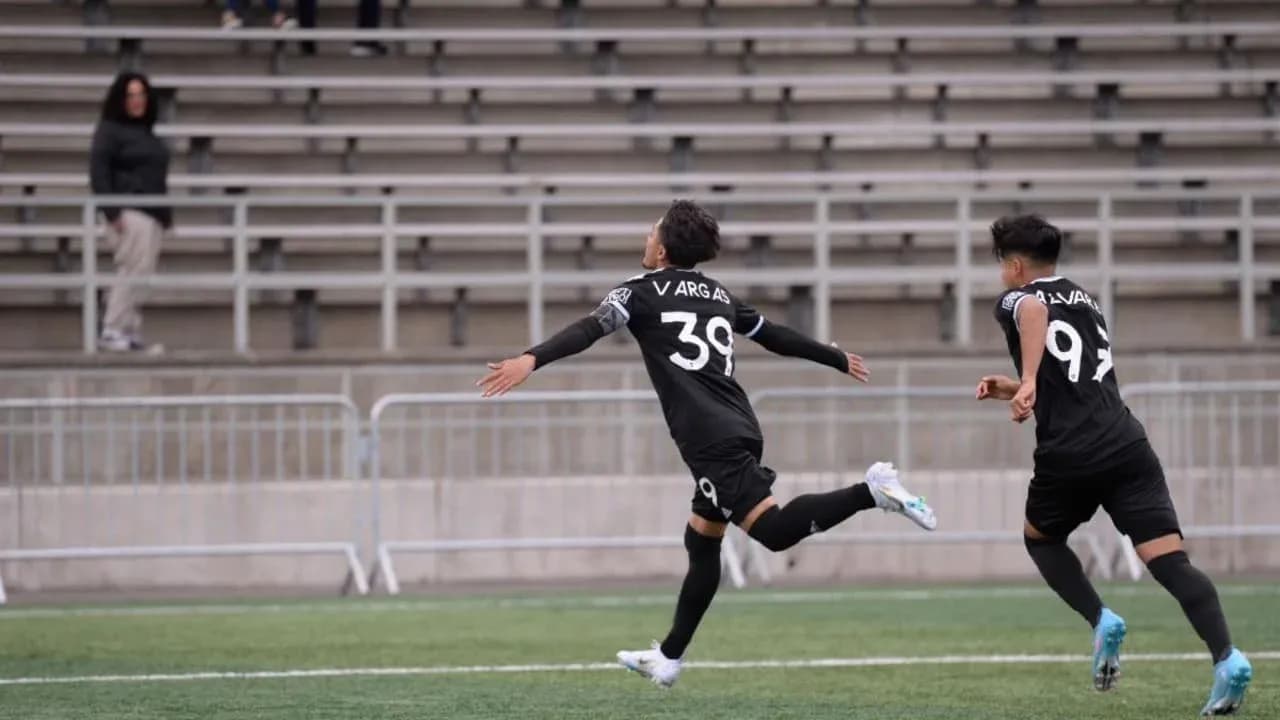
North Texas Dominates Minnesota United II in MLS Next Pro Clash
Under the lights at Allianz Field, this MLS Next Pro Group Stage meeting felt less like a routine fixture and more like a quiet measuring stick between two playoff-aiming projects. Minnesota United II came in as a curious contradiction: 4th in the Frontier Division and 7th in the Eastern Conference bracket with 14 points, yet carrying a negative overall goal difference of -2 from 9 matches. North Texas arrived with the same 14-point haul, 5th in the Frontier Division and 8th in the Eastern Conference picture, but with a slender overall goal difference of +1 across 10 games.
Following this result – a 2-0 away win for North Texas, built on a ruthless first half and managed control thereafter – the story of both squads sharpens. Minnesota’s season-long numbers already hinted at a side that lives on fine margins: overall they had scored 10 and conceded 11, while at home they had only managed 2 goals and conceded 2 in 3 matches before this. North Texas, by contrast, had shown a more expansive profile, with 17 goals for and 15 against overall, including 11 goals scored and 10 conceded on their travels.
The tactical voids here are less about absentees – there is no confirmed injury or suspension list in the data – and more about structural choices and psychological scars. Minnesota’s coach is not listed, an odd anonymity that mirrors a team still searching for a defined identity. Their form line of “WLLWLWWWL” suggests volatility: three straight wins embedded inside a sequence that also includes four defeats. They can surge, but they can just as easily unravel.
Starting XI
The starting XI at Allianz Field reflected that tension. K. Rizvanovich anchored things, with a young spine built around P. Tarnue, N. Dang, J. Farris and J. Bernard. Further ahead, the creative and transitional burden fell on J. Friedman, L. Pechota and S. Vigilante, while D. Randell, M. Caldeira and K. Michel carried the attacking threat. It is a group with energy and verticality, but the season-long statistics suggest a chronic issue: heading into this game, Minnesota had failed to score in 3 of their 9 league matches overall, including once at home. Their home goals-for average stood at just 0.7, while they conceded 0.7 at Allianz Field – a cagey, low-event profile that leaves little room for error.
Discipline
Discipline has been another quiet subplot. Minnesota’s yellow-card distribution this season shows a clear pattern of emotional spikes: 27.78% of their cautions arrive between 31-45 minutes, and another 27.78% between 76-90 minutes, with an additional 22.22% in the 61-75 window. In other words, they are most combustible just before half-time and in the final quarter of the match – precisely the periods when games are often decided. The absence of any red cards is a positive, but the repeated late bookings hint at a team that chases games rather than controls them.
North Texas, under John Gall, brought a more defined competitive edge. Their lineup – with N. Montoya, E. Newman, S. Starnes, Alvaro Augusto and J. Torquato among the starters – had a functional, almost utilitarian feel, but the numbers behind them tell of a side that can flip the switch in key moments. Heading into this game, they averaged 1.7 goals per match overall, with 1.6 on their travels. Their attacking minute distribution is striking: 42.86% of their goals arrive between 31-45 minutes, with another 28.57% in the 76-90 window. This is a team that spikes brutally at the end of each half.
Defensive Analysis
Defensively, North Texas are far from watertight – they concede 1.5 goals per match overall, 1.4 on their travels – but their goals-against minute distribution reveals a different kind of story. They are most vulnerable between 31-45 and 46-60 minutes, each window accounting for 26.67% of their conceded goals, with another 20.00% leaking in the 76-90 stretch. They live dangerously in transition phases either side of half-time.
That is where the “Hunter vs Shield” matchup crystallises. North Texas’ attacking surge between 31-45 minutes directly overlapped with Minnesota’s disciplinary hot zone in the same period, where 27.78% of the Loons’ yellows occur. The away side’s offensive peak met a home side prone to losing composure right before the break – and the 2-0 half-time scoreline is the inevitable consequence of that collision. Minnesota’s overall defensive record (11 conceded before this match, with an overall average of 1.2 against per game) suggests resilience, but the timing of North Texas’ bursts overwhelmed them.
Engine Room
In the “Engine Room”, Minnesota’s midfield trio of Friedman, Pechota and Vigilante were tasked with knitting together a side that, statistically, is more comfortable grinding than opening up. Yet North Texas’ season-long card profile shows they are unafraid of turning that zone into a battleground: 29.17% of their yellows arrive between 16-30 minutes and another 16.67% between 31-45, with further 16.67% in the 46-60 window. They press and foul aggressively in central areas, establishing territorial control even if it costs them cautions. That edge likely disrupted Minnesota’s attempts to build through the thirds.
Penalties
Penalties, often a hidden lever in tight games, offered contrasting narratives. Minnesota had earned 1 penalty this season and converted it, a 100.00% record from the spot, while North Texas had yet to take one. But in a match where the home side struggled to enter dangerous zones consistently – and where their home goals-for average of 0.7 spoke of limited box presence – that potential weapon never materialised.
From a statistical prognosis perspective, the pre-match numbers already tilted slightly toward North Texas. They created more on their travels (11 goals in 7 away games, 1.6 per match) than Minnesota managed at home (2 goals in 3 matches, 0.7 per match), and their willingness to play open, high-variance football suited a fixture where both teams had zero draws in the league. The under/over profile underlined that volatility: in total, North Texas had gone over 1.5 goals in 6 of 10 matches and over 2.5 in 4, while staying under 3.5 in 9. Minnesota, more conservative, still carried enough attacking punch overall (10 goals in 9 games) to punish lapses, but not enough at Allianz Field to scare a side comfortable trading punches.
Following this result, the tactical lesson is stark for Minnesota United II. Their young core – from Rizvanovich at the back through to Randell, Caldeira and Michel in attack – needs a clearer game model at home, one that raises their attacking ceiling without sacrificing the defensive stability that had kept their home goals-against average at 0.7 before this defeat. For North Texas, this 2-0 away win is less a surprise and more a confirmation of their seasonal DNA: a team that may concede, may collect cards, but knows exactly when to strike – especially in that decisive 31-45 minute window, where once again they turned a match on its head and never looked back.