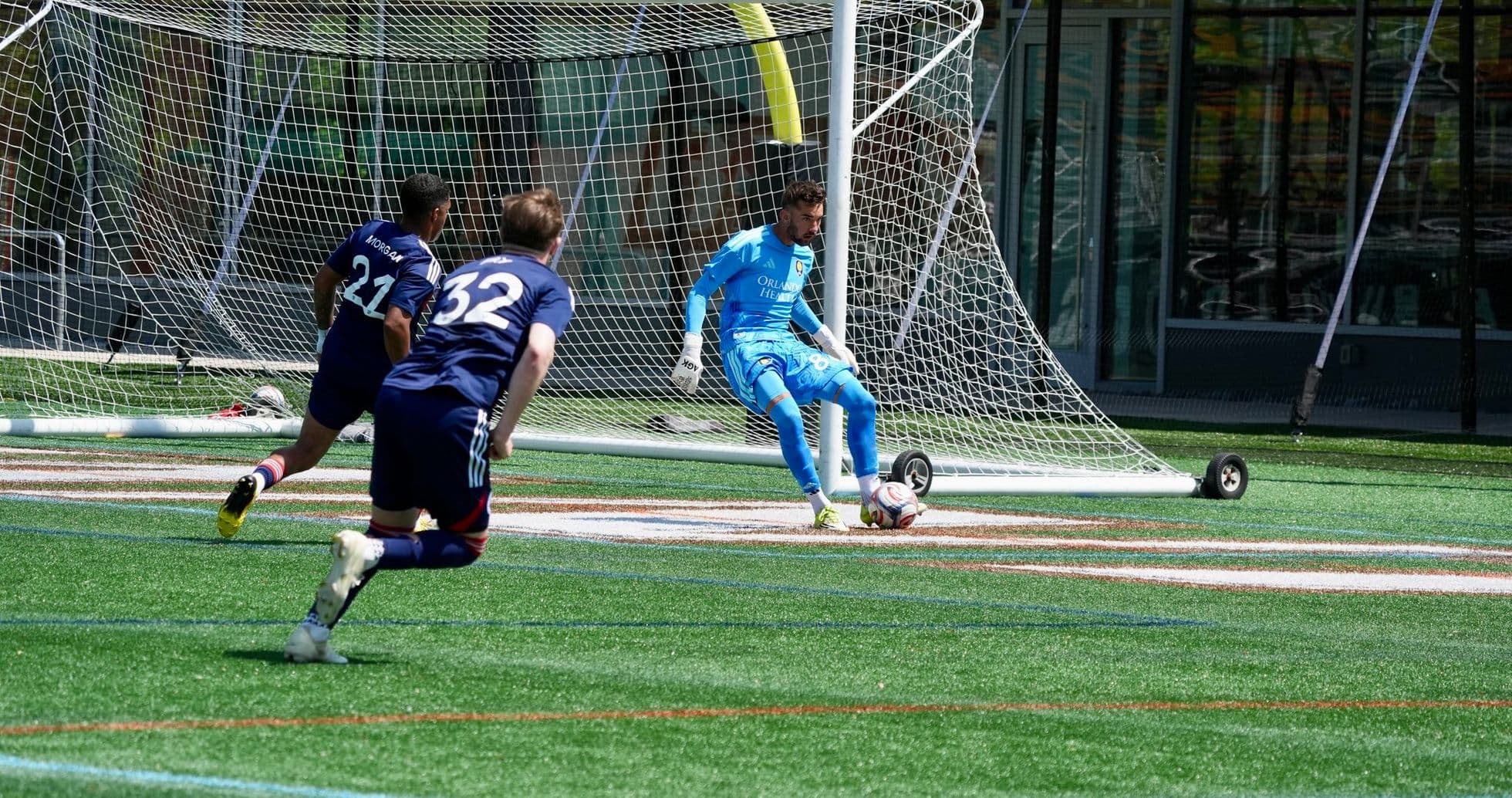
New England II Triumphs 1-0 Against Orlando City II
The lights at Gillette Stadium dimmed on a tight, nervy 1-0 conclusion, but the story of New England II versus Orlando City II was written long before the final whistle. It was a clash between one of the conference’s most secure home operators and one of its most volatile attacking units, and over 90 minutes New England II bent the narrative in their favour.
Heading into this game, New England II were a quietly ruthless machine. In total this campaign they had taken 7 wins from 10, with no draws and 3 defeats. Their goal difference overall was +5, with 14 goals for and 9 against, and the standings framed them as genuine contenders: 2nd in the Northeast Division and 3rd in the Eastern Conference with 20 points, tracking toward the MLS Next Pro play-offs. At home, they had been even more uncompromising: 6 wins from 7, with 10 goals for and 6 against, built on an average of 1.7 home goals scored and only 0.9 conceded.
Orlando City II arrived as something altogether different: chaotic, dangerous, and fragile. Overall, they had 6 wins and 4 losses from 10, no draws, with a goal difference of -1 (19 scored, 20 conceded in the standings; 22 scored and 21 conceded in the broader statistics snapshot, again a -1 balance). Their attack was among the most prolific in the conference, averaging 2.2 goals in total per match, with 2.6 at home and 1.8 on their travels. But they bled at the back, conceding an average of 2.1 goals overall and 1.6 away. They stood 5th in the Central Division and 8th in the Eastern Conference, inside the play-off spots but always flirting with danger.
The lineups underlined the contrast in identity. New England II’s eleven — D. Parisian, D. McIntosh, G. Dahlin, J. Shannon, S. Mimy, J. Mussenden, C. Oliveira, A. Oyirwoth, M. Fry, M. Morgan, and S. Sasaki — suggested a compact, workmanlike side, without obvious star billing but with balance across the pitch. On the bench, the likes of M. Tibbetts, M. Weinstein, S. McNish, J. Da, J. Siqueira, S. George, C. Zambrano, J. Smith, and L. Azar offered depth and the option to change tempo late on.
Orlando City II’s starting group — L. Maxim, P. Amoo-Mensah, L. Okonski, S. Titus Jr, B. Rhein, D. Judelson, J. Ramirez, I. Haruna, I. Gomez, M. Belgodere, and Pedro Leao — was laced with attacking intent. On the bench, J. Rojas, J. Hylton, C. Trombino, C. Archange, A. Chikamso, J. Yearwood, and L. Tsopanoglou gave the visitors fresh legs to maintain their high-octane approach.
Tactically, the voids and vulnerabilities were written into the numbers rather than the team sheets. There were no recorded absences, but the disciplinary profiles hinted at how this game might be fought. New England II’s yellow-card distribution showed a clear spike between 46-60 minutes (28.00%) and a sustained edge of aggression through 61-75 (20.00%) and 76-90 (24.00%). Orlando City II, by contrast, tended to collect cards earlier: 16-30 and 31-45 each accounted for 25.00% of their yellows, with another 20.00% between 46-60. The subtext was clear — New England II grow more combative as matches wear on, while Orlando risk losing control in the middle third of the game.
The “Hunter vs Shield” duel was defined by Orlando City II’s explosive forward timing against New England II’s late-game resilience. On their travels, Orlando averaged 1.8 goals scored, and in total this campaign they leaned heavily on the final half-hour: 26.32% of their goals came between 61-75 minutes and 36.84% between 76-90. That is a ferocious late surge, with 63.16% of their total goals arriving after the hour mark.
New England II, however, were built to withstand exactly that kind of storm. Overall they conceded only 0.9 goals per match, and while 50.00% of those goals arrived between 76-90 minutes, they had still carved out 4 clean sheets in total, 3 of them at home. Offensively, they were also at their most dangerous after the break: 25.00% of their goals came in each of the 46-60, 61-75, and 76-90 ranges. This was the critical intersection — Orlando’s late attacking peak colliding with New England’s own late offensive push and their most vulnerable defensive window.
In the “Engine Room”, the numbers hinted at a battle of control versus chaos. New England II’s matches were typically tight: only 1 of their 10 games had gone over 2.5 total goals, and 9 had stayed under 2.5. Orlando City II lived at the other extreme, with 4 of 10 going over 2.5 and a further 3 clearing 1.5; their biggest home win was 5-4, and their biggest away victory 0-2, underlining their capacity to swing games open quickly. New England’s midfield group, anchored by the likes of G. Dahlin and J. Mussenden, would have been tasked with slowing Orlando’s transitions, denying the vertical runs of players such as I. Haruna and I. Gomez.
Following this result, the 1-0 scoreline felt like a triumph of New England II’s defensive structure and game management over Orlando City II’s volatility. The home side extended a profile built on control: they had failed to score in only 1 match in total this campaign, and they had yet to draw a blank at home. Their penalty record remained spotless, with 2 penalties taken and 2 scored overall, and no misses to undermine their efficiency in high-pressure moments.
For Orlando City II, the defeat was a reminder that their attacking power — 22 goals in total, with peaks in the 31-45 and 61-90 windows — cannot always compensate for a porous back line conceding 2.1 goals per game overall. Their single clean sheet all season, away from home, looks more like an anomaly than a foundation.
From an xG and defensive-solidity perspective, the statistical prognosis around this fixture always leaned toward a low-scoring contest shaded by New England II. A team that keeps matches under 2.5 goals in 9 of 10 outings, concedes less than a goal per game overall, and dominates at home is structurally better positioned than an opponent that both scores and concedes heavily. The final 1-0 margin at Gillette Stadium did not just decide three points; it reaffirmed New England II as a playoff-calibre side whose discipline and late-game resilience can suffocate even one of the conference’s most dangerous attacks.