Fifa's New Red Card Rules for World Cup Players
World Cup players who cover their mouths in confrontations now risk a straight red card, after Fifa pushed through one of the most hardline disciplinary changes the modern game has seen.
The ruling, confirmed at a special Fifa Council meeting in Vancouver on Tuesday, will be in force at this summer’s World Cup. It comes alongside a second, equally stark measure: players who leave the pitch in protest at a referee’s decision can also be sent off.
Both changes were approved as competition opt-ins by the International Football Association Board (Ifab), but Fifa has already nailed its colours to the mast. These rules are coming to the biggest stage in football.
Mouth-covering under the microscope
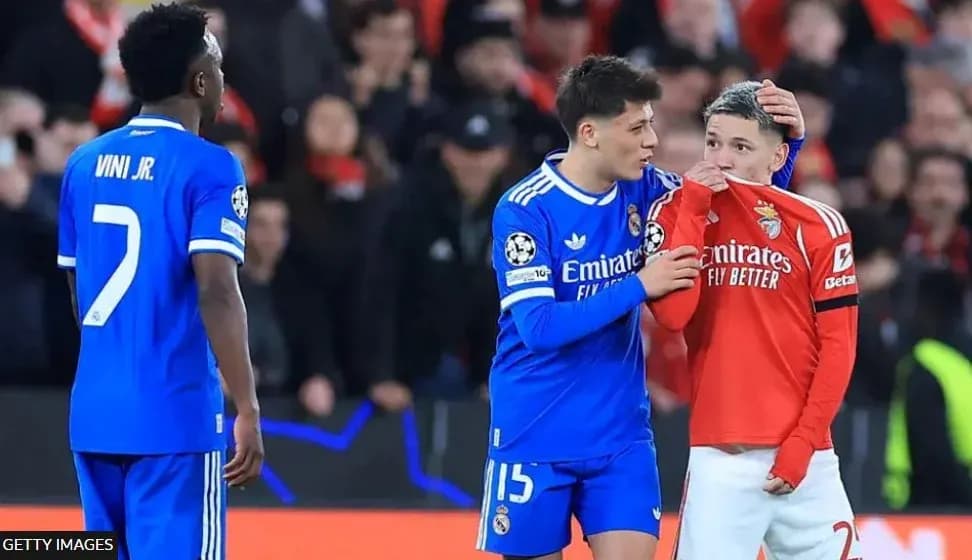
The debate has been building for months. It exploded into the spotlight in February when Benfica winger Gianluca Prestianni raised his shirt to cover his mouth while speaking to Real Madrid’s Vinicius Jr during a Champions League tie.
The Argentina international was initially accused of racist abuse and provisionally banned for one match. After a Uefa investigation, he was found guilty of homophobic conduct and hit with a six-match suspension, three of those suspended. The image of a player shielding his words in a heated exchange travelled fast and lodged itself firmly in the game’s conscience.
That incident helped push the topic onto the agenda at Ifab’s annual general meeting in Wales later that month. From there, it moved to the Fifa Council table with a clear objective: strip away the cloak of secrecy in on-pitch flashpoints.
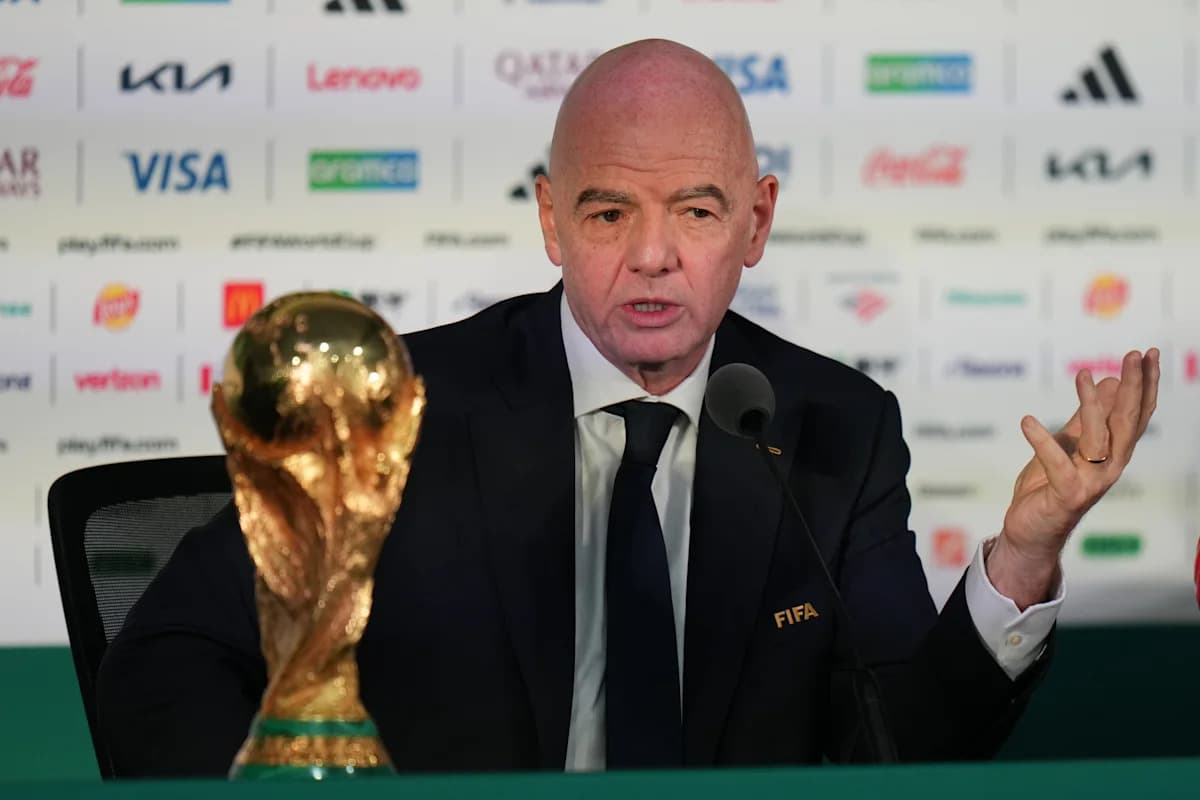
Fifa president Gianni Infantino made his stance unmistakable. He wanted a measure with teeth.
“If a player covers his mouth and says something, and this has a racist consequence, then he has to be sent off, obviously,” Infantino said. “There must be a presumption that he has said something he shouldn't have said, otherwise he wouldn't have had to cover his mouth.
“If you do not have something to hide, you don't hide your mouth when you say something. That's it, as simple as that.”
The power, though, will sit with the referee. Each decision remains at the referee’s absolute discretion, with officials instructed to weigh the context and circumstances before brandishing a red card. Even so, the direction of travel is clear: the game’s lawmakers want transparency, and they are prepared to punish those who appear to hide from it.
Walk off in protest, walk into a red card
If the clampdown on mouth-covering targets what is said, the second rule goes after how teams react when they feel wronged.
The flashpoint came in the Africa Cup of Nations final between Morocco and Senegal. In a moment that stunned the tournament, the Senegal players left the field and headed back towards the changing rooms in protest at a penalty awarded to Morocco.
When they finally returned, the drama twisted again. Brahim Diaz attempted a Panenka from the spot, only to chip the ball tamely into the hands of goalkeeper Edouard Mendy. Senegal regrouped, rode the storm and went on to win 1-0 on the night.
The story did not end there. The Confederation of African Football (Caf) later stripped Senegal of the title and awarded Morocco a 3-0 win, a brutal administrative reversal that underlined just how seriously walk-offs are now treated.
Fifa has moved to shut the door on similar scenes at its own flagship event. Under the new law, players who leave the pitch in protest can be shown a red card. The rule stretches beyond the pitch as well: any team official who incites players to walk off will also be liable for punishment.
There is another sting in the tail. A team that causes a match to be abandoned will, in principle, forfeit the game. No grey area. No slow-burning disciplinary saga. Walk away, and you pay the price on the scoreboard.
A World Cup under stricter orders
Taken together, the two amendments mark a firm shift in how the sport intends to police behaviour at its pinnacle. One targets the hidden word, the other the public act of dissent.
At the World Cup, where every camera angle is dissected and every confrontation replayed across the globe, players and coaches now know the stakes. Cover your mouth in the wrong moment, or lead a protest off the pitch, and the consequence could be instant, irreversible, and decisive.