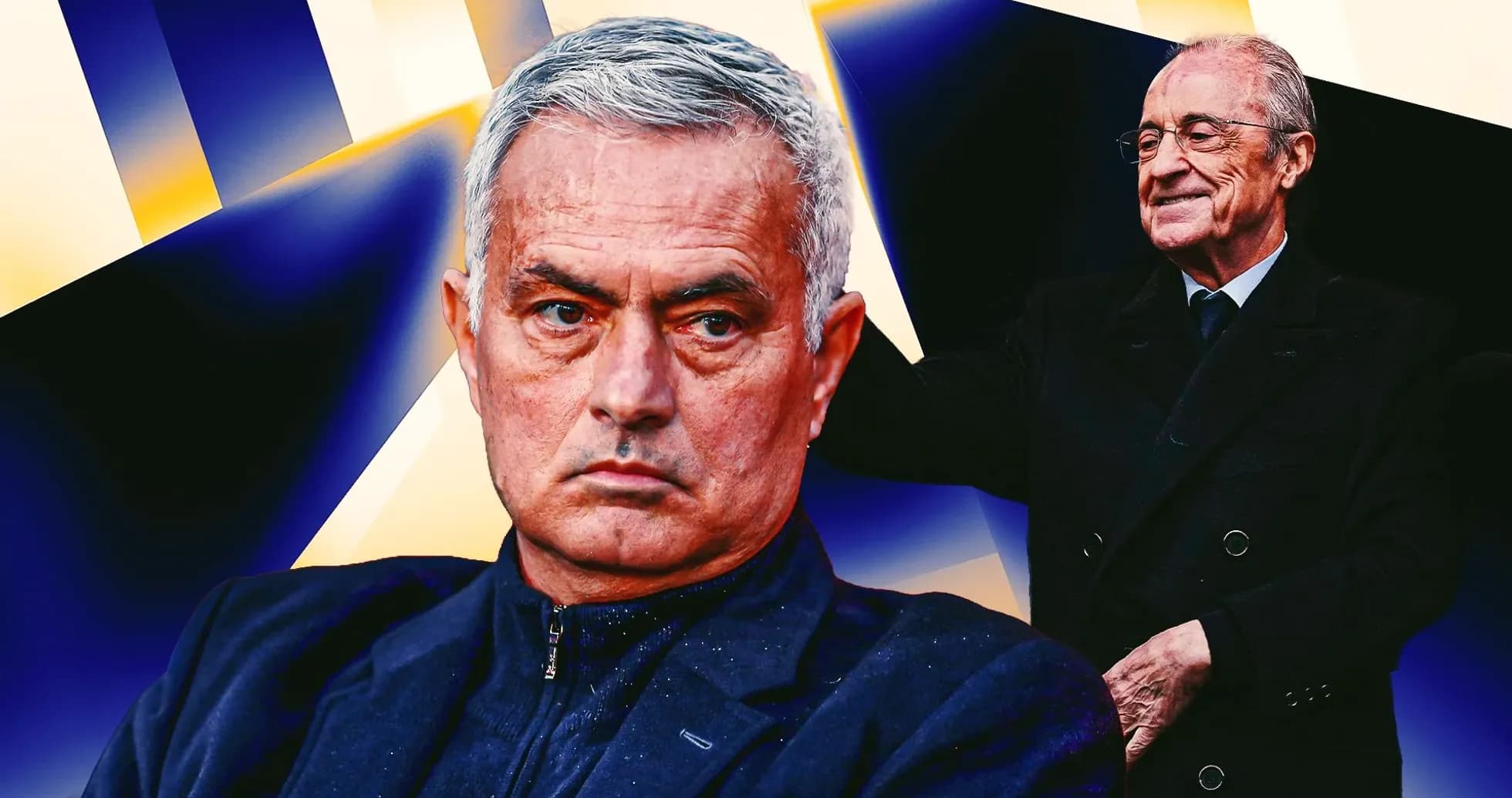
Mourinho's Return: A Risky Nostalgia for Real Madrid
Florentino Perez is staring at the past and calling it the future. Again.
Real Madrid are drifting towards a second straight season without a major trophy, a crisis by Bernabeu standards, and once more they trail in the shadow of a brilliant Barcelona side built around a diminutive, left-footed genius. The echoes of 2010 are obvious. Perez clearly hears them. He seems determined to answer them with the same name.
Jose Mourinho.
The difference is that this is not 2010. Not for Mourinho, and not for modern elite football.
The myth of the Midas touch
Back then, Mourinho was the sport’s ruthless closer, the man who walked into superclubs and walked out with leagues and Champions Leagues. Now, the aura has thinned. The controversies remain; the trophies do not.
He has not won a league title in 11 years. His last piece of silverware, of any kind, is the 2022 Europa Conference League. For a coach with two Champions Leagues on his CV, that detail is not a footnote. It is a verdict on where his methods currently sit in the game’s hierarchy.
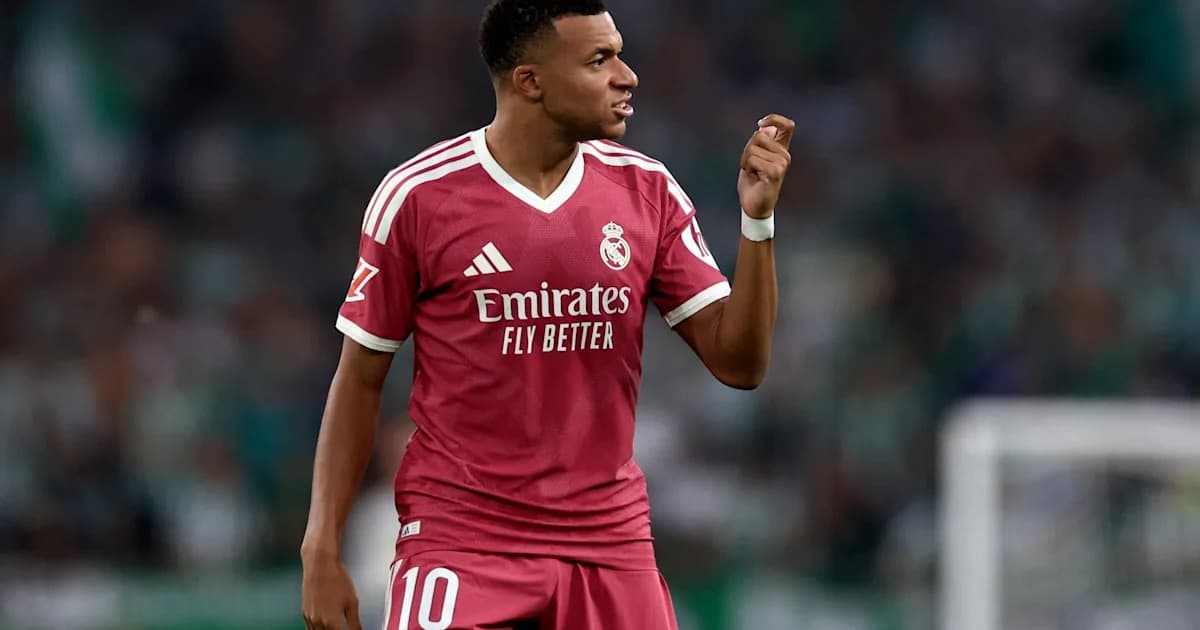
Perez will argue that none of that matters in Madrid’s unique ecosystem. He will say the club needs a commanding figure, someone who can stare down a dressing room full of Ballon d’Or contenders and bend it to his will. In that sense, Mourinho still fits the profile. Kylian Mbappe and the rest of Madrid’s galáctico cast undeniably require a strong personality on the touchline.
Sergio Ramos once put it bluntly: “At Real, managing the dressing room is more important than the coach’s tactical knowledge.” That line has long been gospel for Perez.
Yet the man Perez wants to bring back bears little resemblance to the figures who actually led Madrid to their recent European dominance.
A different Madrid, a different game
Carlo Ancelotti and Zinedine Zidane guided Madrid to Champions League glory with calm authority and emotional intelligence. They soothed egos, not inflamed them. They unified, not divided.
Mourinho is the opposite. He is abrasive, confrontational, relentless. That ferocity helped transform Madrid into a ruthless domestic machine during his first spell, but it also burned the club from the inside out. The intensity that once energised the squad ultimately exhausted it.
He likes to insist, unprompted, that he is one of the few Madrid coaches to have left on his own terms. Perez has always backed that version of events. “Nobody's been sacked, it's a mutual agreement,” the president said in 2013. “We've decided to bring our relationship to an end.”
The reality was far messier.
Less than a year after signing a contract extension through 2016, Mourinho’s position had become untenable. In January 2013, Perez did something unprecedented: he called a press conference to deny a MARCA report claiming that senior players – including Iker Casillas and Ramos – had threatened to leave if Mourinho stayed.
Even then, it was already obvious. Mourinho had lost the dressing room. Four months later, the separation was made official.
When the siege turns inward
The same methods that had made Mourinho a serial winner at Porto, Chelsea and Inter ultimately undermined him in Madrid. His beloved siege mentality – us against the world, everyone hates us, everyone is out to get us – worked brilliantly for a while.
Then it turned toxic.
The climate of suspicion and permanent conflict he created around the club seeped into the squad. Players who had once rallied behind him began to bristle. The paranoia he projected onto the outside world started to reflect back at him from inside his own dressing room.
Casillas accepted his demotion to the bench in 2012-13 without public complaint, but the silence around him was deafening. Pepe did speak out, criticising Mourinho’s treatment of his compatriot. Mourinho hit back by suggesting Pepe was simply bitter that a teenager, Raphael Varane, had taken his place.
Ramos, meanwhile, reportedly mocked Mourinho’s footballing ability in private. When Ancelotti arrived in June 2013, Ramos delivered a pointed line: “You can tell he was a top player.” It was a compliment to Ancelotti, but also a clear contrast with the man who had just left.
Ramos did not stop there. He also pushed back against the narrative, promoted by both Mourinho and Perez, that the Portuguese had laid the foundations for Madrid’s later Champions League glory. Mourinho has claimed Perez begged him to stay in 2013: “Don't leave now. You've done the hard part and the good part is yet to come.”
Ramos was having none of it. Asked about Madrid’s four Champions League titles between 2014 and 2018, he dismissed Mourinho’s influence entirely. “I don't think he had anything to do with it,” he said. “On the contrary, in fact...”
That may go too far. Mourinho did raise Madrid’s competitive level, particularly in La Liga. But the idea that he was the architect of their European dynasty does not survive contact with the evidence. What truly unlocked that era of dominance was the arrival of a calming, unifying presence in Ancelotti.
The club did not need more fire. It needed someone to put it out.
A club in turmoil, a president out of ideas
Fast forward to now and Madrid are again searching for direction after a season of upheaval. Xabi Alonso was sold as the long-term visionary, then ruthlessly discarded just over six months into the project, replaced by rookie coach Alvaro Arbeloa.
Perez’s long-held belief has been reinforced: in his mind, the players need a leader more than a tactician. Jose Angel Sanchez’s failed Alonso experiment has only deepened that conviction.
So Mourinho’s name rises to the top of the list. Again.
There are complications. Mbappe may have liked an Instagram post touting Mourinho as Madrid’s next manager, but the dressing room is not a monolith. Vinicius Jr has far less reason to welcome him. Earlier this season, in a Champions League play-off against Mourinho’s Benfica in Lisbon, play had to be suspended because of the shameful abuse directed at Vinicius. Mourinho effectively accused the Brazilian of provoking that treatment. It is hard to imagine that being forgotten in a hurry.
Inside the club, the idea of bringing Mourinho back does not enjoy unanimous support on the board. Yet unanimity has never been a requirement at Madrid. Perez still rules. If he wants Mourinho, the rest will have to live with it.
That is precisely the problem.
The fact that Mourinho remains at the top of Perez’s wish list in 2026 is not a show of strength. It is an admission of desperation. It exposes a startling lack of imagination at the very top of the club.
On Tuesday night, Paris Saint-Germain and Bayern Munich produced a Champions League spectacle at Parc des Princes that showcased where elite football is heading: high tempo, positional fluidity, aggressive pressing, technical excellence from back to front. It was a reminder that the game has moved on from Mourinho’s rigid, conflict-fuelled blueprint.
Perez has not.
Rehiring Mourinho in 2015 would have been a huge gamble, bordering on reckless. Doing it now, with the game and the dressing room culture even further removed from his peak years, would be something else entirely.
It would be Madrid choosing nostalgia over evolution – and betting the next era of Mbappe and Vinicius on a manager whose time at the very top may already belong to history.