Bayern München vs Real Madrid: A Clash of Footballing Ideologies
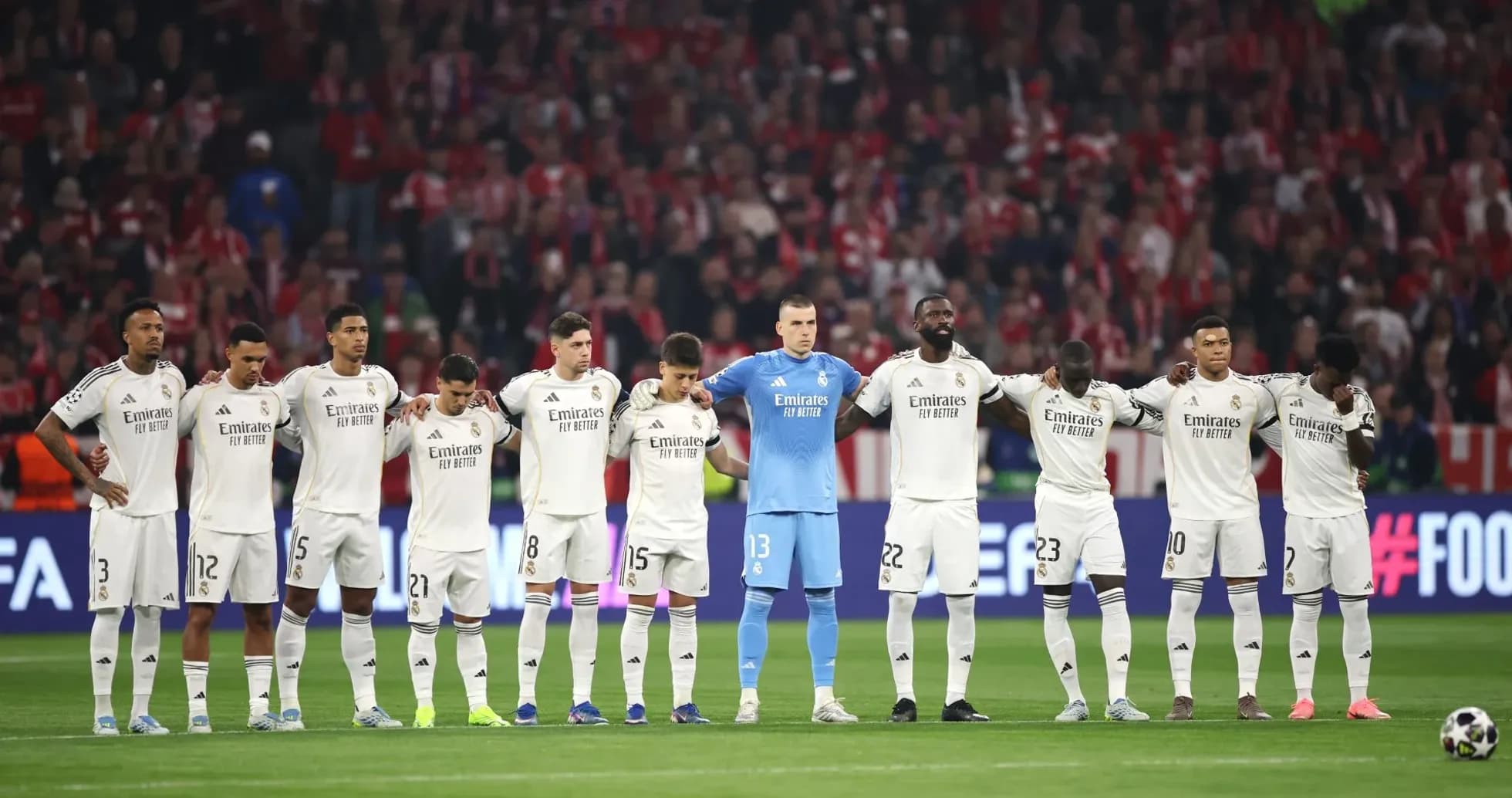
Under the Allianz Arena lights, this quarter-final felt less like a tactical contest and more like a clash of footballing ideologies. Bayern München’s 4-3 comeback over Real Madrid, sealed in regulation time, was the product of a season-long identity: relentless attacking volume, aggressive pressing, and an almost stubborn refusal to compromise at home.
I. The Big Picture – Seasonal DNA Meets Knockout Chaos
Following this result, Bayern’s Champions League campaign looks exactly like their numbers have promised. Overall this season they have played 12 matches in the competition, winning 11 and losing only 1. At home they have been perfect: 6 wins from 6, scoring 20 and conceding 6, an average of 3.3 goals for and 1.0 against at the Allianz Arena. That attacking power was written into this tie from the first whistle.
Real Madrid arrived with a different kind of pedigree: more volatile, but just as dangerous. Overall they have played 14 matches, with 9 wins and 5 defeats, scoring 33 and conceding 20. On their travels they average 2.4 goals for and 1.9 against, numbers that foreshadowed both their threat in transition and their defensive vulnerability. A 4-3 away defeat fits that profile almost too neatly.
The half-time scoreline – Bayern 2, Real Madrid 3 – captured the essence of both teams. Bayern’s high line and front-foot full-backs left space for Kylian Mbappé and Vinícius Júnior to attack, while Real’s back four were repeatedly stretched by Bayern’s layered attacking structure.
II. Tactical Voids – Absences and Discipline
Both squads came into this tie with notable absentees that shaped the tactical chessboard.
For Bayern, a cluster of missing names – M. Cardozo (thigh injury), L. Karl (muscle injury), C. Kiala (ankle injury), W. Mike (hip injury), B. Ndiaye (inactive) and S. Ulreich (muscle injury) – reduced Vincent Kompany’s rotation options, particularly in goal and in depth positions. The decision to lean fully into a first-choice core was almost forced; there was little room for error if the tempo dropped.
Real Madrid’s absences bit closer to the spine. T. Courtois (thigh injury) kept A. Lunin in goal, while Rodrygo (knee injury) removed a key vertical outlet and A. Tchouameni’s suspension for yellow cards robbed Alvaro Arbeloa of his natural midfield destroyer and backline shield. R. Asencio’s illness further trimmed the attacking bench. Without Tchouameni, Madrid’s 4-4-2 had to defend space rather than dominate it, a dangerous proposition against Bayern’s central overloads.
Disciplinary trends added another layer. Bayern’s season-long yellow-card distribution shows a pronounced late-game surge: 37.50% of their cautions arrive between 76-90 minutes. It speaks to a side that keeps pressing and tackling aggressively even as legs tire. Red cards are rare but significant, split evenly between 46-60 and 61-75 minutes, underlining how their intensity can spill over just after half-time.
Real Madrid’s card map is more evenly scattered but still telling. Yellow cards spike between 46-60 and 76-90 minutes at 20.59% in each window, with an additional 17.65% from 91-105 minutes. Their red cards cluster in the later phases too: 20.00% between 61-75, 20.00% between 76-90, and a striking 40.00% between 91-105 minutes, plus one in an unspecified range. This is a team that often walks a disciplinary tightrope when the game becomes stretched.
III. Key Matchups – Hunter vs Shield, Engine Room vs Enforcer
The headline duel was always going to be Harry Kane versus Real Madrid’s defensive block. Kane entered the tie with 12 Champions League goals and 1 assist this season, supported by 32 total shots (21 on target). He has also won 2 penalties and, crucially, scored 3 but missed 1, so his spot-kick record is prolific but not flawless. His all-round game is underlined by 282 passes and 13 key passes, and defensively he has blocked 4 shots and made 5 interceptions – a centre-forward who contributes on both sides of the ball.
Opposite him, Eder Militao and A. Rudiger were asked to contain a Bayern side that, heading into this game, averaged 3.2 goals per match overall and 3.3 at home. Real’s away defensive average of 1.9 goals conceded suggested that even a strong centre-back pairing might bend under sustained pressure. In the end, conceding 4 in Munich was less an aberration than an extension of those numbers.
On the other end, Kylian Mbappé embodied the “Hunter” role. He leads the Champions League scoring charts with 15 goals and 1 assist in 11 appearances, backed by 43 shots (30 on target) and 31 key passes. His penalty record is spotless this season: 3 scored from 3, no misses. Bayern’s defence, which had conceded 14 goals overall before this match (6 at home, 8 away), was always going to be tested by his movement between D. Upamecano and J. Tah, especially with Bayern’s full-backs, J. Stanisic and K. Laimer, pushing high.
The creative battle in the “engine room” was just as decisive. M. Olise, the competition’s top assist provider with 6 assists and 4 goals, orchestrated Bayern’s right side. His 537 passes with 31 key passes and 56 dribble attempts (34 successful) made him the primary conduit into Kane and S. Gnabry. Against him stood F. Valverde and J. Bellingham, tasked with tracking runs, closing passing lanes and still offering thrust. Valverde’s 4 assists, 21 key passes and 21 tackles (plus 6 blocks and 12 interceptions) show why he is the natural two-way anchor in this Madrid midfield.
On the left, L. Díaz added a volatile edge. With 6 goals and 3 assists, 451 passes and 20 key passes, he is both finisher and creator, but his disciplinary line is thin: 1 yellow and 1 red this season. His duel with T. Alexander-Arnold and F. Valverde on that flank was always going to be high-risk, high-reward.
For Real, Vinícius Júnior and Arda Güler formed the creative axis. Vinícius brought 5 goals, 5 assists, 44 shots and 24 key passes, plus 54 dribble attempts with 27 successful. Güler added 4 assists, 2 goals, 34 key passes and 19 dribble attempts (11 successful). Together with Mbappé, they targeted the half-spaces around J. Kimmich and A. Pavlovic, trying to drag Bayern’s double pivot out of shape.
IV. Statistical Prognosis – Why Bayern’s Edge Held
From a pure numbers perspective, Bayern’s victory aligns with the broader statistical currents. Overall they score 3.2 goals per match and concede 1.2; Real score 2.4 and concede 1.4. Bayern’s home defensive record (1.0 conceded on average) against Real’s away attacking average (2.4 scored) pointed towards a high-scoring, finely balanced contest. A 4-3 scoreline sits right at that intersection.
Clean sheets underline the contrast in defensive control. Bayern have kept only 2 clean sheets overall, both at home, while Real have 4, split evenly between home and away. Yet Real’s away defensive average of 1.9 conceded hinted that, under elite pressure, their back line can be prised open repeatedly.
Penalty dynamics also mattered in the underlying xG picture. Bayern’s 3 penalties scored from 3, with no misses this season for the team as a whole, add a reliable high-xG source, even if Kane personally has 1 miss on his record. Real’s 4 from 4 from the spot this campaign reinforced their own efficiency in critical moments. In a tie where both sides carry multiple high-volume shooters, these set-piece moments often tip the balance.
Ultimately, Bayern’s structural advantages – a settled 4-2-3-1 used in all 12 Champions League matches, a perfect home record, and multiple in-form creators (Olise, Gnabry, Díaz) around a prolific but hard-working Kane – provided a slightly higher attacking ceiling. Real’s flexible formations and individual brilliance from Mbappé, Vinícius and Güler kept them in the contest, but their season-long defensive profile on their travels always suggested they might concede one goal too many in Munich.
Following this result, Bayern emerge from this quarter-final as the side whose statistical identity held truest under pressure: ruthless at home, relentless in attack, and just resilient enough at the back to survive Real Madrid’s star-studded onslaught.