
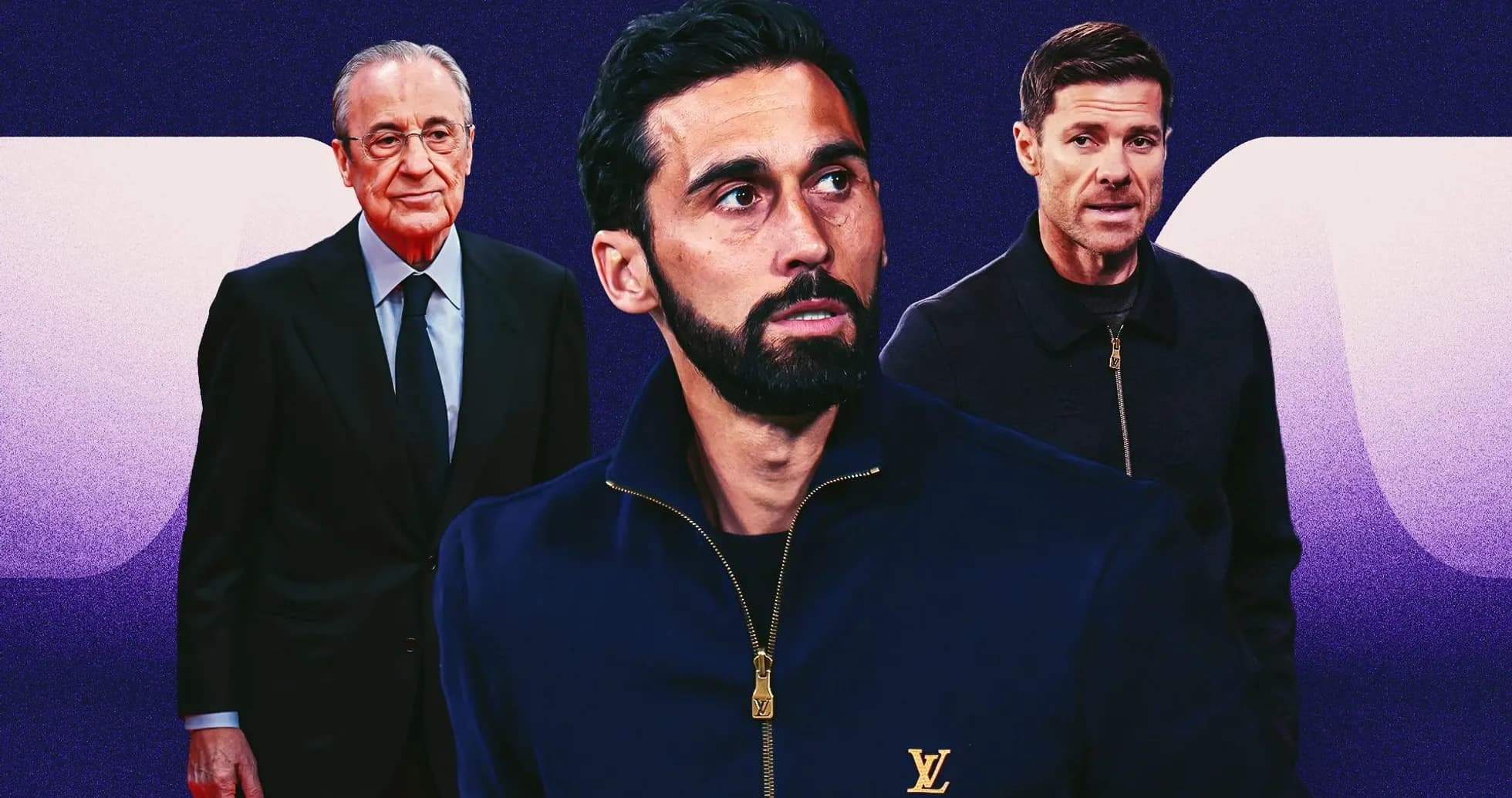
Álvaro Arbeloa's Challenging Start as Real Madrid Interim Coach
Álvaro Arbeloa had barely eased his car out of its space at Valdebebas when Xabi Alonso reversed into it. A minor bump in a Madrid car park, but a perfect metaphor for what followed on January 12. Alonso had been swerving towards the sack for weeks. When it came, it still felt abrupt. His exit was confirmed, and almost in the same breath, Arbeloa was announced as interim.
No drama. No drawn‑out speculation. No ‘tic tac’ countdown on late-night TV. Just a flat, functional club statement: Alvaro Arbeloa, first-team coach.
Maybe that was exactly what Real Madrid needed. The final stretch under Alonso had descended into a soap opera: clashes with Vinicius Jr, a fanbase turning cold, football that felt as joyless as it was ineffective. A bloodless changing of the guard, devoid of sentiment, almost suited the mood.
Arbeloa certainly played his part. His first press conference was brisk, stripped of nostalgia. If he felt anything beyond professional duty, he hid it well. He stuck to the script, hit the club’s favourite notes and moved on.
"This club is about winning, winning, and winning again," he said. "Those demands are a reflection of the DNA that has brought us here, to this trophy-laden history. When I was a player, I learned those values from the people in that dressing room. They’re still there, and that’s what matters. We want to excite fans all over the world and help fill those trophy cabinets even more. That’s my job and what I’ll live for every day."
It sounded like a mission statement. It did not sound like a job description with a clear expiry date.
Because the key question never really got an answer: what, exactly, is Arbeloa? A caretaker for a few weeks? A season-long solution? A long-term bet? The future?
His reply was as opaque as the club’s statement. "I’ve been at this club for 20 years, and I’ll be here as long as Real Madrid want me to be. This is my home, and it always will be."
Home or not, his first step through the door went badly wrong.
A brutal beginning
Arbeloa arrived promising opportunity. The kids from La Fábrica, the ones he had nurtured in the academy, would get their shot. A Copa del Rey tie against second-tier Albacete looked like the ideal soft landing, the perfect stage to back up his words.
He handed out four debuts. Madrid lost 3-2, undone by a 94th-minute winner.
La Liga offered no respite. Madrid have spent the last three months quietly, almost ritualistically, sliding out of the title race. They sit nine points behind Barcelona. Even if they win El Clásico next month, there is little real evidence that they can haul the Catalans back.
The numbers are not kind. From the Club World Cup to early January, Alonso’s Madrid played 34 games: 24 wins, six defeats. Not a disaster on paper, but at this club, “not a disaster” is nowhere near enough. He lost to PSG, Liverpool, Atletico Madrid, Celta Vigo, Barcelona and Manchester City. None of those results were acceptable. The Celta defeat was particularly damning; the loss at Anfield and the Supercopa final against Barca felt like heavy blows to his authority.
Yet most of those setbacks came against sides at, or above, Madrid’s level. Arbeloa’s record has been less forgiving. Across 20 games, he has 13 wins, six defeats and one draw. A lower win percentage than Alonso, and a more erratic profile. The losses have come against Bayern, Mallorca, Getafe, Osasuna, Benfica and Albacete.
The pattern matters as much as the numbers.
From principles to pragmatism
Alonso lived and died by his system. He was a structure obsessive. He adjusted to fit Vinicius Jr and Kylian Mbappé into the same side, but he never abandoned his demand for collective work without the ball. He wanted control, a steady tempo, clear roles. It was modern, meticulous, and, in the end, suffocating. The players stopped responding. The club stopped believing.
Ironically, Arbeloa made his name in the academy by doing something similar. He was a 4-3-3 purist. His greatest success at La Fábrica was moulding tempo-setting midfielders like Thiago Pitarch, who has since stepped up to the first team. His youth sides wanted the ball, but they moved it quickly. They played through the thirds, took risks, yet never fully abandoned their shape.
That version of Arbeloa has vanished.
He has drifted away from his 4-3-3 ideals and into a 4-4-2 halfway house, the same tactical limbo that eventually dragged down Carlo Ancelotti. The message between the lines is clear: Madrid cannot be over-coached; they can only be managed. Put the stars on the pitch, give them a loose framework, and trust that their talent will do the rest.
It sounds romantic. It has not consistently worked.
Madrid have looked languid, short of ideas, almost scripted. The same patterns repeat: the ball funnels wide, Vinicius Jr is swarmed, the opposition break into space. Teams have figured out that if they sit deep, double up on Vinicius and spring forward quickly, Madrid wobble. Mbappé’s cold spell has sharpened the problem, but it is not the only one. This team are not just predictable. They are beatable.
The clearest evidence came in last week’s 2-1 defeat to Bayern. Madrid were second best everywhere. The Bavarians sliced through them and could easily have been three or four goals clear after an hour. That they are still in the tie owes almost everything to Vinicius’ right foot and Jude Bellingham’s relentless running.
And yet, for all the tactical shortcomings, this script is painfully familiar.
Living off the myth
These are exactly the kind of situations that Real Madrid have turned into legend. Their Champions League aura is sometimes exaggerated, but it exists for a reason. Belief and work rate are not enough on their own, but at this club they are never far from the story.
How else do you explain Joselu morphing into a Harry Kane-style No.9 in key European moments? Or Thibaut Courtois’ impossible performance in the 2022 final against Liverpool? Or Rodrygo, who rarely scores headers, rising to nod one in against Manchester City because, on that night, of course he did?
Bayern feels like another of those nights waiting to happen. On paper, Madrid are outgunned in defence, midfield and attack. Arbeloa admitted as much, accepting that his side will have to be better in every department than they were in Germany.
Yet this is exactly when the club tends to find something irrational, something that defies form and logic. The adversity has stacked up neatly: the injuries, the poor league form, the criticism of the coach, the questions over the stars. It all feeds into the mythology.
Vinicius and Mbappé were both poor in the draw with Girona on Friday. Their timing could hardly be better. There is no more natural stage to rediscover their edge than a second leg at the Bernabéu, chasing down a 2-1 deficit against the most in-form side in Europe.
Arbeloa is leaning into it. "Real Madrid's history is built on overcoming difficult challenges like tomorrow," he said. He has talked about belief, about remontadas, about the comfort this club feels on big European nights. He has, deliberately or not, opened the old Champions League playbook and started reading from the familiar pages.
Arbeloa’s night or the end of the road
Strip away the romance and the logic is brutal. Bayern are flying. Harry Kane is playing at a Ballon d’Or level. Madrid are limping, out of every other competition, and clinging to this tournament as their last meaningful frontier.
Every coach before Arbeloa has been judged on what they did on nights like this. Ancelotti, one of the greats, had his position questioned before masterminding famous comebacks. Others survived storms because they could point to a track record, to trophies, to long lists of scalps.
Arbeloa has none of that. No CV to fall back on, no defining achievement as a senior coach. He has been thrown into the role without a clear timeline, armed with little more than a deep understanding of the club’s culture and a willingness to let the stars breathe.
He has already sacrificed some of his principles to keep them happy. He has become the “vibes” manager, the one who loosened the reins, talked about freedom, and trusted the badge to do the rest.
At almost any other club, it would be unreasonable to demand a miracle just to keep your job. At Real Madrid, that is often the entry requirement.
This has to be Arbeloa’s remontada. If it isn’t, it is hard to see why he would be given the chance to engineer another.



