Special Olympics Team Prepares for National Games in Birmingham
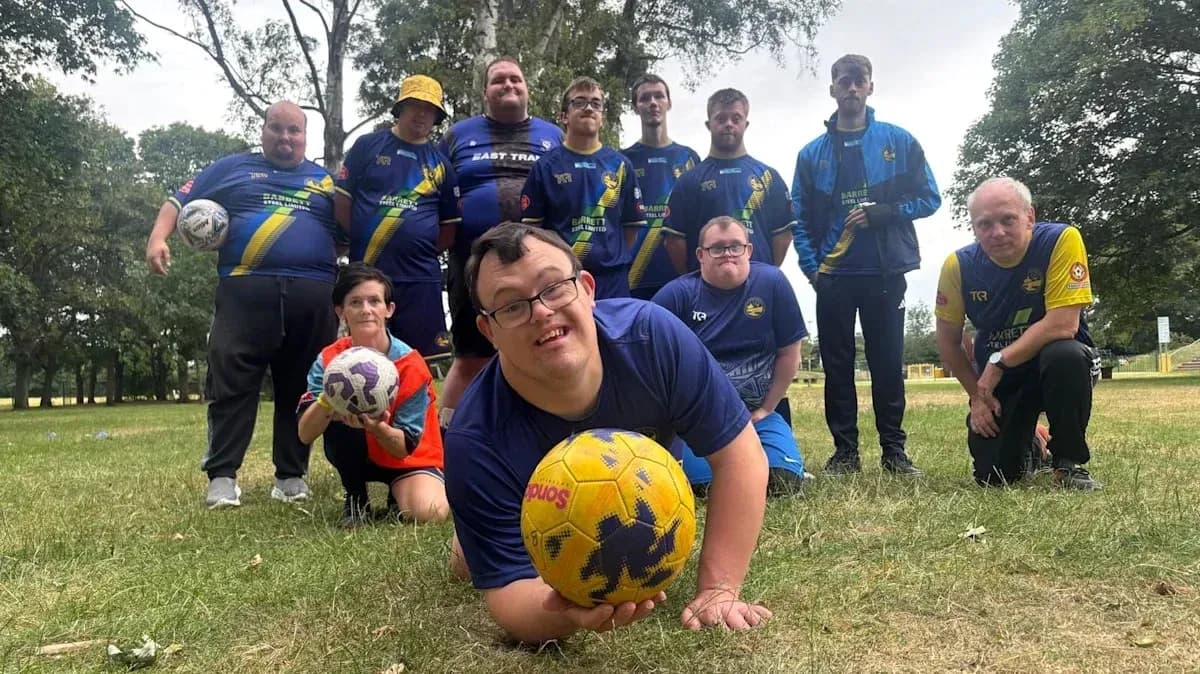
On a hot July evening in Scunthorpe’s Central Park, far from the noise and glare of a World Cup run in New York, a different kind of England team went to work in the shade of the trees.
No TV gantries. No roaring stands. Just a cluster of players with intellectual disabilities, bibs on, boots laced, being driven hard through drills as they chase their own version of football’s biggest prize: Special Olympics gold.
From small steps to national stage
This group began as a team for young adults with Down’s syndrome, based at Bottesford Town Football Club in North Lincolnshire. Over the years it has grown, just as its players have, now welcoming those with autism, ADHD and a range of learning disabilities.
When these players first came together more than eight years ago, the goals were modest. Build a bit of social confidence. Learn how to pass, control, shoot. Find a place where football didn’t leave them behind.
Now they train wearing their own colours, talking not about fitting in, but about medals.
They are preparing for the Special Olympics GB National Summer Games at Alexander Stadium in Birmingham, running from 26 to 30 August. It is the biggest stage many of them have ever known.
Jake, one of the team’s longest-serving players, doesn’t bother dressing it up.
“I feel happy,” he says, when asked about the tournament. He explains that he takes corners, and then, like any set-piece specialist, starts giving tips on how to “wrap” the ball into the net.
He has history at this level. Silver in 2017. This time, the target is clear: score two goals and turn that silver into gold.
A mission bigger than medals
Special Olympics GB runs all year, not just at Games time. It exists to give people with intellectual or learning disabilities a chance to play sport in their communities, week in, week out.
The organisation estimates about 1.5 million people in Great Britain live with an intellectual disability. Its stated mission is to help transform as many of those lives as it can through sport.
At Bottesford Town, that mission is written in the story of one family.
Jake’s mum, Sue, has been there from the very start. She has raised money, organised transport, and watched both her sons grow within the game. Her other son, Aiden, also has disabilities and is now learning to coach the team he once watched from the sidelines.
The team, she explains, was formed at Bottesford Town around a decade ago, initially just for young adults with Down’s syndrome. Demand, and need, quickly widened that brief.
“My son Jake, he’s got Down’s syndrome and he loves playing football but struggled to play it mainstream,” she says. “He found it too difficult and couldn’t keep up with the team.”
So she did what many parents in her position end up doing: she created the space that didn’t exist.
She approached Bottesford Town FC and asked for a chance. A pitch. A slot. A team.
“For Jake to be able to play football was just such a big thing for him,” she says. “It’s his passion. He loves football and he wanted to be able to play it.”
What started as an escape has become a community. The football has improved, yes, but so have the friendships. Players who once arrived shy and uncertain now joke, compete and argue like any squad with something at stake.
“When your child is born and you find out they have a disability, it’s a complete unknown,” Sue says. “But my commitment was always that my boys would access as much as possible in their lives.”
Bottesford Town FC, she adds, have been “amazing”, opening up their facilities — a sports hall for training, a 4G pitch they can use all year round — and treating the team like any other part of the club.
Setbacks, sacrifice and a £10,000 hurdle
The journey to Birmingham has not been smooth.
The team were accepted into the Games back in 2021, only to see the event cancelled because of the Covid-19 pandemic. For a group that thrives on routine, structure and clear goals, that blow landed hard.
“It set quite a few of them back. Jake was one of those who struggled,” Sue says.
The emotional hit was one thing. The financial mountain was another.
To send two teams to this year’s Games — covering travel and accommodation — they needed to raise £10,000. For families already juggling care, work and day-to-day costs, that figure loomed as the “biggest challenge”.
They pushed on. Fundraisers, appeals, every small donation chipping away at a number that stood between these players and the biggest week of their footballing lives.
Training ramps up, ambitions rise
On the pitch, the focus is simple: get better. Manager Michael Potts talks about training “ramping up” as the Games draw closer. The players, he says, are “excited”.
The 4G surface has become a crucial part of their development, giving them a consistent, reliable pitch in all weathers. Touch, passing, movement — everything sharpens when the surface stops being a problem.
As the squad has expanded to include players with a wider range of intellectual disabilities, the coaching team has adapted. Sessions are tailored, instructions broken down, support tweaked to make sure every player gets what they need to thrive.
At the back, Mason is the man with the gloves. He talks about his defence being “rock solid”, a phrase any elite goalkeeper would happily borrow.
Asked what he’d say to help the England men’s team tighten up at the back, he doesn’t blink. Train hard. Get the goalkeeper focusing on “throwing the ball out” properly.
He knows the power of one big moment. At his last competition, he saved a penalty. That memory fuels his own tilt at gold in Birmingham.
Taylor, another long-serving member of the group, has been with the team for a decade and now anchors the defence. Training, he says, is going well. His message to anyone thinking of joining a team like this is straightforward: train hard. His own prediction? Four goals.
Dreams under the trees
As the light fades over Central Park and the session winds down, the picture is clear.
Players in their own kit, running through drills with a seriousness that belies the setting. Coaches barking instructions. Parents watching from the side, half-proud, half-anxious, knowing exactly how much it has taken to get here.
No one is talking about New York. Their world, for now, is Birmingham at the end of August, Alexander Stadium, and the chance to walk away with medals around their necks.
Walking back through the park, the noise of the session drops away, but the impression doesn’t. The passion is obvious. So is the professionalism. This is not a token gesture. It is a football team, preparing for a major competition, with all the intensity that demands.
The next time these players gather under the trees, some of them may be champions. The question now is not whether they belong on that stage.
It’s how far this team — and others like them — can push the game to finally match their ambition.