Angel City W's Tactical Victory Over Kansas City W: A 2-1 Analysis
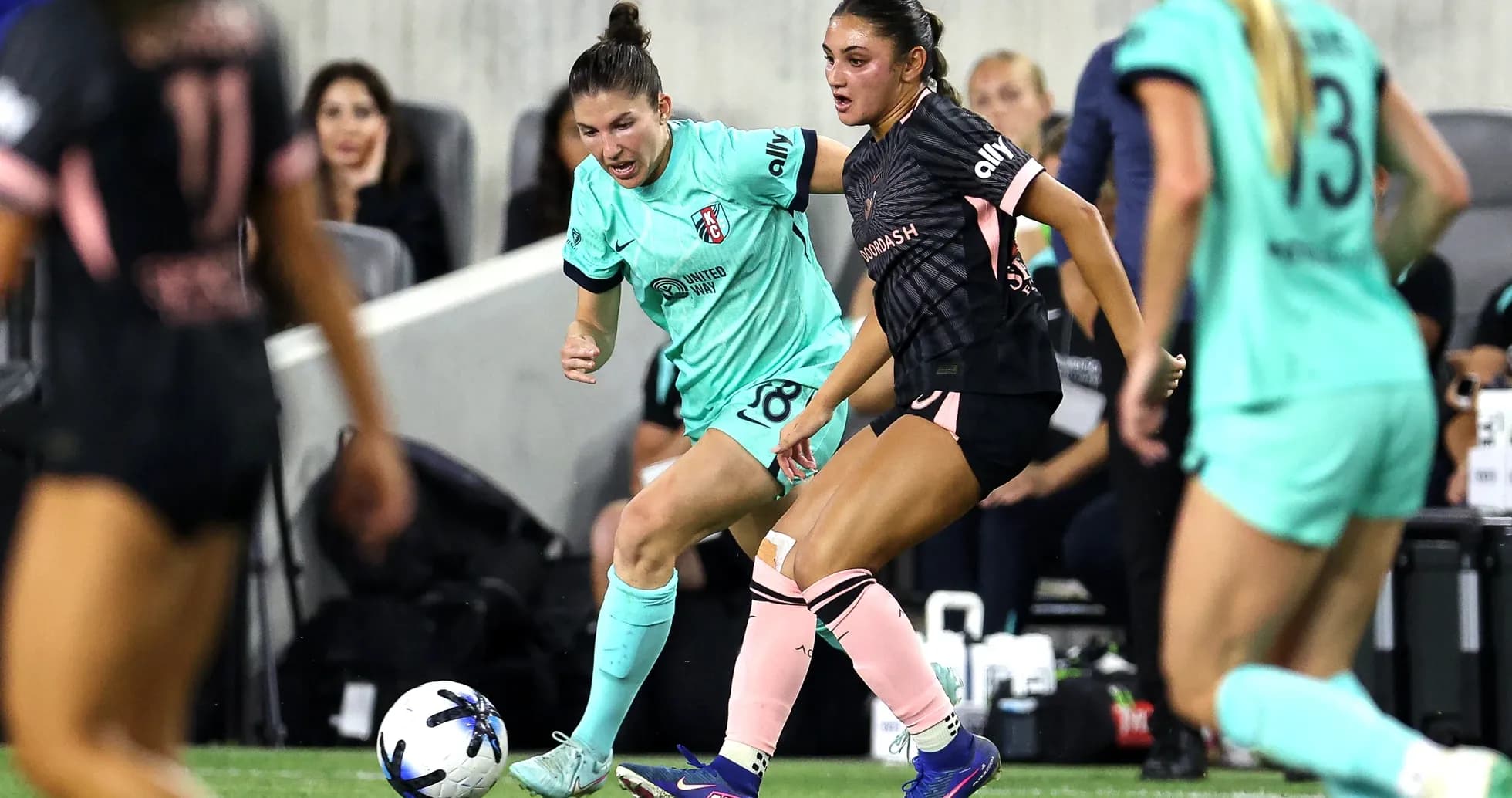
Under the Los Angeles lights at BMO Stadium, Angel City W’s 2–1 win over Kansas City W felt less like a routine group-stage outing and more like a statement about identity. In a league where margins are thin and momentum is currency, this was a night where structures, tendencies and individual profiles all converged into a tight, tactical narrative.
I. The Big Picture – Two 4-2-3-1s, one sharper edge
Both sides lined up in a mirrored 4-2-3-1, a shape that has become their seasonal backbone. Angel City have leaned on this system in 5 matches overall, and it showed in the clarity of their spacing. Kansas City, who have used 4-2-3-1 in 7 games, brought their familiar structure too, but the contrast lay in how each team’s season-long DNA translated under pressure.
Heading into this game, Angel City sat 7th with 13 points from 9 matches, their overall goal difference at +4 (14 scored, 10 conceded). At home, they had been volatile: 3 wins and 3 losses from 6, with 10 goals for and 7 against. Kansas City arrived a rung higher in 6th on 15 points from 10 matches, but with a goal difference of -2 (14 for, 16 against) – a team as dangerous as it was vulnerable.
The statistical undercurrent framed the contest perfectly. Angel City’s attack this campaign has averaged 1.7 goals at home and 1.6 overall, while conceding 1.2 at home and 1.1 overall. Kansas City, by contrast, have been a split personality: 2.5 goals for and just 0.5 against at home, but only 0.7 scored and 2.3 conceded on their travels. On their travels they had lost 5 of 6, scoring 4 and conceding 14. This was always likely to be decided by whether Angel City could drag Kansas City into their away-game chaos.
II. Tactical Voids and Discipline – Walking the line
There were no listed absentees, so both coaches had close to full decks. That made Alexander Straus’ choice to double down on midfield energy significant: a double pivot of N. Martin and Ary Borges, with J. Endo, C. Lageyre and Maiara Niehues ahead, supported Casey Phair as the lone forward. It was a selection built for vertical surges and second-ball dominance.
Angel City’s disciplinary profile this season suggested a side that flirts with the edge. Their yellow cards are scattered, but 27.27% arrive between 76–90 minutes, and they have already seen a red card between 46–60 minutes – that dismissal belongs to Niehues, whose aggressive presence again anchored the midfield here. Kansas City, for their part, spread their yellows more evenly, with 37.50% between 31–45 minutes, hinting at a team that often has to foul to reset when opponents grow into the half.
In a tight 2–1, that edge mattered. Angel City managed to channel their bite without tipping into self-destruction, while Kansas City’s structural fouls never quite disrupted the home side’s rhythm in the key phases.
III. Key Matchups – Hunter vs Shield, Engine vs Enforcer
Hunter vs Shield
The clearest “Hunter vs Shield” storyline belonged to Kansas City’s star: T. Chawinga. With 5 goals and 1 assist in just 6 appearances, Chawinga has been one of the league’s most ruthless midfield finishers, scoring from only 8 shots total and 5 on target. Her threat between the lines and in transition was supposed to be the visitors’ trump card.
But Angel City’s defensive unit, led by the outstanding G. Thompson, had other ideas. Thompson’s season numbers are those of a complete modern full-back: 3 goals, 1 assist, 279 passes at 81% accuracy, 11 key passes, 23 tackles, 3 blocked shots and 10 interceptions. She is not just a defender; she is a pressure-release valve and an attacking outlet. Alongside S. Gorden, E. Sams and E. Shores, she formed a back four that could both compress space around Chawinga and spring forward when the ball was won.
Kansas City’s overall attacking averages – 1.4 goals per game in total but only 0.7 on their travels – met an Angel City defence that, while not watertight, has a clear pattern: they concede heavily late, with 50.00% of their goals against arriving between 76–90 minutes. The fact that this match finished 2–1 without a late collapse suggests improved game management from Straus’ side, especially in those closing minutes where their season-long vulnerability has been most exposed.
Engine Room – Control vs Chaos
In midfield, the “Engine Room” duel pitted Angel City’s layered creators and destroyers against Kansas City’s dual playmakers.
For Angel City, Niehues and Martin formed the platform. Niehues, already marked by that solitary red card this season, is a combative presence: 10 tackles, 2 blocks, 1 interception and 85 duels with 47 won. Her job was to disrupt Chawinga’s runs and limit the space for Kansas City’s advanced midfield trio. Ahead of them, Endo and Lageyre floated between lines, while Ary Borges offered ball progression from deeper pockets.
Kansas City’s response revolved around L. LaBonta and B. Feist in the double pivot, with M. Cooper, Croix Bethune and Chawinga as the advanced three behind A. Sentnor. Cooper and Bethune are the creative heartbeat of this side. Cooper has 2 goals and 3 assists, 9 key passes and 23 dribble attempts with 9 successes; Bethune adds 2 goals, 2 assists, 8 key passes and 37 dribble attempts with 18 successful. They are designed to carry the ball through pressure and feed runners.
Yet Angel City’s compact 4-2-3-1 funnelled Kansas City into traffic. With Thompson stepping high and Niehues snapping into duels, Cooper and Bethune were often forced wide or backward, blunting the direct supply to Sentnor and limiting Chawinga’s ability to arrive in scoring zones.
IV. Statistical Prognosis – What this result tells us
Following this result, the numbers and the eye test converge on a clear picture.
Angel City are evolving into a high-variance but increasingly resilient home side. Overall they score 1.6 goals per match and concede 1.1, and their goal timing shows a pronounced attacking surge between 46–60 minutes, where 35.71% of their goals arrive. That mid-second-half punch was again decisive, aligning with a game plan built around half-time adjustments and increased tempo after the break.
Defensively, their late-game weakness – 50.00% of goals conceded between 76–90 minutes – remains a concern, but closing out a 2–1 against a top-half opponent suggests they are learning to manage those fragile minutes with better control, substitutions and tempo management.
Kansas City, meanwhile, remain a team split in two. At home, their numbers are those of contenders. On their travels, they concede 2.3 goals per match and score only 0.7, with no away clean sheets and 3 away games where they have failed to score. The structure is there, the individual talent is undeniable, but the away version of this side lacks the compactness and conviction of their home persona.
In xG terms, the profiles hint at a modest edge for Angel City in this type of fixture: their consistent chance creation at home, combined with Kansas City’s porous away defence, naturally tilts the expected goals balance toward the hosts. The 2–1 scoreline fits that model: a competitive game, decided by the home side’s sharper execution and better alignment between tactical plan and statistical strengths.
On this night at BMO Stadium, the mirrored formations told one story; the season-long data told another. The scoreboard sided with the numbers. Angel City’s structure, timing and individual profiles made them the more coherent machine, while Kansas City were once again undone by the version of themselves that appears only on the road.