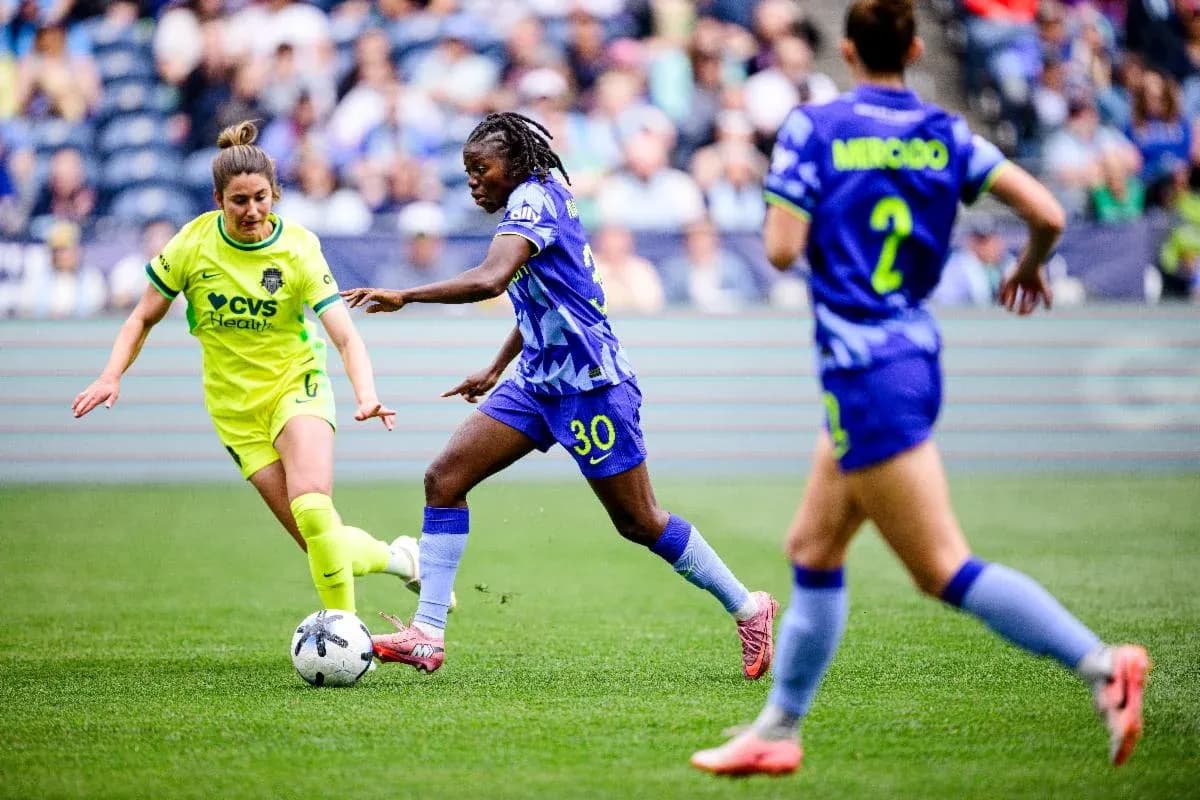
Angel City W vs San Diego Wave W: Mid-Group-Stage Clash with Playoff Implications
Angel City W host San Diego Wave W at BMO Stadium in a mid-group-stage NWSL Women clash in 2026 that already has clear playoff implications: in the league phase, Angel City sit 8th on 9 points (11 goals for, 7 against), while San Diego are 3rd on 15 points (11 goals for, 8 against). With both currently in the NWSL Women play-offs 1/4 final positions, this match is a swing game: a home win would pull Angel City back toward the upper pack, while an away win would widen San Diego’s buffer inside the top four.
Head-to-Head Tactical Summary
In recent meetings, the rivalry has been tight and often low-scoring, with Angel City showing a slight edge in knockout pressure moments. On 10 August 2025 at Snapdragon Stadium in San Diego (Regular Season - 15), the sides drew 1-1 after a 0-0 HT. Earlier that year, on 16 March 2025 at BMO Stadium in Los Angeles (Regular Season - 1), Angel City came from a 0-1 HT deficit to draw 1-1. In 2024 league play, Angel City won 2-1 away at Snapdragon Stadium on 24 August 2024 (Regular Season - 13), having led 2-0 at HT, while the 24 May 2024 meeting at BMO Stadium (Regular Season - 8) finished 0-0. The only knockout-style encounter in the dataset came on 2 August 2024 at Titan Stadium in the NWSL - Liga MXF Summer Cup group stage, where a 0-0 draw (0-0 HT) saw Angel City win 5-3 on penalties. Overall, Angel City have shown they can control games at home and manage tight scorelines, while San Diego have carried more goal threat at Snapdragon but have struggled to convert that into wins in Los Angeles.
Global Season Picture
- League Phase Performance: In the league phase, Angel City W are 8th with 9 points from 6 matches (3 wins, 0 draws, 3 losses), scoring 11 and conceding 7 (goal difference +4). At BMO Stadium they have 2 wins and 2 losses, with 7 goals for and 4 against. San Diego Wave W are 3rd with 15 points from 8 matches (5 wins, 0 draws, 3 losses), scoring 11 and conceding 8 (goal difference +3). Away from home they have 3 wins and 1 loss, with 6 goals for and 5 against.
- All-Competition Metrics: Across all phases of the competition, Angel City’s attack has been proactive, averaging 1.8 goals per match (11 total in 6 games) with a strong surge just after the break (4 goals between minutes 46-60, 36.36% of their total). Defensively they allow 1.2 goals per match (7 conceded), but are vulnerable late, with 4 of those 7 goals conceded between minutes 76-90 (57.14%), indicating a fragile closing phase. Their disciplinary profile is heavy, with yellow cards spread across the match and a red card between minutes 46-60, pointing to an aggressive, high-risk approach. San Diego Wave, across all phases, average 1.4 goals scored per game (11 in 8) with a broad spread of scoring windows and a particular strength between minutes 46-60 (3 goals, 30.00%), while conceding 1.0 goal per game (8 total). Defensively they start poorly, with 3 goals conceded in the first 15 minutes (33.33%) and another 3 between 61-75 (33.33%), suggesting early and mid-half concentration dips despite an otherwise solid defensive record.
- Form Trajectory: In the league phase, Angel City’s form string of LLLWW shows a clear split: a three-game losing run followed by back-to-back wins, indicating a side that has recently corrected course and is trending upward. San Diego’s LLWWW form also reflects a strong rebound: two early defeats followed by three straight wins, underlining a team that has stabilized and is now performing like a top-three contender. Both teams therefore come into this fixture on upward curves after early-season volatility, with momentum slightly stronger in San Diego’s case due to a higher baseline of points and away results.
Tactical Efficiency
Without explicit numerical attack/defense indices from the comparison block, the efficiency profile must be inferred from the season data. Across all phases of the competition, Angel City’s attacking efficiency is high in terms of output (1.8 goals per game) but situationally streaky: they generate big surges after half-time and in the final quarter (combined 6 goals from minutes 46-90, 54.54% of their total), yet also fail to score in one of six matches and rely on strong home peaks (4-0 as their biggest home win). Defensively, their structure looks solid for 70 minutes (only 3 goals conceded from 0-75) but collapses late (4 goals conceded between 76-90, 57.14%), so their “defense index” is dragged down by end-game management rather than overall shape.
San Diego’s all-phase numbers point to a more balanced efficiency profile. Their attack is slightly less explosive (1.4 goals per game) but steadier across home and away, with no extreme dependence on a single time window and the capacity to score multiple times in both halves. Defensively, conceding just 1.0 goal per game with no matches going over 2.5 goals against them (under on 2.5 in all 8 games) reflects a compact, controlled block that rarely gets opened up. Their main inefficiency is in concentration at the very start and around the 60-75 minute mark, where most of their goals conceded cluster. In comparative terms, Angel City’s “attack index” is more volatile but higher-ceiling, while San Diego’s “defense index” is more consistent and better aligned with their away record of 3 wins and only 5 goals conceded on the road.
The Verdict: Seasonal Impact
This fixture’s seasonal impact is clear: for Angel City, a home win would move them from mid-table risk into serious contention for a safer 1/4 final berth, validating their recent LLLWW turnaround and leveraging a positive historical record against San Diego at BMO Stadium. It would also cut the gap to San Diego and compress the top half, potentially turning the title and top-four race into a denser pack where one or two results can swing positions rapidly.
For San Diego Wave, an away victory would consolidate their 3rd place in the league phase, extend the points gap to teams like Angel City, and strengthen their platform to push toward the very top rather than merely defending a 1/4 final slot. Given their 5 wins from 8 and strong away return, three points here would mark them as credible title-race participants in 2026, not just playoff qualifiers.
A draw would marginally favor San Diego, preserving their cushion and keeping them on a stable trajectory toward the upper seeds, while leaving Angel City under pressure to chase wins elsewhere to avoid falling into a congested mid-table battle. In summary, this is a leverage game: Angel City are playing to reattach themselves to the top-four conversation, while San Diego are playing to turn a good start into a sustained, possibly title-adjacent campaign.