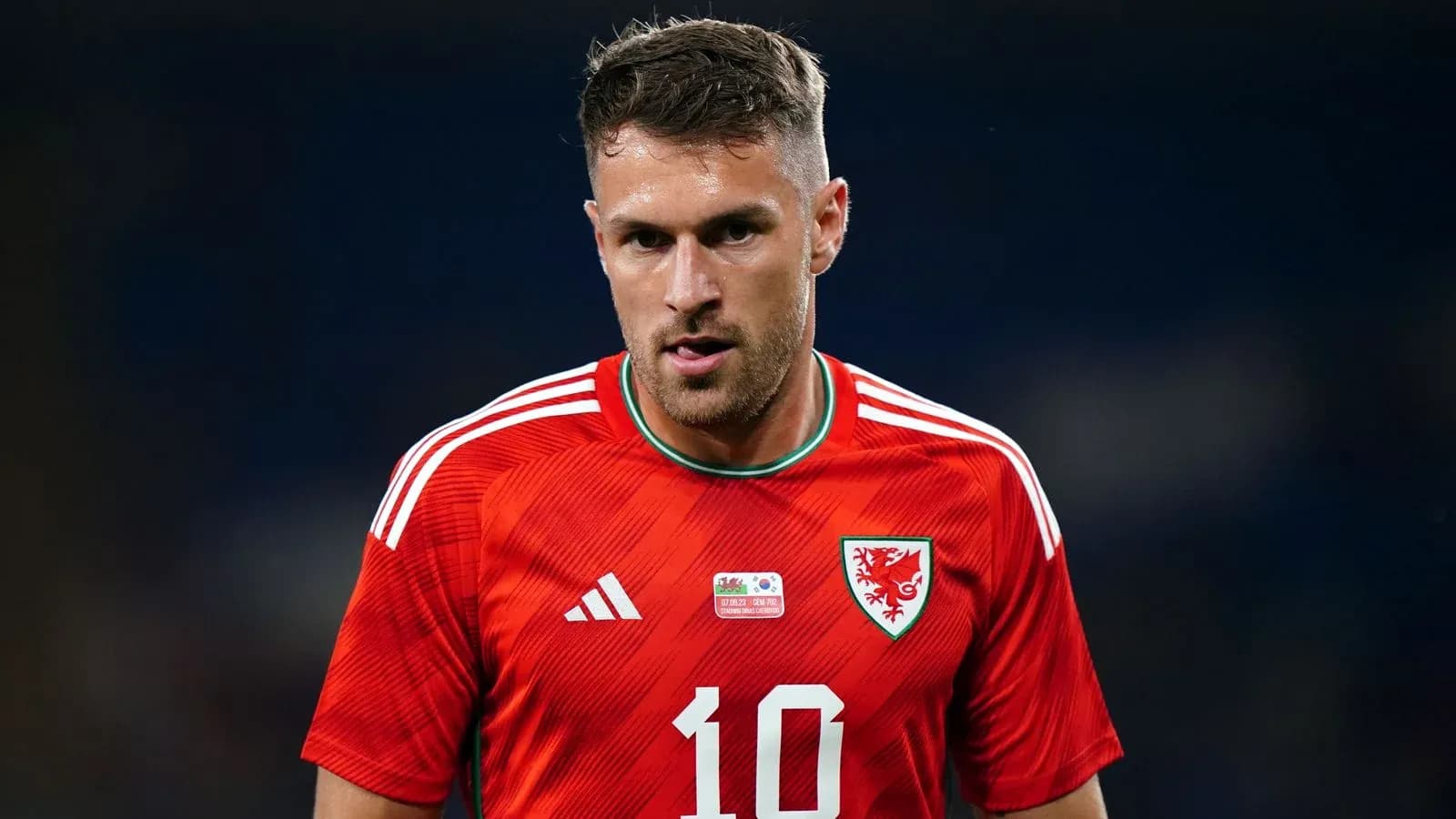
Aaron Ramsey Retires: A Quiet Superstar's Impact on Welsh Football
Aaron Ramsey has drawn a line under a 20-year professional career, the 35-year-old announcing his retirement and closing a chapter that stretched from a teenage debut at Cardiff to the glare of World Cups and European finals.
The former Arsenal midfielder, capped 86 times by Wales and a central figure in the country’s so‑called golden generation, had been without a club since leaving Mexican side UNAM by mutual consent in October. His decision, delivered on his personal Instagram, ends one of the most influential Welsh careers of the modern era.
“This has not been an easy decision to make. After a lot of consideration, I have decided to retire from football,” Ramsey wrote, before turning his attention to the team that defined him.
“It has been my privilege to wear the Welsh shirt and experience so many incredible moments in it… To the Red Wall. You have been there through thick and thin… We’ve been through everything together and it’s been an honour to represent you. Diolch.”
For Wales, he was never just another name on the teamsheet. He was the heartbeat.
From Cardiff prodigy to Arsenal mainstay
Ramsey’s story started in familiar surroundings but at a startling pace. In April 2007, at just 16 years and 124 days, he became Cardiff City’s youngest-ever player. Within a year he had gone from promising academy product to prized asset, joining Arsenal for just under £5m.
North London did not embrace him overnight. Injuries arrived early and often, disrupting his rhythm just as he threatened to settle. Even so, his talent refused to wait. He collected back-to-back Welsh Young Player of the Year awards in 2009 and 2010, a nod to the quality that Arsenal fans were only seeing in flashes.
When he did finally break through, he stayed. Ramsey made 369 appearances for Arsenal, scoring 64 goals and carving out a reputation as a midfielder who could both knit play together and decide games. He hit double figures in the Premier League in the 2013/14 season and twice claimed the club’s Player of the Year award, a significant feat in an era of constant change at the Emirates.
He also became a man for big moments. Three FA Cups arrived during his time in north London, and Ramsey’s name is forever tied to those Wembley afternoons and the sense that, when the stakes rose, he relished the responsibility.
A golden generation’s lynchpin
If Arsenal shaped his club career, Wales gave it its soul.
Ramsey’s influence on the national side came early. He captained Wales for the first time at just 20 under the late Gary Speed, a powerful vote of confidence in his temperament as much as his technique, before later taking on the role permanently.
Wales described him on Friday as a “world-class talent” and an “integral part of the golden generation that made international history” – a fair reflection rather than polite tribute. He helped drag the country into three major tournaments and stood at the centre of their greatest modern achievement: the run to the Euro 2016 semi-finals in France, where he earned a place in the team of the tournament.
Those nights – the surge past Belgium, the sense of a small nation playing with a big voice – belonged to Gareth Bale in the headlines, but Ramsey’s work between the lines powered the dream. He set the tempo, saw passes others missed, and gave Wales a sophistication they had long lacked on the biggest stage.
He was there again in 2022, part of the side that finally took Wales back to a World Cup for the first time since 1958. He started all three matches in Qatar, a symbolic presence as much as a tactical one, closing the circle on a journey that had begun before many of his younger teammates were born.
Titles, setbacks and one cruel penalty
Ramsey’s club path after Arsenal took him across Europe and beyond. A move to Juventus in 2019 brought a Scudetto under Maurizio Sarri and a Coppa Italia the following year, proof that his game translated to the most tactical league in Europe. His time in Turin never quite settled into dominance, but he left with medals and respect.
A loan to Rangers followed, and with it more silverware in the form of a Scottish Cup. There was also one of the harshest moments of his career. Introduced as a 117th-minute substitute in the Europa League final against Eintracht Frankfurt, Ramsey stepped up in the shootout and missed the decisive penalty as Rangers lost 5-4. For a player whose career had been defined by composure in big moments, it was a rare, brutal twist.
He moved back to boyhood club Cardiff for a second spell, a romantic return that also included a brief stint as interim manager, before taking the unusual step of heading to Mexico with UNAM. When that contract ended by mutual consent last October, the sense grew that the end might be near.
Now the confirmation has come.
A career that changed expectations
Across more than 250 Premier League appearances for Arsenal and 21 goals for Wales, Ramsey reshaped what Welsh football could dare to expect. He was not just a supporting act to Bale, but a driving force in his own right – the player who connected defence and attack, who could run beyond a striker or drop deep to dictate.
In his farewell, he reserved special praise for those who carried him along the way. “Thank you to all the clubs I've been lucky enough to play for. Thank you to all the managers and staff that have helped me be able to live my dream and play at the highest level. And a huge thank you to my wife and children and all my family. Without you by my side throughout, none of this would have been possible.”
For Wales, for Arsenal, and for a generation that watched him grow from a slight teenager in blue to a leader in red, his retirement marks more than the end of a career. It closes a defining era.
The Red Wall will march on. The next talents will emerge. But the standard Ramsey set – and the belief he helped embed in a small footballing nation – will be the measure they are judged against.