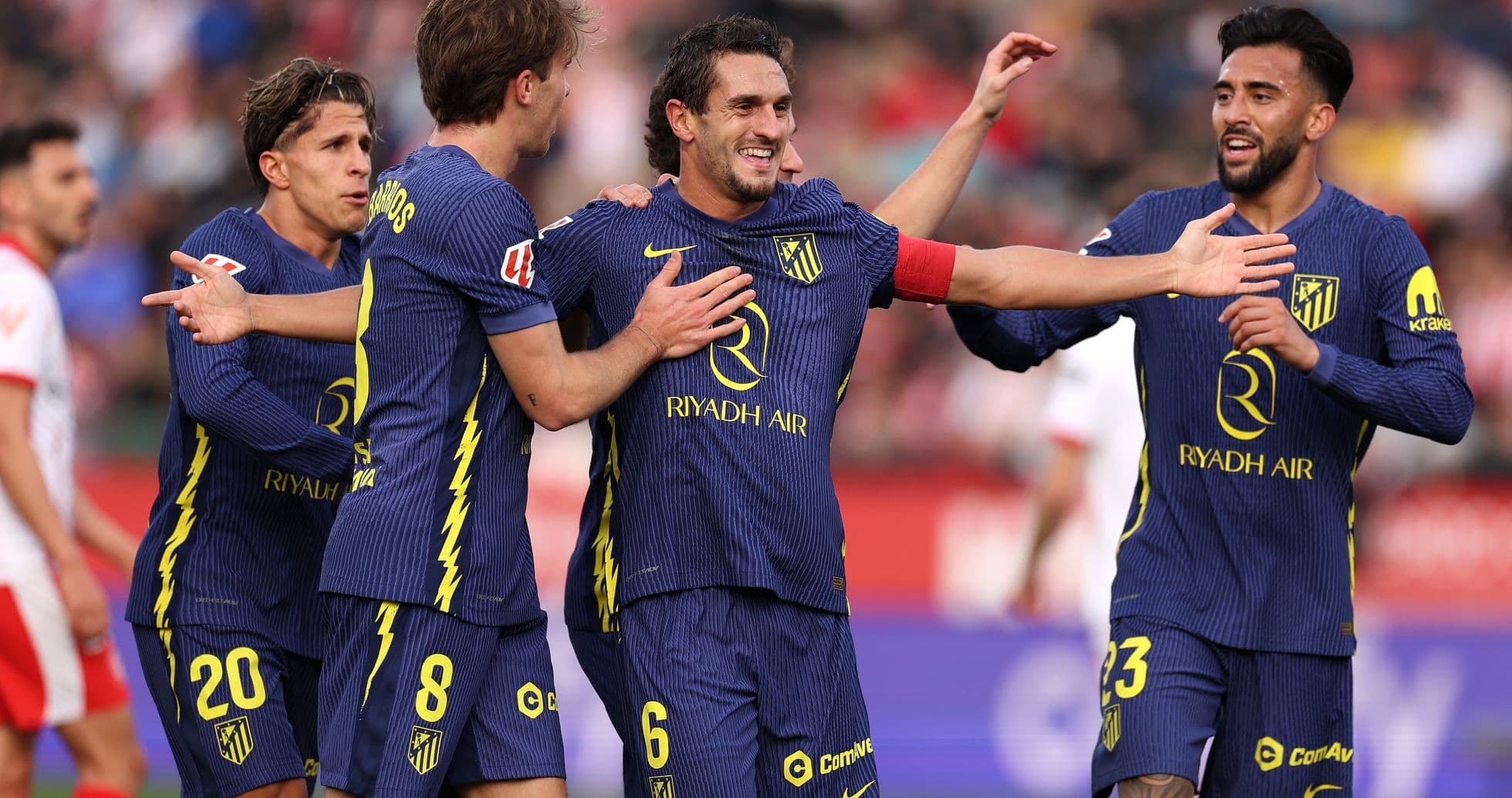
Atletico Madrid vs Girona: La Liga Round 37 Analysis
The Riyadh Air Metropolitano felt like a pressure chamber for two very different missions. Atletico Madrid came into this La Liga Round 37 clash entrenched in 4th place on 69 points, their Champions League ticket almost stamped but still demanding a statement. Girona arrived in 18th on 40 points, trapped in the relegation zone and clinging to the idea that one big away performance could flip their season’s narrative.
Following this result, the 1-0 scoreline told a familiar story. Atletico leaned again on the identity that has carried them through the campaign: a ruthless home edge and defensive control. At home this season they have been imposing, with 15 wins from 19, scoring 39 and conceding just 17. That +22 overall goal difference (61 scored, 39 conceded) is built on nights exactly like this: functional, controlled, and unforgiving.
Girona’s defeat, by contrast, was almost a compressed version of their year. On their travels they have only 3 wins from 19, with 18 goals scored and 28 conceded, and an away goals-against average of 1.5. They are competitive enough to hang in games, but rarely sharp enough in either box to tilt them.
I. The Big Picture: Simeone’s late-season pivot
Diego Simeone’s choice of a 4-3-3 felt like a deliberate flex of squad depth in the face of an injury list that would cripple most sides. Without J. Alvarez (ankle), P. Barrios (muscle), J. Cardoso (contusion), J. M. Gimenez, N. Gonzalez, R. Mendoza, N. Molina and the suspended M. Llorente, he rebuilt the spine with a mix of reliability and recalibration.
J. Oblak anchored the side behind a back four of M. Ruggeri, D. Hancko, R. Le Normand and M. Pubill. In front, Koke sat as the reference point in midfield, flanked by A. Baena and O. Vargas, while A. Lookman and A. Griezmann worked either side of G. Simeone in a fluid front three.
Opposite him, Michel kept faith with Girona’s season-long blueprint, a 4-2-3-1 that has been their default in 20 league matches. P. Gazzaniga started in goal, shielded by A. Moreno, Vitor Reis, A. Frances and A. Martinez. A. Witsel and I. Martin formed the double pivot, with B. Gil, A. Ounahi and J. Roca supporting lone forward V. Tsygankov.
II. Tactical Voids: Who was missing, and what it cost
Atletico’s absences were concentrated in the defensive and transitional core. No Gimenez and no N. Molina stripped Simeone of his usual right-sided aggression and aerial dominance, forcing R. Le Normand and D. Hancko into an uncompromising, position-first partnership. The absence of M. Llorente through suspension removed one of the league’s best vertical runners, pushing more creative and carrying responsibility onto A. Baena and O. Vargas.
Yet Atletico’s season data suggests they are built to absorb such losses. Overall they average 1.6 goals for per match and 1.1 against, but at home that attacking figure jumps to 2.1. Even with a patched XI, the structure and pressing triggers are so ingrained that the system often outlives the individuals.
Girona’s list of absentees cut into their experience and depth. Juan Carlos and Portu (both knee injuries), A. Ruiz and V. Vanat were all unavailable, and the data snapshot even lists M. ter Stegen as missing for Girona – a quirk of registration, but one that underlines how much Michel has had to juggle resources. Without Portu’s running and Juan Carlos’ calm, Girona’s margin for error shrank further in a stadium where they needed every ounce of resilience.
Disciplinary tendencies also framed the risk. Atletico’s yellow cards are spread across the game, with noticeable spikes between 31-45 minutes (20.51%) and 46-60 (17.95%), reflecting their willingness to foul to control transitions. Girona, by contrast, live dangerously late: 39.47% of their yellow cards arrive between 76-90 minutes, and a further 17.11% from 91-105. In a survival fight, that volatility is a loaded gun.
III. Key Matchups: Hunter vs Shield, Engine Room vs Enforcer
The “Hunter vs Shield” storyline here lived mostly in potential. A. Sørloth, Atletico’s leading scorer in La Liga with 13 goals from 34 appearances, began on the bench. His profile is clear: 54 shots, 34 on target, a classic penalty-box reference who thrives on service. Simeone’s decision to start G. Simeone centrally, with Griezmann and Lookman around him, pointed to a more mobile front line designed to drag Girona’s centre-backs into wide and uncomfortable areas.
For Girona, the “shield” was headlined by Vitor Reis. His season numbers are striking for a 19-year-old: 3048 minutes, 48 tackles, and, crucially, 40 blocked shots. Vitor Reis blocked 40 shots this season, a testament to his timing and bravery in the box. Yet his place atop the red-card charts (1 red, 7 yellows) hints at the thin line he walks between last-ditch heroics and over-commitment.
In midfield, the “Engine Room” duel set Koke and O. Vargas against A. Witsel and I. Martin. Atletico’s season-long use of 4-4-2 (24 matches) and 4-2-3-1 (3 matches) has hard-wired them for compactness between the lines; shifting into 4-3-3 here allowed Koke to orchestrate with two runners either side. G. Simeone, listed as a midfielder in his season data but used here higher up, stitched phases together with the same intelligence that has delivered 6 assists and 31 key passes. His 927 completed passes at 81% accuracy and 43 tackles underline why he is Simeone’s hybrid piece: creator, presser, and auxiliary eight when needed.
Girona’s double pivot, with Witsel’s positional discipline and Martin’s energy, tried to slow those rotations. But Girona’s overall defensive record – 54 conceded in total, with 28 on their travels – meant that even well-organised phases were always one mistake away from punishment.
IV. Statistical Prognosis: What this performance says about both futures
Following this result, Atletico’s season arc remains coherent. At home they have conceded only 17 in 19, with a goals-against average of 0.9. The clean-sheet culture is reinforced by 14 shutouts overall, and they have failed to score in just 2 home games. Their penalty record – 3 taken, 3 scored, 0 missed – speaks to a team that rarely wastes high-value chances.
Girona’s numbers paint the opposite picture. Their total of 38 goals scored against 54 conceded yields that -16 goal difference, and they have failed to score in 10 matches overall, including 5 away. Even their perfect penalty record (7 scored from 7) cannot mask the structural issues: they simply allow too many good chances, particularly late in games where their yellow-card surge between 76-90 minutes often coincides with fatigue and desperation.
If we overlay the tactical and statistical layers, the prognosis is clear. Atletico’s defensive solidity and home attacking average suggest that, in xG terms, they consistently generate and deny better chances than their opponents in Madrid. Girona, with an away goals-for average of 0.9 and goals-against average of 1.5, are almost always chasing probability.
This 1-0 felt like the logical outcome of those trajectories. Atletico, even with a patched XI and without their top scorer in the starting lineup, had enough structure, pressing intelligence and individual quality in players like G. Simeone, Griezmann and Koke to control the tempo and protect a narrow lead. Girona, for all the courage of Vitor Reis and the work of Witsel and Tsygankov, again found themselves on the wrong side of the margins that define survival.
In the end, the night in Madrid did not just settle a match; it underlined why one club is consolidating its place among Europe’s elite, while the other stares into the uncertainty of relegation with numbers that have been warning of this danger all season.