
World Cup Portraits: The Art of Capturing Football Superstars
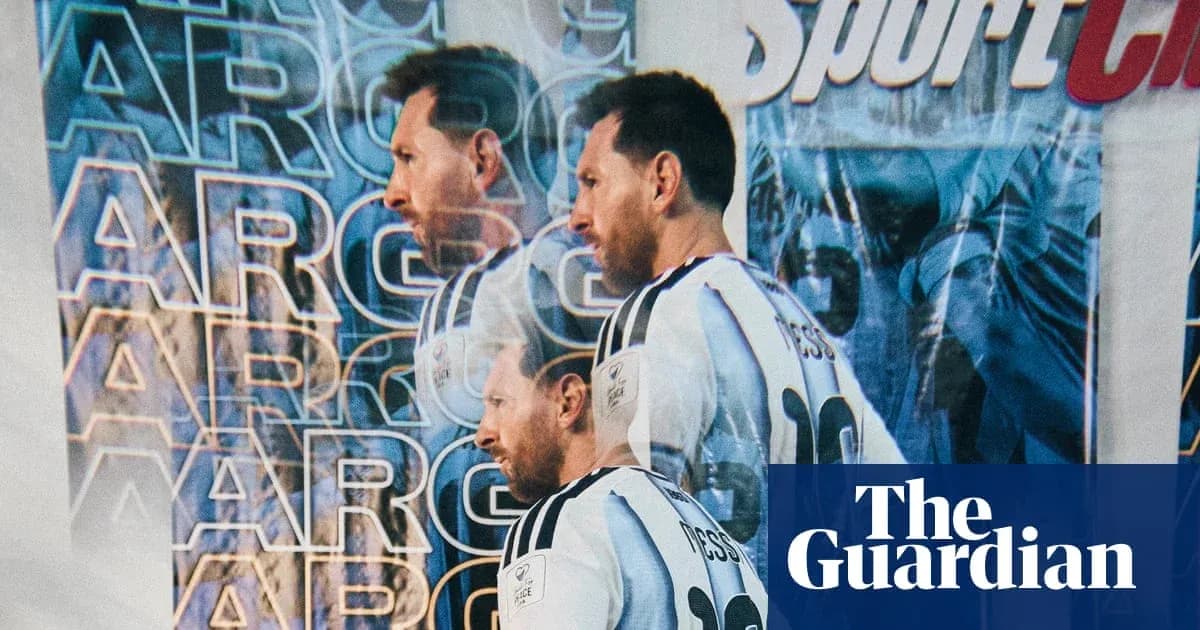
Lionel Messi stands bolt upright, shoulders squared, gaze fixed. No smile, no flourish. Just the most scrutinised footballer on earth, frozen in a frame that looks almost austere.
Across the same World Cup conveyor belt, Marc Cucurella flicks his hair and half-dances into shot. Diego Moreira shields his eyes with a forearm and quietly unveils an unsettling tattoo. Harry Kane drops awkwardly on to one knee, as if caught between a sponsor shoot and a school photo.
At this World Cup, 1,248 players and 48 managers filed through the same ritual. No one escaped. The official portrait is no longer a flat headshot on a plain background; it’s a tiny stage where football’s biggest names decide what version of themselves they want to send around the world.
Production line of superstars
Getty Images, commissioned by Fifa, spent recent weeks turning training bases into makeshift studios. Every squad had two photographers assigned, working in tandem. One set-up stayed simple and clean, the other more distinctive, so players and coaches could be shuttled between them with minimal fuss.
The lighting was stripped back but unforgiving. A big studio strobe with a softbox aimed at the torso. A couple of rim lights behind to carve out the silhouette and give shoulders and jawlines a sharper edge. No theatrical shadows, no moody noir. Just clarity and control.
The backdrops, muted compared with the bolder 2022 World Cup portraits, left the heavy lifting to the lenses. Special filters spun the images into something more vivid: unpredictable blur, fractured colour, kaleidoscopic flares. Messi’s portrait, with its shimmering distortions, came straight out of the camera, not out of a software lab.
Behind the lens, it felt less like a glamorous fashion shoot and more like a high-speed factory line.
“With these kinds of shoots, you only get a few minutes with each player and you have to bash out various pictures and think incredibly quickly,” says The Guardian sports photographer Tom Jenkins, part of the operation.
You don’t get a warm-up. You get a superstar, a countdown and the expectation that you’ll nail it.
Between school photo and celebration pose
Jenkins knows the old way. Stand there. Hands behind back. Neutral expression. The classic media-day mugshot.
“You want some shots that are dead plain like a school photo – that’s how player portraits always used to be done – but these days you also want pictures that are more emotive and fun,” he explains.
The game has changed. Players arrive with a catalogue of rehearsed poses: arms folded, finger to lips, hands over ears, the celebration they’ve repeated in front of 60,000 fans. The photographers still need their own ideas, a mental checklist of options, because time evaporates the moment the subject steps on to the tape mark.
“The interesting thing is that you’re in control of these superstars and every aspect of the shoot,” Jenkins says. “There’s a lot of pressure that comes with that. You have to make sure you’ve set things up and tested everything before they arrive, so that when the shoot starts you can just focus on them.”
Control is everything. Lighting tested. Filters checked. Backgrounds locked in. Once Messi or Kane walks through the curtain, there is no fiddling with cables.
Even the basics are systematised. Name cards wait for every player – Messi included, just in case someone in post-production somehow blanks on the most famous face in the sport. After each burst of shots, players often wander over to the monitor, scanning through the frames, judging angles, hair, posture.
Footballers as brands
“Most football players are very aware of their own image these days and they know how powerful it can be, especially through Instagram,” Jenkins says.
They have practised this. Campaigns for Burberry, grooming deals with L’Oréal, fashion shoots and lifestyle spreads. Eberechi Eze has already posed for Burberry. Declan Rice has fronted L’Oréal. By the time they land at a World Cup, the camera is no longer an intruder. It’s part of the job.
“So actually they’re much more comfortable with being in front of the camera and some of them really enjoy it,” Jenkins adds.
Comfort doesn’t always guarantee a flattering result. England’s squad learned that the hard way when their portraits hit social media. Rice was mocked for his sunburnt complexion. Anthony Gordon found himself compared, relentlessly, to Princess Diana. Dean Henderson’s intense side-eye sparked its own strand of dark humour.
The internet can be merciless. The photographers can only shape so much.
Yet among the memes and mockery, something else shines through. The more daring frames – the ones of Jude Bellingham and his team-mates that lean into colour, distortion and attitude – show what can be done in-camera when the technical craft meets a sliver of personality. Even when the subject isn’t naturally expressive, the lens can still find a spark.
Bielsa, perfectly difficult
The most talked-about portrait of this World Cup does not belong to a player at all. It belongs to Marcelo Bielsa.
Shot by Michael Regan at Uruguay’s base in Cancún, Mexico, the image captures the Argentinian manager doing the one thing a photographer dreads: refusing to play along.
Bielsa doesn’t look down the barrel of the lens. He doesn’t even lift his head. He stares at his own feet, shoulders hunched, posture closed, as if the whole process offends his sensibilities. The frame feels wrong by conventional standards – and that is exactly why it works.
“I’m not a model,” he protested afterwards.
He didn’t need to be. The portrait has raced around the football world precisely because it rejects the usual choreography. No forced intensity. No contrived swagger. Just a stubborn refusal to perform.
“Ultimately I think the best portrait is one that displays the individual’s personality, and that’s why the Bielsa picture is so brilliant,” Jenkins says. “It’s perfectly him.”
In an age when players and coaches curate every image, the most powerful shot of the tournament might be the one where the subject wants nothing to do with the camera at all.



