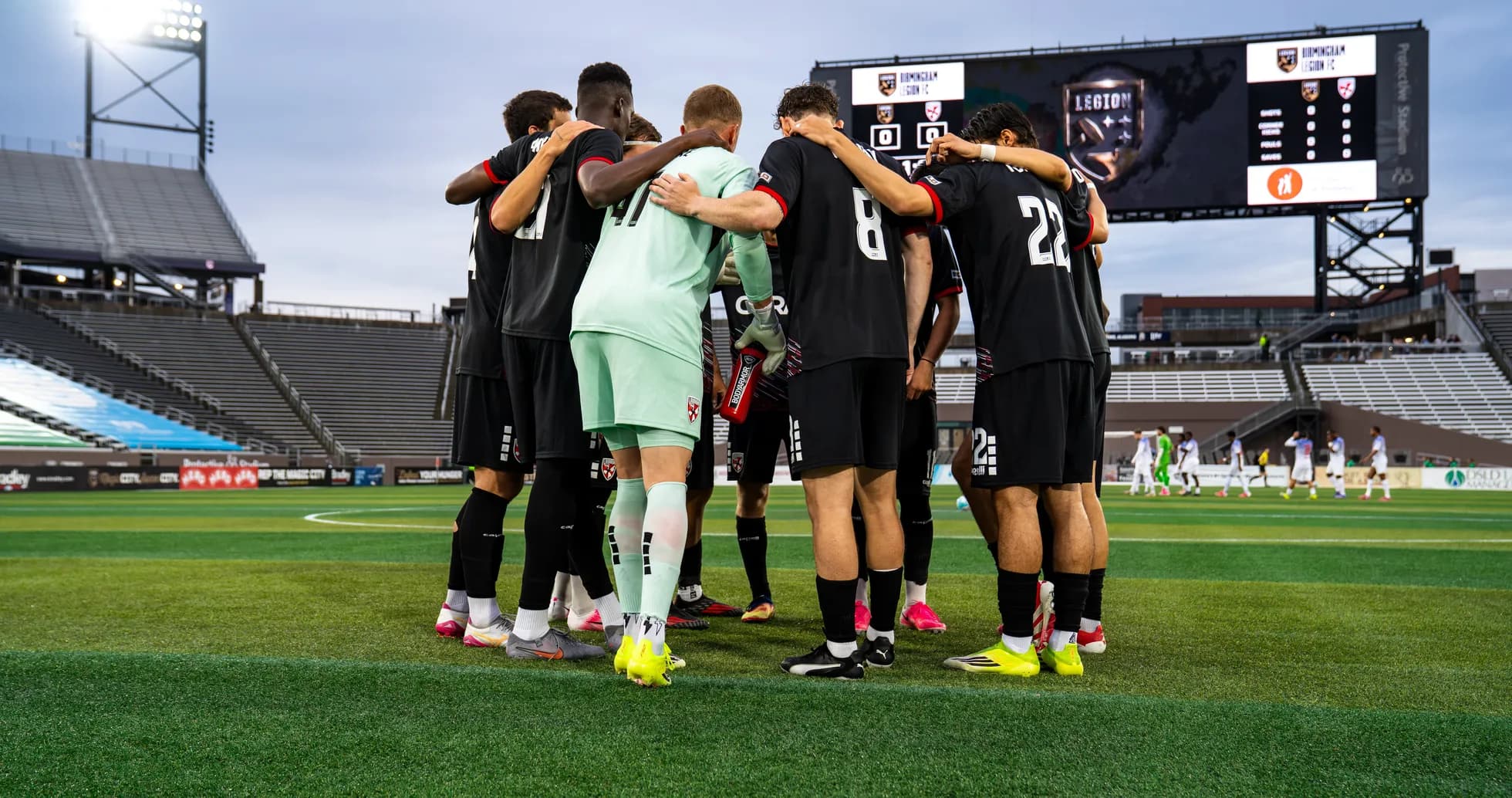
Birmingham Legion and Loudoun United Draw 1-1: A Match of Missed Opportunities
Under the lights at Protective Stadium, Birmingham Legion and Loudoun United shared a 1-1 draw that felt less like a deadlock and more like a mirror held up to two sides still searching for a decisive identity in the USL Championship’s Group Stage. Following this result, Birmingham sit 10th on 13 points with a goal difference of -2 (14 scored, 16 conceded), while Loudoun remain just behind them in 11th on 10 points and a goal difference of -8 (14 scored, 22 conceded). The table says mid-pack strugglers; the performance on the night suggested two projects still very much in construction.
I. The Big Picture: Cautious structures, fragile margins
The season’s statistical DNA framed this fixture long before the first whistle. Birmingham, with only 2 wins from 13 matches overall, have leaned into stalemates: 7 draws in total, and 5 of those at home. Their attack at Protective Stadium has been cautious and low-yield, averaging 0.8 goals at home, while conceding 0.9. Clean sheets at home (3) underline a preference for control over chaos, but 3 home matches without scoring show how thin the attacking edge can be.
Loudoun arrived with a different imbalance. Overall, they average 1.2 goals for and 1.8 against, a negative spread that explains that -8 goal difference. On their travels, they have been tighter but still vulnerable: 0.8 goals scored away, 1.6 conceded, with 2 away clean sheets offset by 2 away defeats. Heading into this game, both sides had drawn more than they had won or lost, and the 1-1 scoreline felt almost preordained.
The first half followed the script of two wary teams. With formations not explicitly listed, the shapes were inferred from personnel: Birmingham’s blend of J. Koleilat in goal, a back line anchored by L. Duru, K. Hughes, R. Hamouda and A. Daley, and a midfield platform including S. Antwi and S. Shashoua, suggested a structure that prioritised security in central zones. Loudoun, with E. Bandre in goal and a defensive unit of N. Adnan, J. Erlandson, B. Akinyode and C. Torres, leaned on the physical presence of Akinyode and the dual midfield roles of J. Murphy and K. Awuah to keep the game in front of them.
II. Tactical Voids and Discipline: Edges never fully taken
There were no listed absentees, so both coaches—Jay Heaps and Anthony Limbrick—had near-full decks. Yet the tactical voids came not from who was missing, but from what was missing: sustained risk.
Birmingham’s season-long card profile hinted at late-game volatility, and it hovered over the contest like a warning sign. Overall, 28.57% of their yellow cards come in the 76-90 minute window, and they have seen their only red card in that same stretch. Loudoun’s discipline tells a similar story: 34.29% of their yellows arrive between 76-90 minutes, with another 25.71% between 46-60. This is a fixture where the game tends to fray precisely when legs tire and structure loosens.
On the night, that history informed the tempo. Neither side overcommitted early; both were keenly aware that their most dangerous period, statistically, often coincides with their most fragile discipline. The result was a contest that built slowly, with the true intensity reserved for the final third of the match.
III. Key Matchups: Hunter vs Shield, Engine Room vs Engine Room
Without official top scorers listed, the “hunter vs shield” battle had to be read through roles rather than raw tallies. For Birmingham, the attacking trident of T. Pasher, P. Vassell and G. Diarbian, supported by R. Williams, formed the cutting edge. Their challenge was to puncture a Loudoun away defence that, while conceding 1.6 goals per game on their travels, had also produced 2 away clean sheets. The 1 goal Birmingham found fit neatly into those numbers—just enough to test Loudoun’s resolve, not enough to break them.
At the other end, Loudoun’s forward line of A. Ordonez, T. Ulfarsson and A. Aboukoura carried the burden of turning a modest away scoring rate of 0.8 into something more. Against a Birmingham home defence that concedes 0.9 and has 3 clean sheets at Protective Stadium, the away side’s single goal felt like a fair reflection of their season-long profile: opportunistic rather than relentless.
The true battleground, though, was the engine room. Birmingham’s S. Antwi and S. Shashoua were tasked with knitting play and protecting the back four, while Loudoun’s J. Murphy and K. Awuah mirrored that dual responsibility. With neither side boasting a dominant playmaker in the data, this became a game of collective balance. Birmingham’s season-long pattern—failing to score in 3 home matches—suggests that when their midfield cannot break lines, the entire attack blunts. Loudoun, who have failed to score in 3 matches overall, faced a similar dependence on central progression.
Substitutions added different textures rather than transforming the story. From the Birmingham bench, options like S. Saucedo, R. Damus and N. Brown offered fresh legs and direct running, while Loudoun could turn to J. Panayotou, S. Young and L. Barrus to adjust their press and protect transitions. Each change was a tweak, not a revolution, aimed at nudging a knife-edge game rather than blowing it open.
IV. Statistical Prognosis: A draw that explains the table
Following this result, the numbers and the narrative align. Birmingham’s overall scoring average of 1.1 and conceding average of 1.2, Loudoun’s 1.2 for and 1.8 against—these are the profiles of teams that live in the margins. A 1-1 at Protective Stadium is almost a mathematical midpoint of their tendencies: Birmingham slightly more secure at home than prolific, Loudoun slightly more fragile away than incisive.
If we project forward, any xG-based reading would likely show a narrow band: neither side creating enough volume or quality to justify a multi-goal margin, both doing just enough to avoid defeat. Defensive solidity, such as it is, comes from compactness rather than dominance; attacking threat comes in flashes rather than waves.
In that sense, this 1-1 is less a standalone story and more a chapter in an ongoing serial. Birmingham remain the draw specialists trying to turn control into cutting edge. Loudoun remain the nearly-men, searching for a way to close the gap between what they create and what they concede. The table, and this match, say the same thing: until one of them finds a way to bend these fine margins, they will keep meeting each other in the middle.