World Cup 2026: Iran's Participation in Jeopardy as Italy Awaits
Less than two months before the expanded 48-team FIFA World Cup 2026 is due to kick off on June 12, football’s biggest stage is being dragged into a geopolitical tug-of-war.
On one side, Iran — qualified on the pitch, but unwilling, for now, to step on American soil. On the other, Italy — a four-time world champion watching from the outside after failing in the qualifiers, yet suddenly back in the conversation through politics, not play.
This is no ordinary pre-tournament storyline. It is a collision of diplomacy, security fears, and raw sporting prestige.
An envoy, a proposal, and a World Cup opening
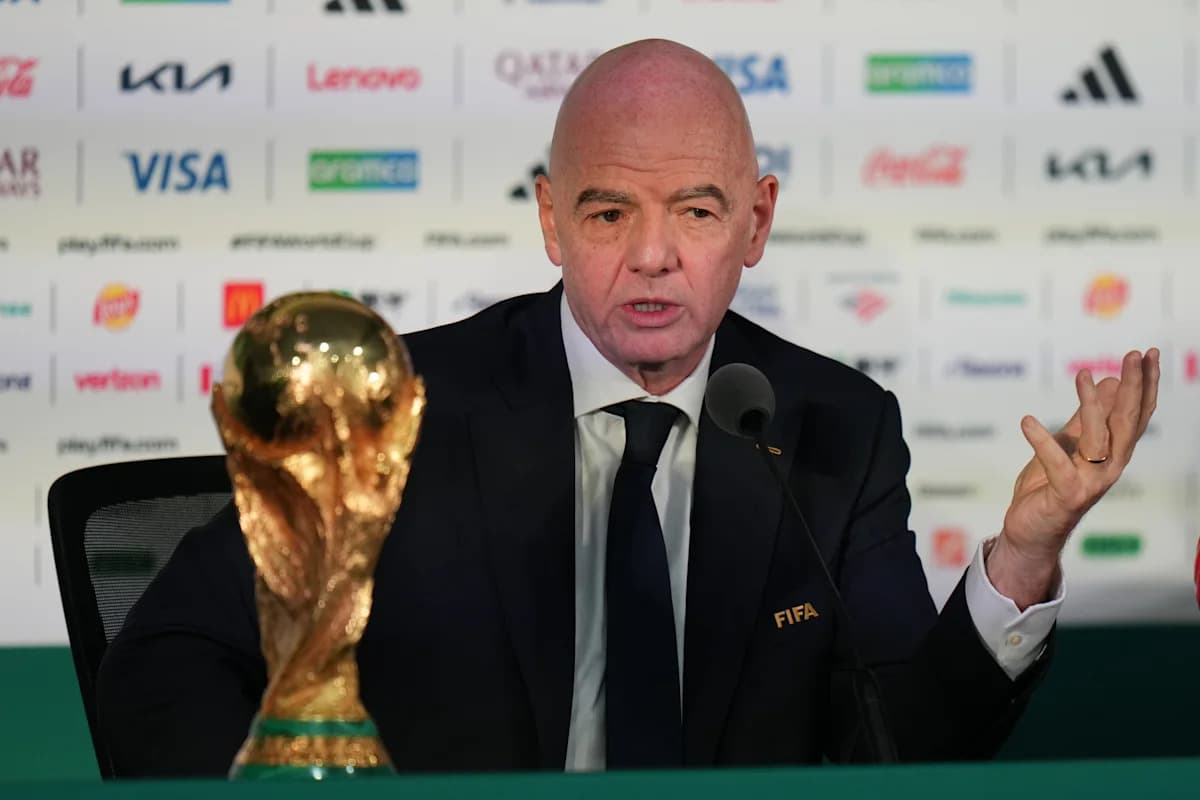
According to a report in the Financial Times on Wednesday (April 22), US special envoy Paolo Zampolli has formally asked US president Donald Trump and FIFA president Gianni Infantino to remove Iran from the World Cup and hand their place to Italy.
Zampolli did not hide his motivations or his loyalties.
“I confirm I have suggested to Trump and [Fifa president Gianni] Infantino that Italy replace Iran at the World Cup. I’m an Italian native and it would be a dream to see the Azzurri at a US-hosted tournament. With four titles, they have the pedigree to justify inclusion,” he told the FT.
It is an extraordinary suggestion. Not a plea to change seedings or tweak a draw, but to overturn qualification entirely and parachute in a fallen giant because of off-field tensions.
Behind the football argument lies a political one. The proposal has been framed as a potential bridge between Trump and Italian president Giorgia Meloni after relations soured, reportedly following Trump’s comments about Pope Leo XIV in the context of the Iran war. A World Cup berth for Italy, in that reading, becomes a diplomatic olive branch dressed in Azzurri blue.
Iran’s stance: Qualified, but unwilling to travel
All of this unfolds against a hardening backdrop between Washington and Tehran. The United States, along with Mexico and Canada, is set to co-host the 2026 tournament, but the relationship with Iran remains fraught.
Iran, placed in Group G, has publicly indicated it is not willing to travel to the US for its matches. That position came after Trump warned that the Middle Eastern nation “should not travel to the US for their own safety,” a line that only deepened the sense of hostility around the fixtures.
The schedule is already locked in. Iran are slated to open their Group G campaign against New Zealand in Los Angeles on June 15, stay in LA to face Belgium on June 21, then fly north to Seattle to meet Egypt on June 27.
Three games. Two US cities. One political minefield.
Infantino, for his part, has expressed confidence that Iran will ultimately take part, maintaining the traditional FIFA stance of separating politics from participation, at least in principle. But the tension is obvious: a qualified team is signalling reluctance to enter the host nation, while voices close to the US president push for their outright removal.
Italy waiting in the wings
For Italy, this is a surreal subplot. On sporting merit, their fate is clear: they failed to qualify, a brutal blow for a country that has lifted the World Cup four times and shaped the game’s history.
Yet their pedigree is exactly what Zampolli is using as leverage. The argument is simple and provocative: if a spot opens because of geopolitics, why not give it to a traditional powerhouse that would raise the tournament’s competitive and commercial appeal?
It is the kind of notion that inflames debate across continents. Purists will insist that a World Cup place must be earned on the pitch, not awarded in a diplomatic backroom. Others will point to Italy’s stature and the potential spectacle of the Azzurri returning under the lights in a US-hosted event.
For now, it is only a proposal. No decree from Trump, no ruling from FIFA, no emergency reshaping of Group G. Just a powerful suggestion, loudly made, at a moment when the tournament can least afford chaos.
A World Cup walking a tightrope
The World Cup has lived with politics before — boycotts, bans, diplomatic standoffs. Yet the 2026 edition was sold as something different: a sprawling, modern, three-nation festival that would showcase the sport’s global reach.
Instead, with the opening game looming, one of its qualified teams is openly questioning its ability to attend, while a former champion circles in the background, urged forward by a political envoy.
Iran’s fixtures remain on the calendar. New Zealand in Los Angeles. Belgium in Los Angeles. Egypt in Seattle. Every date feels less like a simple group schedule and more like a countdown to a decision that could reshape the tournament’s early weeks.
Does Iran travel and play under a cloud of tension? Does FIFA stand firm and risk a late withdrawal? Or does football, yet again, bend under the weight of geopolitics and pull a four-time champion back from the cold?
The clock is ticking toward June 12. And the World Cup, long before a ball is kicked, is already under pressure.