Germany's World Cup Redemption: Can They Reclaim Their Status?
Fifty days. That is all that separates Germany from another shot at repairing a damaged footballing ego.
Since lifting the World Cup in 2014, the four-time champions have twice stumbled out at the group stage, in 2018 and 2022. The aura went, the fear factor evaporated, and a nation used to deep runs was left staring at the exit door before the knockouts even began. Now, as 2026 looms, they arrive among the favourites, but with a question hanging over them that no one can quite answer.
What, exactly, is Germany now?
Flickers of form and a new core
The first signs of recovery came at Euro 2024. A quarter-final exit would once have been treated as failure; this time it felt like a step forward, a team at least pointed in the right direction. The two years since have been uneven, though. Spells of slick, modern football have been undercut by jarring lapses, the kind that stir memories of those early exits.
Some pillars have emerged.
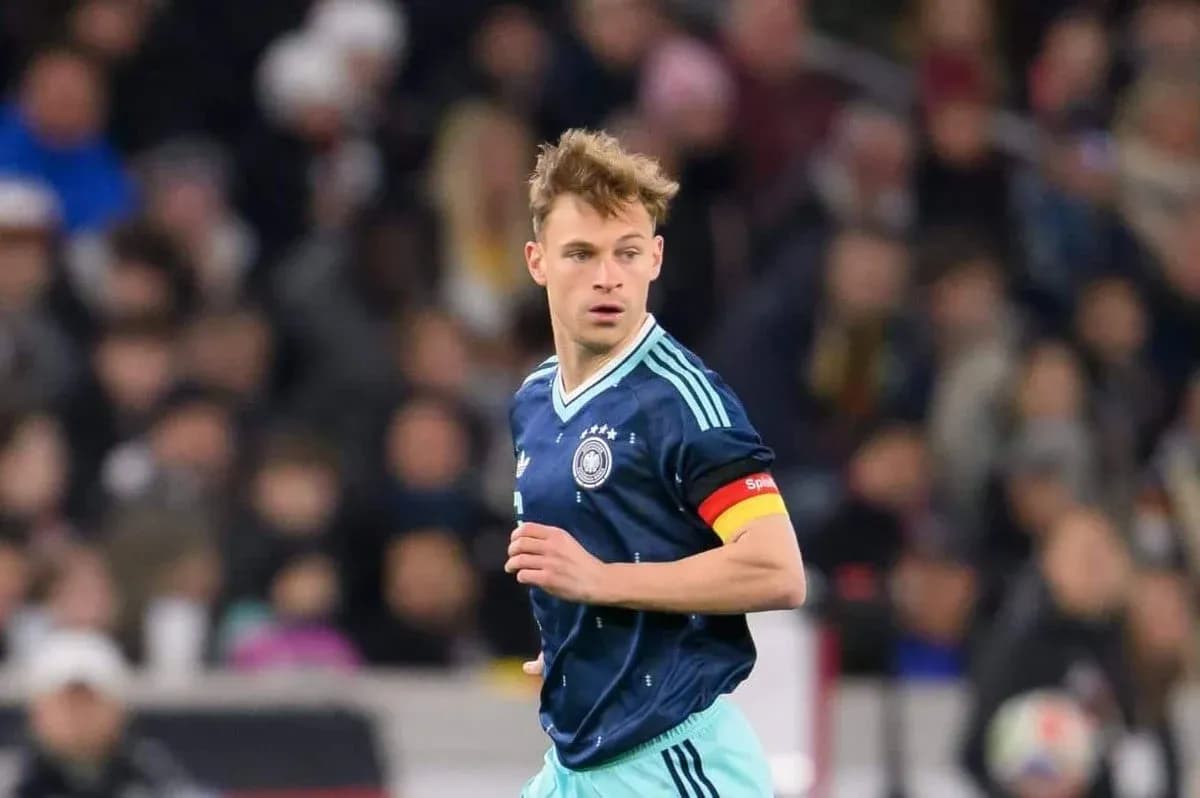
Joshua Kimmich has reasserted his authority at Bayern Munich, anchoring a side chasing a treble and showing the kind of intensity Germany will lean on. Alongside him, Aleksandar Pavlovic has surged from promising youngster to fully fledged midfield option, his composure and range of passing making him look ready for the international stage.
At the back, Jonathan Tah has delivered his best club season. Strong in duels, calmer on the ball, he has played like a defender who expects to start at a World Cup, not one hoping to sneak into the squad.
On the left, David Raum has grown into far more than a reliable full-back. Handed the RB Leipzig captaincy at the start of the year, he has worn the armband with conviction and produced the most complete football of his career. His energy and delivery from wide areas have been matched by a more mature defensive edge; Germany suddenly have a leader as well as a runner on that flank.
Beyond the core, others have forced the issue. Anton Stach’s outstanding first season at Leeds United in the Premier League has propelled him from outsider to genuine squad contender, his blend of physicality and intelligence giving Nagelsmann another midfield tool. Up front, Deniz Undav has been relentless for Stuttgart. Only Harry Kane has scored more Bundesliga goals, a statistic that demands attention in a country not exactly short on attacking history.
Stars searching for rhythm
The concern sits higher up the pitch. Nagelsmann’s preferred front three — Kai Havertz, Jamal Musiala and Florian Wirtz — reads like a dream on paper. On grass, not yet.
Musiala and Havertz have spent much of the campaign fighting back from long-term injuries. The sharpness, those instinctive changes of direction and timing in the box, have taken time to return. The signs are there now, glimpses of the old fluency, but not yet the sustained form that terrifies opponents.
Wirtz’s situation is different. His move to Liverpool came with an enormous price tag and an even heavier set of expectations. Under constant scrutiny and criticism, his confidence has taken hits. The talent remains obvious — close control, vision, that ability to slip into pockets and unpick defences — but the smile has not always been there. Germany need the version of Wirtz who plays with freedom, not the one weighed down by headlines.
Felix Nmecha complicates the picture further. The Borussia Dortmund midfielder had been in excellent form before a knee injury in March halted his season. He is expected back well before World Cup preparations start, but match rhythm is another matter. Nmecha offers a rare profile: tall, technically sharp, capable of carrying the ball through pressure and linking play between the lines. There is no like-for-like alternative in the squad. If he cannot reach his mid-season level in time, Nagelsmann loses a tactical card few managers in the tournament possess.
Injury clouds that won’t clear
The medical bulletin does not make pleasant reading.
Serge Gnabry, a proven tournament performer, is likely to miss out with an adductor tear suffered in mid-April. Bayern have not put a firm timeline on his return, but the indications are bleak. Losing his direct running and goal threat strips Germany of a different kind of wide option.
Another Bayern forward, Lennart Karl, has also been sidelined. The 18-year-old, one of the brightest young attacking talents in the country, picked up a muscle injury in April and has already missed three matches. He is back in individual training and should feature again before the club season ends, but any disruption at that age matters. His freshness and fearlessness would have offered Nagelsmann something unpredictable from the bench.
A defence that still creaks
For all the talk of systems and rotations, Germany’s biggest problem is brutally simple: they do not yet defend well enough to win a World Cup.
Nagelsmann inherited a fragile back line and has not fully solved it. The recent international break underlined that reality. Switzerland and Ghana both found ways to trouble them, exposing gaps and uncertainty that better sides will ruthlessly punish.
Some pieces are fixed. Kimmich will play at right-back, a role he knows and can dominate. Raum will start on the left. Those full-backs give Germany quality in possession and aggression in the press.
The real debate lies in the centre.
Jonathan Tah has earned a place, but who stands next to him? Nico Schlotterbeck brings a cultured, left-footed balance and progressive passing that can launch attacks from deep. Antonio Rudiger, older now but still Germany’s most naturally gifted defender, offers raw power, recovery pace and experience — along with a temperament that has become harder to predict.
Waldemar Anton lurks as the compromise candidate. Solid, disciplined, less spectacular but more dependable, he could be the glue that holds a partnership together without dominating it.
Nagelsmann must choose. He cannot shuffle his way through the group and hope for clarity later. To beat the best in the world, Germany need a settled, trustworthy defensive spine. Right now, they have options, not answers.
If the World Cup started today…
On current evidence, Nagelsmann’s XI would likely look something like this in a 4-3-3:
Oliver Baumann; Joshua Kimmich, Jonathan Tah, Nico Schlotterbeck, David Raum; Aleksandar Pavlovic, Felix Nmecha, Leon Goretzka; Florian Wirtz, Jamal Musiala, Kai Havertz.
It is a side heavy on technical quality, with ball-playing defenders, three midfielders who can all build play and break lines, and a fluid front three capable of interchanging positions. It is also a team that would need collective discipline without the ball and a sharper edge in both boxes than Germany have shown consistently in recent years.
Ivory Coast: talent waiting to explode
Beyond Germany, the group carries its own intrigue, starting with Ivory Coast.
Emerse Fae, assistant during the 2023 Africa Cup of Nations triumph and head coach since 2024, has built a side that is both structured and entertaining. The Elephants defend with organisation and attack with flair, a blend that made them one of the most watchable teams at the most recent AFCON despite a quarter-final exit to Egypt that stung.
The question is not whether the talent exists, but how Fae fits it all together. Yan Diomande already looks like a star in the making. Around him, Martial Godo, Bazoumana Traore, Wilfried Singo and Ousmane Diomande form a supporting cast that could break out on the global stage.
The framework is in place. If the pieces click, Ivory Coast will not just make up the numbers in this group.
Warm-up game: Ivory Coast vs France, June 4.
Ecuador: waiting on Caicedo
Ecuador arrive with momentum from a strong generation and a clear sense that this could be a landmark tournament. Yet everything circles back to one issue: Moises Caicedo and his suspension.
The Chelsea midfielder was sent off in a qualifier against Argentina in September 2025, ruling him out of the opening match against Ivory Coast. The Ecuadorian FA and head coach Sebastian Beccacece have pushed FIFA to overturn the decision, but so far there has been no sign of a reprieve.
With or without Caicedo, this is a team with enough quality to progress. The semi-final run at the Under-20 World Cup in 2019 hinted at a wave of talent now filtering into the senior side. Still, losing their midfield heartbeat for the first game — a fixture that could define the group — would be a major blow.
Warm-up games:
- Ecuador vs Saudi Arabia, May 30
- Ecuador vs Guatemala, June 7
Curacao: history and upheaval
Then there is Curacao, the smallest nation ever to qualify for a World Cup, with a population of just 156,000. In a country where baseball reigns, football has suddenly barged its way into the national conversation. What this tournament might mean for future generations is a story in itself.
For now, the focus is on a team that should have been led into this moment by one of the game’s elder statesmen. Dick Advocaat guided Curacao unbeaten through qualifying and, at 78, was set to become the oldest head coach at a World Cup. Instead, he stepped down in February 2026 due to a family health issue, a poignant twist at the end of a long career.
Fred Rutten, with experience at Feyenoord, PSV and Anderlecht, has taken over at 60. The task is brutal: rebuild the tactical structure and emotional core of a side in just a few weeks before the biggest matches in its history.
Warm-up games:
- Curacao vs Scotland, May 30
- Curacao vs Aruba, June 6
Off the pitch: a costly pilgrimage
For travelling Germany supporters, the challenges are not confined to tactics and team sheets.
Reaching MetLife Stadium from New York City’s Penn Station has become an ordeal for the wallet. Return train tickets, normally $12.90 and priced the same for last summer’s Club World Cup, are currently listed at an eye-watering $150. That is not a typo; it is a staggering mark-up that will hit thousands of fans.
Walking to the stadium is not an option — it is illegal. Even buses, usually the budget alternative, come with inflated prices.
So Germany head into 2026 chasing redemption on the pitch, while their fans navigate obstacles off it. The squad has talent, scars and just enough time to turn promise into something more substantial.
In 50 days, the talking stops. Then we find out whether this version of Germany is ready to be feared again, or destined to remain a cautionary tale of a giant still trying to remember how to be ruthless.