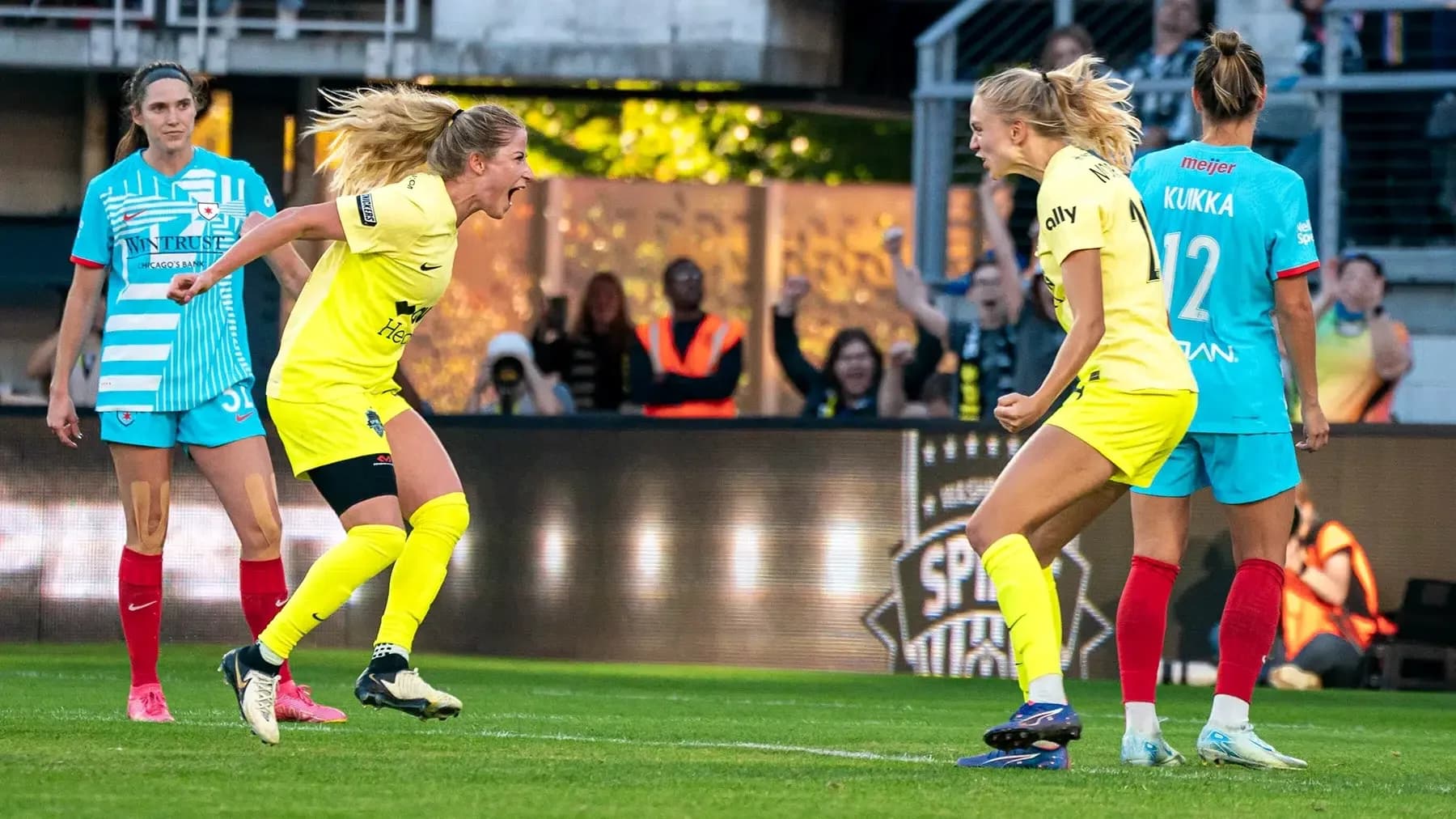
Washington Spirit Dominates Chicago Red Stars 3–0 in NWSL Clash
Under the lights at Northwestern Medicine Field at Martin Stadium, this Group Stage meeting in the 2026 NWSL Women season ended with a stark scoreline that mirrored the wider arc of both campaigns. Washington Spirit W, chasing honours near the top of the table, dispatched bottom‑placed Chicago Red Stars W 3–0, a result that felt less like a one‑off and more like a concentrated expression of each side’s seasonal DNA.
Chicago came into this fixture rooted in 16th place with 17 points from 25 matches, their overall goal difference a bruising -43, born of just 14 goals scored against 57 conceded. At home they had been marginally more competitive – 4 wins from 12, with 10 goals for and 25 against – but even in Evanston the pattern was familiar: 0.8 goals scored per home game, 2.1 conceded. The Spirit, by contrast, arrived as a hardened contender. Second in the standings with 46 points from 25 games, they had forged a positive overall goal difference of 13, scoring 36 and conceding 23. On their travels they were even more ruthless: 8 wins, 3 draws, and only 2 defeats from 13 away matches, with 21 goals scored and just 10 conceded, an away profile of 1.6 goals for and 0.8 against that already hinted at what was to come.
The starting formations told a story of intent and identity. Chicago lined up in a 4‑4‑2, a shape they had used less often this season than their 4‑2‑3‑1 or 4‑3‑3, but one that suggested a desire to get bodies higher and press more aggressively. Alyssa Naeher anchored the side in goal, with a back four of T. Malham, Maitane López, S. Staab and Nádia Gomes. In front of them, a flat midfield line of J. Bike, B. Pinto, B. Franklin and Leila Ouahabi was tasked with both screening and supplying, while M. Alozie and J. Grosso formed a front two expected to stretch Washington’s back line.
Washington responded with a confident 4‑3‑3, a system that has underpinned their rise this season. S. MacIver started between the posts, protected by a back four of L. Di Guglielmo, T. McKeown, E. Morgan and G. Carle. The midfield triangle of A. Sullivan, Hal Hershfelt and M. Bethi balanced control and bite, while a front three of R. Kouassi, S. Cantore and T. Rodman promised direct running and layered movement. It was a lineup built to dominate transitions and to press Chicago’s uncertain build‑up.
For the Red Stars, the tactical voids are structural rather than individual. The season’s numbers paint a side that struggles to control either box. Overall they average just 0.6 goals scored per match, while conceding 2.3. They have failed to score in 17 of their 25 league games, and even at home they have drawn a blank in 8 of 12. The clean sheet count – only 3 overall, 2 at home – underlines how rarely they are able to lock a game down. Their card profile adds another layer: 34.78% of their yellow cards arrive between 31–45 minutes and another 26.09% between 46–60, suggesting a team that becomes increasingly stretched and late into challenges as each half wears on.
Washington’s absences list offered no warning flags, and the data reinforces a squad with depth and balance. They have kept 10 clean sheets overall, including 6 away from home, and have failed to score on their travels only twice. Their disciplinary record is aggressive but controlled: yellow cards cluster in the 31–45 and 76–90 minute windows (both at 22.22%), reflecting a side that presses hard before and after the interval but largely stays on the right side of the line. The single red card this season came in added time between 91–105 minutes, a reminder that A. Sullivan’s competitive edge can tip over when games become stretched.
Within this framework, the key matchups crystallised clearly. The “Hunter vs Shield” duel was embodied by T. Rodman against a Chicago defence that has been porous all year. Rodman, listed as a midfielder but deployed high on the right of the front three, entered this fixture with 9 goals and 5 assists from 25 league appearances, underpinned by 60 shots and 25 key passes. Her dribbling volume – 73 attempts – and the 34 fouls she has drawn make her a constant destabilising force. Up against a back four that has conceded 25 times at home and whose worst home defeat was a 0–6 collapse, her pace and willingness to attack one‑v‑one were always likely to pry open gaps.
The “Engine Room” confrontation pitted Washington’s central trio, and particularly Sullivan, against Chicago’s midfield four. Sullivan’s season has been defined by efficient distribution – 296 passes at 86% accuracy – and a willingness to contest duels, with 58 challenges and 10 interceptions. Her card history, featuring 2 yellows and a yellow‑red, hints at the hard edges of her game, but also at her importance in setting the tone. Opposite her, Pinto and Franklin were asked to both protect a vulnerable back line and connect quickly to Alozie and Grosso. In practice, the weight of Washington’s pressing and their superior structure in the middle third meant Chicago’s midfield spent long stretches retreating rather than constructing.
Statistically, the prognosis for a contest like this was always tilted. Washington’s overall attacking output of 1.4 goals per game, combined with Chicago’s concession rate of 2.3, pointed towards a multi‑goal return for the visitors. At the other end, the Spirit’s defensive solidity – 0.9 goals conceded per match overall, 0.8 away – dovetailed with Chicago’s anaemic 0.6 goals scored per game and their chronic habit of failing to find the net. Even without explicit xG figures, the patterns of chance creation and suppression suggested that a clean sheet for MacIver and a comfortable margin of victory for the visitors were the most likely outcome.
In the end, the 3–0 full‑time scoreline simply confirmed what the numbers and the shapes had foreshadowed. Washington’s 4‑3‑3 imposed its rhythm, Rodman and the front line exploited a fragile defence, and Sullivan’s engine room controlled the central corridors. For Chicago, the night in Evanston was another chapter in a season defined by structural frailty in both penalty areas. For Washington, it was the clinical away performance of a side that knows exactly who it is – and how far it intends to go.