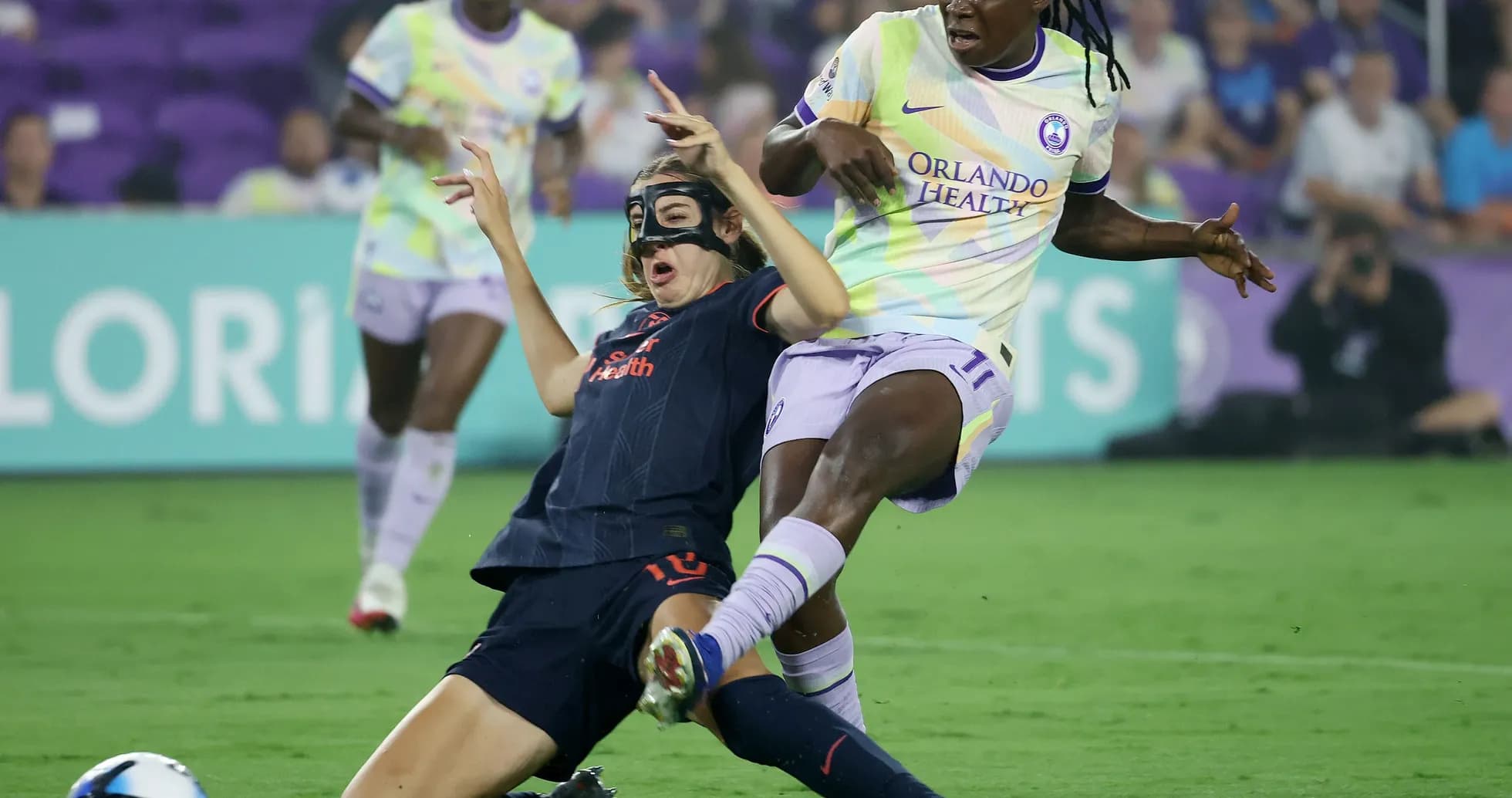
Kansas City W Dominates Denver Summit W in 4-1 Showdown
The lights at CPKC Stadium had barely cooled when the story of this Group Stage clash was already clear: Kansas City W, seventh in the NWSL Women table, used a 4-2-3-1 that has become their seasonal signature to overwhelm Denver Summit W 4–1, reaffirming why their home form is one of the most intimidating in the league.
Heading into this game, Kansas City had been a paradox. Overall they had taken 41 points from 26 matches, but the split was stark: at home they were unbeaten, with 9 wins and 4 draws from 13, scoring 32 and conceding 13; on their travels they had lost 9 of 13. The goal difference overall was +6, correctly matching 43 scored and 37 conceded, but the true engine of their season was this stadium. Denver arrived 10th, with 35 points from 26, more balanced but less explosive: 42 goals scored and 37 conceded overall for a goal difference of +5, and a respectable away record of 3 wins, 4 draws and 6 defeats, with 17 goals for and 19 against.
I. The Big Picture – Two 4‑2‑3‑1s, one ruthless
Both sides lined up in a mirrored 4‑2‑3‑1, but the personalities of those shapes could not have been more different.
Kansas City’s version was aggressive and fluid. Lorena in goal sat behind a back four of E. Ball, G. Robinson, K. Sharples and I. Rodriguez. Ahead of them, the double pivot of L. LaBonta and V. DiBernardo provided the platform for an electric band of three: M. Cooper to the right, Debinha central, and the league’s most devastating runner, T. Chawinga, from the left. H. Hopkins started as the nominal striker.
Denver’s 4‑2‑3‑1 under N. Cushing had a more balanced, possession‑minded feel. A. Smith was shielded by A. Oke, Eva Gaetino, K. Kurtz and J. Beckie. E. Regan and D. Sheehan formed the double pivot, with Y. Yamamoto, L. Horan and Y. Ryan supporting N. Flint up top.
The first half’s 1–1 scoreline hinted at a contest, but the second half exposed the structural gap between an elite home side and an away team still learning how to survive hostile environments.
II. Tactical Voids – Discipline, fatigue, and the shadow of cards
Across the season, Kansas City have walked a disciplinary tightrope. Their yellow cards skew heavily towards the end of halves: 23.81% between 31–45 minutes and another 23.81% in both the 61–75 and 76–90 windows. There is also a red‑card spike late on, with 100.00% of their reds arriving between 76–90 minutes. That volatility is embodied by players like L. Rouse, who has already seen red once this campaign, even if she was not in this particular lineup.
Denver’s profile is different but equally instructive. Their yellows cluster after the break: 26.09% between 46–60 minutes and another 26.09% from 76–90. They have also taken a red between 16–30 minutes this season, with J. Beckie’s dismissal a reminder that even a key attacker can be dragged into defensive desperation.
In this match, Kansas City’s control of territory and tempo meant they never had to lean into that chaotic late‑game identity. Denver, chasing the game, were forced into the periods where their discipline historically frays. The second half became a long, exhausting sprint against a side that thrives on home momentum.
III. Key Matchups – Hunter vs shield, and the battle for the engine room
The headline duel was always going to be “Hunter vs Shield”: Kansas City’s frontline, led by T. Chawinga and H. Hopkins, against a Denver defence that, away from home, had been conceding 1.5 goals per match while scoring 1.3.
Chawinga came into this fixture as one of the league’s most complete threats: 11 goals and 3 assists in 14 appearances, with 31 shots (18 on target), 19 key passes and 38 dribble attempts, 16 successful. Her starting position on the left of the three behind Hopkins was a deliberate stress test for A. Oke and Eva Gaetino on Denver’s right side. Every time Kansas City broke, Chawinga’s runs dragged the line diagonally, forcing Denver’s back four to turn and chase rather than hold a compact block.
Hopkins, with 8 goals and 3 assists from 26 appearances, offered a different kind of pressure. Her 219 duels and 38 tackles this season show a forward who defends from the front, pressing centre‑backs and screening passes into midfield. Against Denver, that work disrupted K. Kurtz and Eva Gaetino’s ability to step out and play, pinning them deeper and isolating the Denver double pivot.
Behind them, the “Engine Room” duel was fascinating. On one side, Debinha, LaBonta and DiBernardo – supported by the creative thrust of M. Cooper – against Denver’s triangle of Regan, Sheehan and L. Horan, with Y. Ryan drifting inside.
Kansas City’s midfield had the advantage of variety. Croix Bethune, even though not in this particular XI, has defined their creative identity with 10 assists and 4 goals this season, and her influence on the team’s patterns is evident: the side is conditioned to find vertical lanes early, to trust runners like Chawinga and Cooper, and to flood the half‑spaces. Cooper’s 5 goals and 5 assists, plus 23 key passes, underline how dangerous that right‑side channel can be.
Denver’s response centred on Y. Ryan and Beckie. Ryan has 6 goals and 5 assists, with 47 key passes and 62 dribble attempts, 21 successful. She is the Summit’s metronome and line‑breaker, and her starting role as an attacking midfielder from the left aimed to drag E. Ball and G. Robinson out of shape. Beckie, nominally a left‑back here but statistically an attacking force with 6 goals, 5 assists and 35 key passes, was Denver’s best route to progression down the flank.
Yet the problem for Denver was structural: every time Beckie advanced, space opened behind her for Kansas City’s counters, particularly through Cooper and Hopkins drifting wide. The 4–1 full‑time scoreline was the tactical bill for that risk.
IV. Statistical Prognosis – Why 4–1 felt inevitable
On their travels this season, Denver have been competitive but fragile: 3 away wins, 4 draws and 6 defeats, with 17 goals scored and 19 conceded. Kansas City at home have been relentless: 9 wins, 4 draws, 0 defeats, averaging 2.5 goals scored and conceding just 1.0.
Layer onto that the penalty narratives: Kansas City have earned 4 penalties overall but scored only 1, missing 3 for a conversion rate of just 25.00%. Even without spot‑kick reliability, they still average 1.7 goals per match overall, and far more at home. Denver, by contrast, have been perfect from the spot with 3 scored from 3, but could not engineer the kind of penalty‑box pressure required here.
Defensively, both sides entered with the same overall concession rate of 1.4 goals per match, but context mattered. Kansas City’s figure was dragged up by their away struggles; at home they were far tighter. Denver’s away defence, conceding 19 in 13, was always likely to bend under the weight of Kansas City’s layered attack.
In the end, the 4–1 scoreline felt like the logical intersection of structure and form. Kansas City’s 4‑2‑3‑1, honed through 20 league uses, maximised their stars: Chawinga as the hunter, Hopkins as the pressing spearhead, Cooper and Debinha as creative disruptors. Denver’s mirrored shape never quite found the balance between unleashing Ryan and Beckie and protecting A. Smith’s goal.
Following this result, the table numbers will tick, but the deeper story is about identity. Kansas City remain a home juggernaut whose attacking ceiling is among the league’s highest. Denver, despite their talent in Ryan, Beckie and Flint, are still searching for an away blueprint that can withstand a night like this in Kansas City.