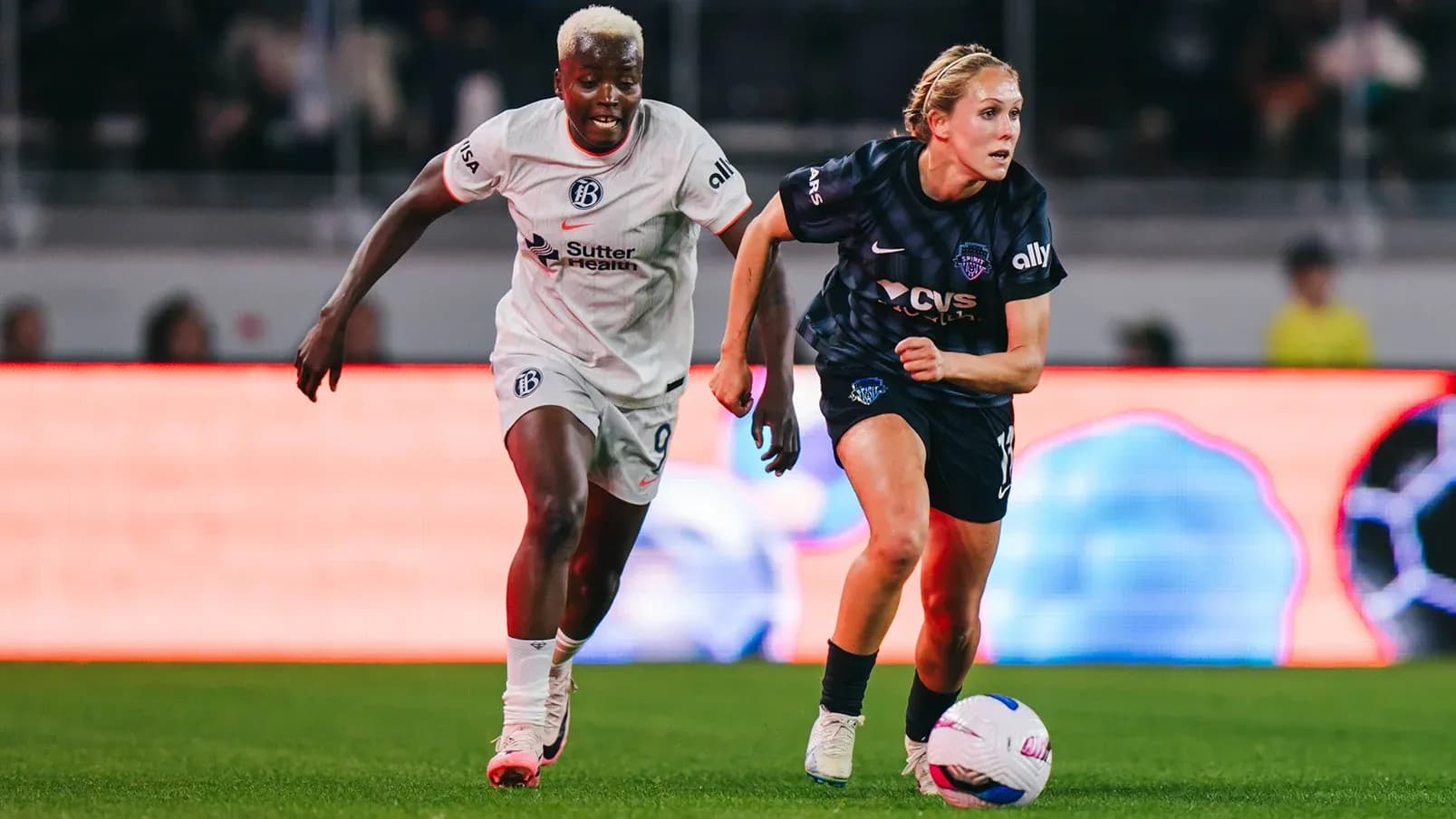
Washington Spirit W Dominates Bay FC in NWSL Fixture
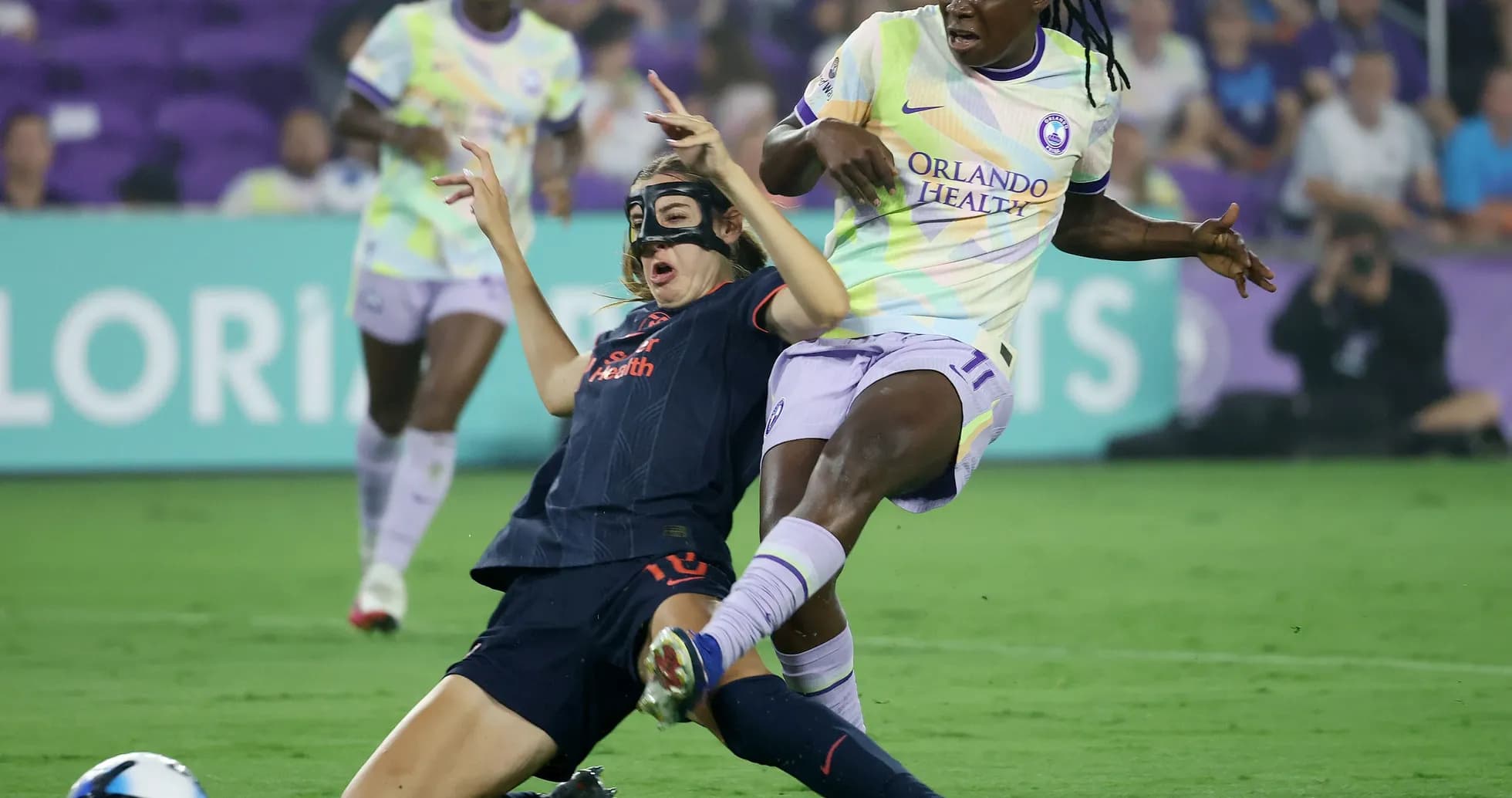
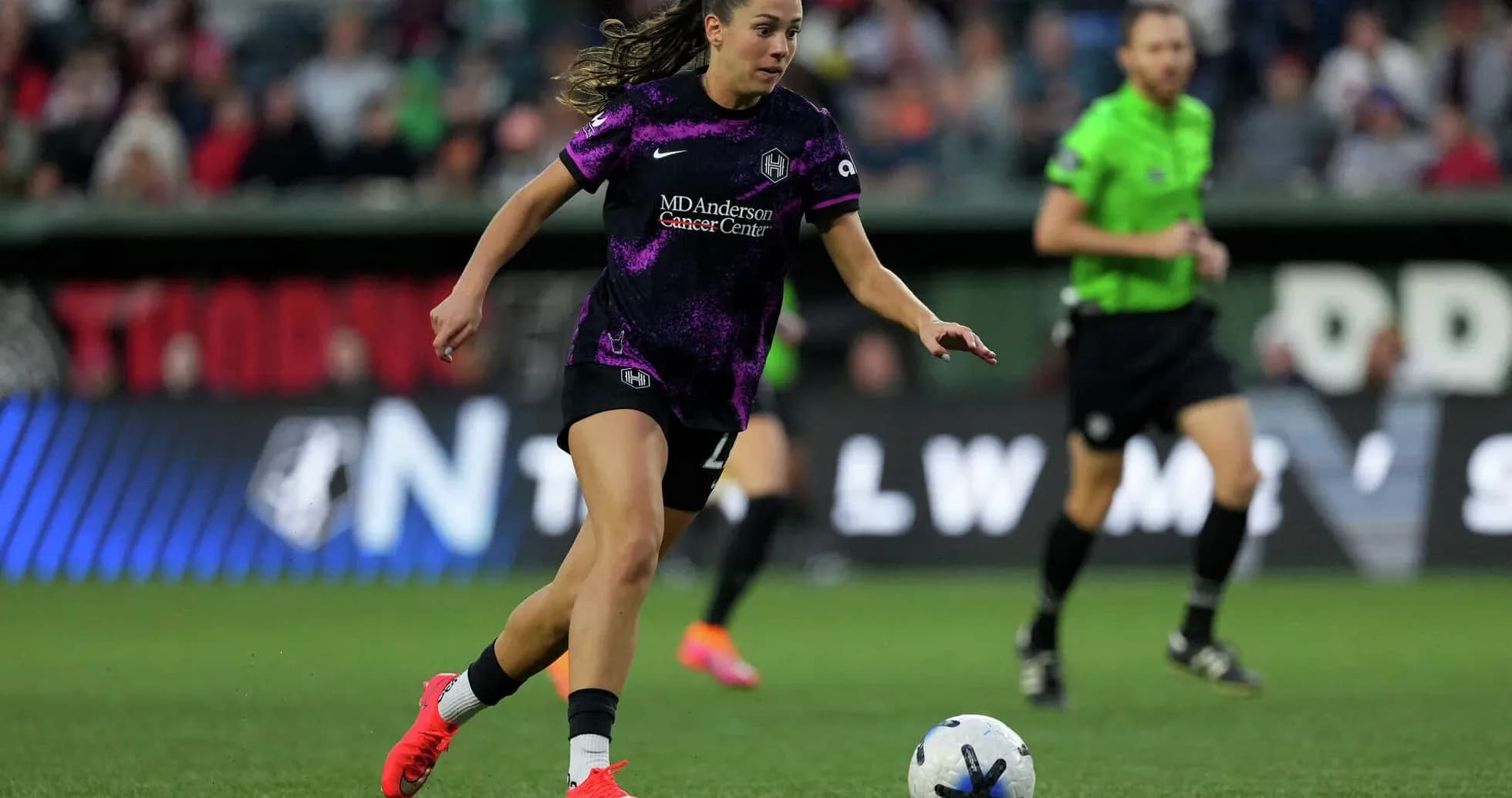
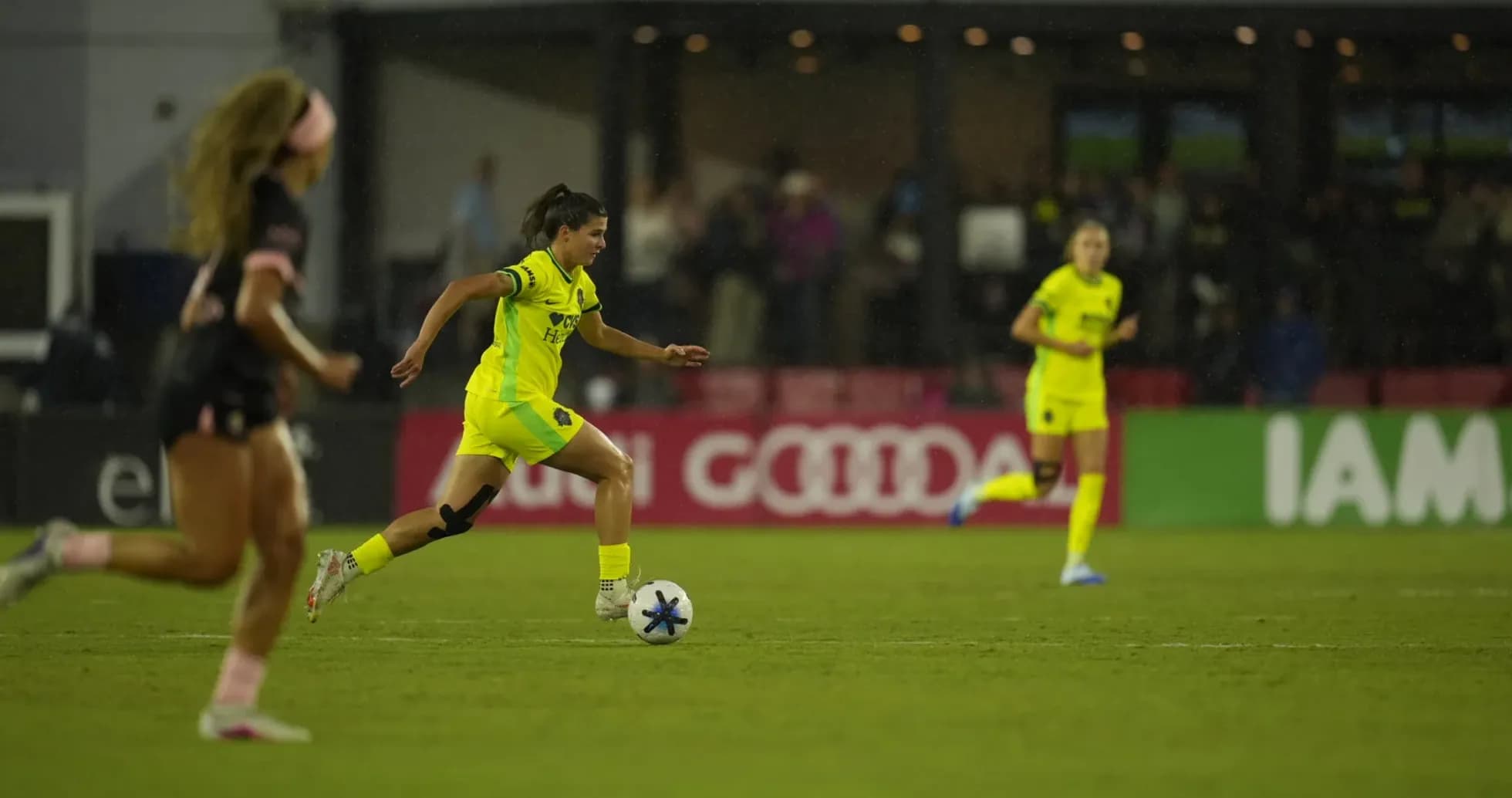
At PayPal Park, Bay FC’s 4-2-3-1 was methodically dismantled 2–0 by a far more assertive Washington Spirit W side in this NWSL Group Stage fixture. Despite the scoreline suggesting a controlled away win, the underlying numbers reveal near-total territorial and chance dominance from the Spirit: 62% possession, a 20–6 shot advantage, and a 10–1 edge in shots on target. Bay’s resistance hinged almost entirely on J. Silkowitz, whose nine saves kept the match competitive deep into the second half. Washington’s pressing structure, wing rotations and set-piece volume (12 corners to Bay’s 3) steadily suffocated Bay’s build-up, forcing them into a reactive, low-block game they struggled to exit.
Scoring Sequence & Disciplinary Log
The first half finished goalless, but the pattern was already clear: Washington Spirit W circulating the ball with patience and width, Bay FC defending deep and relying on isolated transitions. No cards or goals were recorded before the interval, yet the shot count and corner disparity hinted that Bay were living dangerously.
Adrian Gonzalez made the first structural adjustment in stoppage time of the first half. At 45+3', P. Metayer (IN) came on for right-back L. Di Guglielmo (OUT), a move that subtly shifted the Spirit’s midfield balance and freshened their pressing legs down the right channel. Immediately after the restart at 46', C. Martinez Ovando (IN) replaced centre-forward S. Cantore (OUT), injecting more direct running and depth into the front line.
The breakthrough arrived on 57', and it reflected the pressure Washington had built. Under sustained attack, Bay defender B. Courtnall diverted the ball into her own net, credited as an own goal for Washington Spirit W. It was the logical outcome of Washington’s territorial grip and volume of entries into the Bay penalty area rather than a random error.
Emma Coates responded at 60' with a like-for-like attacking switch: C. Conti (IN) came on for left-sided midfielder K. Barry (OUT), seeking more vertical threat and fresh energy in wide transition. On 71', Bay doubled down on changes: K. Lema (IN) replaced striker C. Girelli (OUT), and M. Moreau (IN) came on for left-back A. Denton (OUT), signaling a push for more dynamism and possibly a more aggressive full-back profile.
Washington managed the game intelligently, refreshing their double pivot and attacking midfield at 76'. A. Sullivan (IN) replaced R. Bernal (OUT), and Tamara Bolt (IN) came on for R. Kouassi (OUT), reinforcing central control and maintaining the intensity between the lines. At 84', G. Monday (IN) replaced playmaker L. Santos (OUT), adding pace and directness against a tiring Bay back line.
Bay’s final roll of the dice came at 85', with D. Bailey (IN) introduced for holding midfielder H. Bebar (OUT), an attacking tilt in central areas. But within a minute, Washington killed the contest: on 86', G. Monday scored a normal goal for Washington Spirit W, sealing a 2–0 lead that reflected their sustained superiority.
The only card of the match arrived at 90', when Bay FC defender Brooklyn Jean Courtnall received a yellow card for a foul. That booking capped a personally difficult night for Courtnall, who had already been involved in the own goal that opened the scoring.
Tactical Breakdown & Personnel
Both sides nominally lined up in a 4-2-3-1, but Washington Spirit W’s structure was far more proactive and fluid. With 447 total passes at 83% accuracy, they used their double pivot—H. Hershfelt and initially R. Bernal—to dictate tempo and circulate possession from side to side. The full-backs, K. Wiesner and L. Di Guglielmo, pushed high to pin Bay’s wingers, while the line of three—R. Kouassi, L. Santos, and T. Rodman—constantly rotated to overload half-spaces.
Bay FC, by contrast, were forced into a low to mid-block 4-2-3-1. Their 273 passes at 75% accuracy, coupled with only 38% possession, show a side largely confined to their own half. The double pivot of H. Bebar and C. Hutton spent most of the match screening the back four rather than launching attacks. This left the attacking midfield trio of A. Pfeiffer, T. Huff, and K. Barry isolated from lone forward C. Girelli, resulting in just six total shots and only one on target.
The goalkeeping numbers underline the tactical story. J. Silkowitz’s nine saves were not a sign of parity but of constant siege; Washington generated 10 shots on target, forcing her into repeated interventions from both central and wide deliveries. At the other end, Sandy MacIver was largely untroubled, making just one save across 90 minutes. This 9–1 save disparity mirrors the 20–6 shot and 10–1 shots-on-goal gaps, confirming Washington’s sustained offensive pressure.
Washington’s six blocked shots versus Bay’s zero further illustrate the difference in defensive posture. The Spirit not only attacked more but also defended their box aggressively when required, stepping out to block attempts at source. Bay’s inability to register a blocked shot suggests that Washington rarely needed to shoot under heavy pressure, often working the ball into clearer looks.
Substitutions sharpened these tendencies rather than reversing them. For Washington, Metayer’s introduction at 45+3' and Sullivan’s at 76' ensured fresh legs in midfield to keep the press coordinated and deny Bay any late control. The attacking switches—Martinez Ovando for Cantore, Tamara Bolt for Kouassi, and Monday for Santos—maintained vertical threat and prevented Bay from pushing their full-backs high without risk. Monday’s goal at 86' was emblematic: a substitute exploiting space against a stretched and fatigued Bay defense.
Bay’s changes were more reactive. Conti and Lema were intended to increase direct running and offer new reference points in transition, while Moreau for Denton hinted at a desire to get more from the left flank. Bailey’s late introduction for Bebar was a calculated gamble to add an extra attacking midfielder, but by then Washington’s control of central spaces—anchored by Hershfelt and later Sullivan—meant Bay still struggled to progress the ball cleanly.
The Statistical Verdict
The final 2–0 scoreline arguably flatters Bay FC relative to the underlying dominance of Washington Spirit W. With 62% possession, 447 passes at 83% accuracy, and a 20–6 shot advantage (10–1 on target), Washington imposed their game territorially and technically. Bay’s lone yellow card—to Brooklyn Jean Courtnall at 90'—contrasts with Washington’s clean disciplinary slate, reflecting a home side increasingly forced into last-ditch interventions.
Although expected goals figures are not provided, the volume and quality indicators—12 shots inside the box for Washington versus only 3 for Bay—strongly suggest a substantial xG gap in favor of the visitors. Bay’s nine goalkeeper saves versus Washington’s single save quantify the extent of defensive workload imbalance.
In seasonal terms, this performance profiles Washington Spirit W as a high-possession, high-volume attacking side comfortable in a 4-2-3-1 that behaves like a 2-3-5 in sustained pressure phases. Bay FC, by contrast, appear more comfortable when they can press higher and transition quickly; here, pinned deep and starved of the ball, they struggled to connect their attacking structure. Without the excellence of Silkowitz, this could easily have been a heavier defeat, underscoring how one-sided the tactical and statistical battle truly was.