VAR Controversy: Neco Williams' Disallowed Goal Explained
New footage has dropped. The debate is not going anywhere.
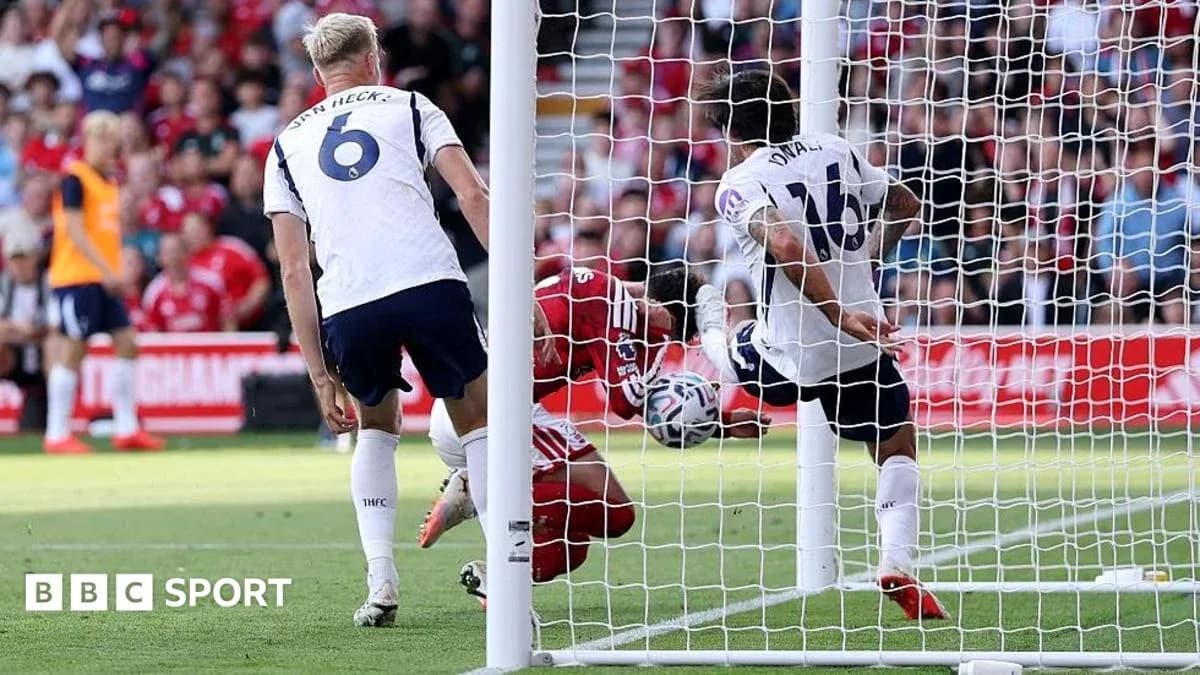
Fresh camera angles from Nottingham Forest’s 0-0 draw with Tottenham Hotspur show the ball clearly striking Neco Williams’ arm in the build-up to his disallowed goal – not once, but twice. First the left arm, then the right forearm, before he forces it over the line in the 67th minute.
That is exactly what VAR Peter Bankes ruled in real time: accidental attacking handball, goal chalked off.
At the time, Williams and Forest head coach Oliver Glasner stood their ground. They insisted there was no evidence the ball had touched an arm. Williams doubled down in his post-match interview, Glasner echoed the frustration, and the clip of the incident fuelled a weekend of arguments about VAR, angles and the meaning of “clear and obvious”.
Now the new footage backs Bankes. Yet it also exposes the faultline at the heart of the row.
VAR vindicated – but with a catch
Inside the VAR hub, Bankes only had access to broadcast cameras. The new angle doing the rounds was not among them. It comes from one of several cameras that film the game but do not feed into live coverage, and therefore do not feed into VAR.
So Bankes had to make his call off what he could see: the ball’s path, the movement of Williams’ body, and, crucially, the ripple of the defender’s shirt as it appeared to brush his right forearm. On that, he felt he had enough to rule out the goal.
The fresh clip shows that judgement was right. The ball does not touch Williams’ head at all, despite his belief he had headed it down between his arms. It hits his left arm, then his right forearm, then drops kindly for him to score.
Inside Pro Ref – the rebranded refereeing body formerly known as PGMOL – there is no doubt. BBC Sport understands they are “completely happy” with the decision. For them, the new angle is confirmation, not revelation.
What grates within Pro Ref is how the story has snowballed. Williams spoke with absolute certainty that the ball had not hit his arm. Glasner leaned on the “no proof” argument. Forest fans followed. Once those lines were out, the criticism gathered pace.
The feeling in refereeing circles is simple: if the player had not been so unequivocal, the backlash would not have been as fierce.
‘Tricky one’ that cuts to the heart of VAR
The incident has become another lightning rod in the wider VAR debate. Not just because of the decision itself, but because of how people think VAR should operate.
Much of the noise has centred on the phrase “clear and obvious error”, used as a stick to beat Bankes with. Glasner referenced it. Williams posted on X about it. The suggestion: if you cannot see the handball clearly, you cannot disallow the goal.
But that is not how the system is written.
“Clear and obvious” only applies to subjective calls – red cards, penalties, incidents where the referee is sent to the pitchside monitor to reassess their own decision. Handball in the attacking phase before a goal is classed as factual. For those, the VAR does not need “clear and obvious”; they need evidence they believe proves an offence.
If the VAR thinks they have that proof, they intervene. Bankes did. Stuart Attwell, on another famous incident, did not.
Howard Webb highlighted that contrast when he spoke about Benjamin Sesko’s goal for Manchester United against Liverpool last season. The ball seemed to brush the Slovenia striker’s hand on its way in, but Attwell decided he could not be sure. The goal stood.
Webb later admitted the ball “probably does hit the hand” yet stressed that VARs must see it conclusively to overturn. Attwell did not feel he had that. Bankes, on Williams, did.
That gap – two officials, two similar situations, two different thresholds – is exactly where trust in VAR frays. Even the so-called “factual” decisions are, at their core, one person’s judgement.
A law under pressure
Webb has already signposted where he thinks the law is going wrong. Attacking handball, he said in pre-season briefings, is one law he would change.
Right now, VARs must forensically check every goal: what did the ball hit, in what order, and did it brush an arm on the way in? The Williams incident is a textbook example. An accidental touch in a crowded box, no appeal at the time, but a slow-motion freeze-frame turns it into a match-defining call.
“The problem is the law forces VARs on every goal to look at what body part the ball went in off,” Webb said. If handball was only punished when it was deliberate or when an attacker made themselves “unjustifiably big”, VAR could clear incidents more quickly and stay out of the microscopic stuff.
Webb has been clear: it is a law he wants changed, and Pro Ref and the Premier League intend to lobby for that.
Until that happens, though, VARs will keep doing what the law demands. They will examine, rewind, zoom, and, if they think they see a touch, they will act. Even when half the stadium cannot see it. Even when the angle that proves them right only surfaces days later.
Lighter touch, same fury
On paper, VAR is already being dialled back. This season has seen just two subjective interventions at 0.06 per game, down from 0.15 last year. Fewer pitchside monitors. Less meddling in grey areas.
Yet the Williams incident shows how little that matters when the stakes are high and the tribal lines are drawn. Forest feel robbed. Pro Ref feel vindicated. Bankes has had two bruising days of scrutiny despite being, on the evidence now available, correct.
Nottingham Forest have been approached for comment. Their supporters will not need asking twice for an opinion.
The law says Bankes did his job. The footage says the ball hit the arm. The argument, as ever with VAR, is about everything in between – and how long the game is prepared to live with that gap.