Vancouver Prepares for FIFA World Cup 2026: New Rules and Impact
Vancouver is bracing for a very different kind of matchday.
On Wednesday, the city officially steps into its FIFA World Cup 2026 "event period," a 10-week stretch that will reshape how public space, noise, advertising, and even late-night city life are controlled around B.C. Place and Hastings Park.
This isn’t just bunting and banners. It’s a legal overhaul built around one tournament.
A World Cup city, under new rules
With the province projecting roughly 350,000 visitors to B.C. Place over the course of the World Cup, Vancouver has armed itself with a powerful new tool: the FIFA World Cup 2026 Bylaw.
From May 13 to July 20, 2026, that bylaw hands the city expanded authority over everything from street vending to graffiti removal. The stated goal is a “clean, safe, and organized” experience as Vancouver prepares to host seven matches at a cost estimated between $532 million and $624 million, with the city on the hook for up to $281 million.
The trade-off is stark: global spotlight and economic surge on one side, tighter control of the streets on the other.
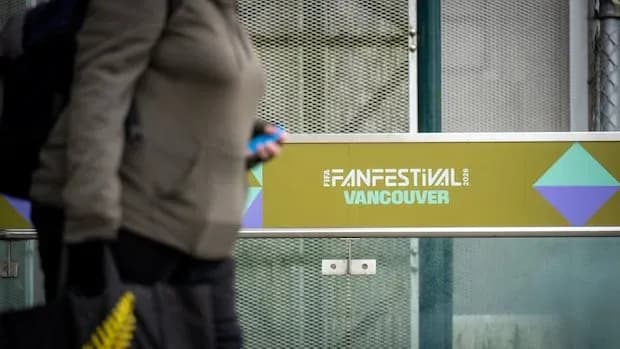
Inside a two‑kilometre “controlled area” around B.C. Place and the FIFA Fan Festival site at Hastings Park, the rules change sharply.
Temporary event infrastructure – fan zones, big screens, elaborate signage and other installations – will go up under relaxed building rules. Street vending and busking face new restrictions. Unauthorized commercial signs will be removed more quickly to protect FIFA’s tightly guarded branding environment.
Noise limits will stretch later and start earlier, shaped by international broadcast schedules and matchday operations. Truck routes and delivery patterns in the downtown core may be rerouted to clear space for security perimeters and event logistics.
Break the rules and it can be costly. Bylaw officers will be able to issue tickets ranging from $250 to $1,000, with enforcement shared between the City of Vancouver and the Vancouver Police Department.
For visiting fans, much of this will be invisible. For people who live and work in the controlled zones, it will define daily life.
Who pays the price for a “clean” city?
That word — clean — is where the battle lines form.
Some housing advocates and legal experts warn that the bylaw’s emphasis on cleanliness and beautification risks pushing unhoused residents even further to the margins.
“This is basically the privatization of public space,” said Penny Gurstein, professor emeritus at the University of British Columbia’s School of Community and Regional Planning. “I think people should be worried, especially people who are experiencing homelessness, living on the streets.”
The city insists the legal framework does not strip existing protections from people without housing. Officials say those experiencing unsheltered homelessness will still be allowed to erect temporary overnight shelters in parks where current bylaws already permit it.
Beautification, they argue, is about infrastructure, not people: fixing sidewalks, dressing up construction sites, repairing visible wear and tear. In the city’s own words, this work has “no assessed impact on human rights.”
But critics see a different picture. They see a global governing body with enormous leverage over how a city looks and feels, and vulnerable residents who have no say in that redesign.
A divided experience
For Margot Young, a constitutional law professor at UBC’s Allard School of Law, the World Cup will land on Vancouver like a split-screen broadcast.
“There will be disruption, but that disruption will be different for different groups in the city depending really upon their … social and economic status,” she said.
Those with money, she noted, can buy tickets, join the parties, and treat the tournament as a rolling celebration. For those at the bottom of the income and wealth ladder, the same event can feel like an eviction notice from public life.
“For those with money, they maybe can go to games, they can take part in the parties,” Young said. “But for individuals who are at the bottom of our ... income and wealth distribution … they will be moved around by the reordering of city space by FIFA.”
The city has promised “trauma-informed” enforcement, language designed to reassure communities that officers will approach vulnerable people with care. Young is not convinced that good intentions on paper will hold when the pressure of a global event hits the streets.
“There’s no system in place to sort of monitor what is happening with respect to the vulnerable populations,” she said.
In other words, there is no scoreboard tracking the human cost.
Services stay, questions remain
City officials say that even as the World Cup machine rolls in, core homelessness services will keep operating.
Vancouver currently counts more than 1,500 shelter beds and about 8,100 supportive housing units, backed by outreach teams, hygiene services, and storage programs. Those systems, the city says, will continue throughout the tournament, even as bylaws tighten around them.
In a written statement, the city framed the World Cup as a “once-in-a-generation opportunity” to showcase Vancouver on a global stage.
The stadium will be full. The fan zones will be loud. The skyline will beam out to the world.
The real test is whether, when the final whistle blows on July 20, the people living closest to the edge feel like they were part of that opportunity — or simply cleared out of the way so everyone else could enjoy the game.