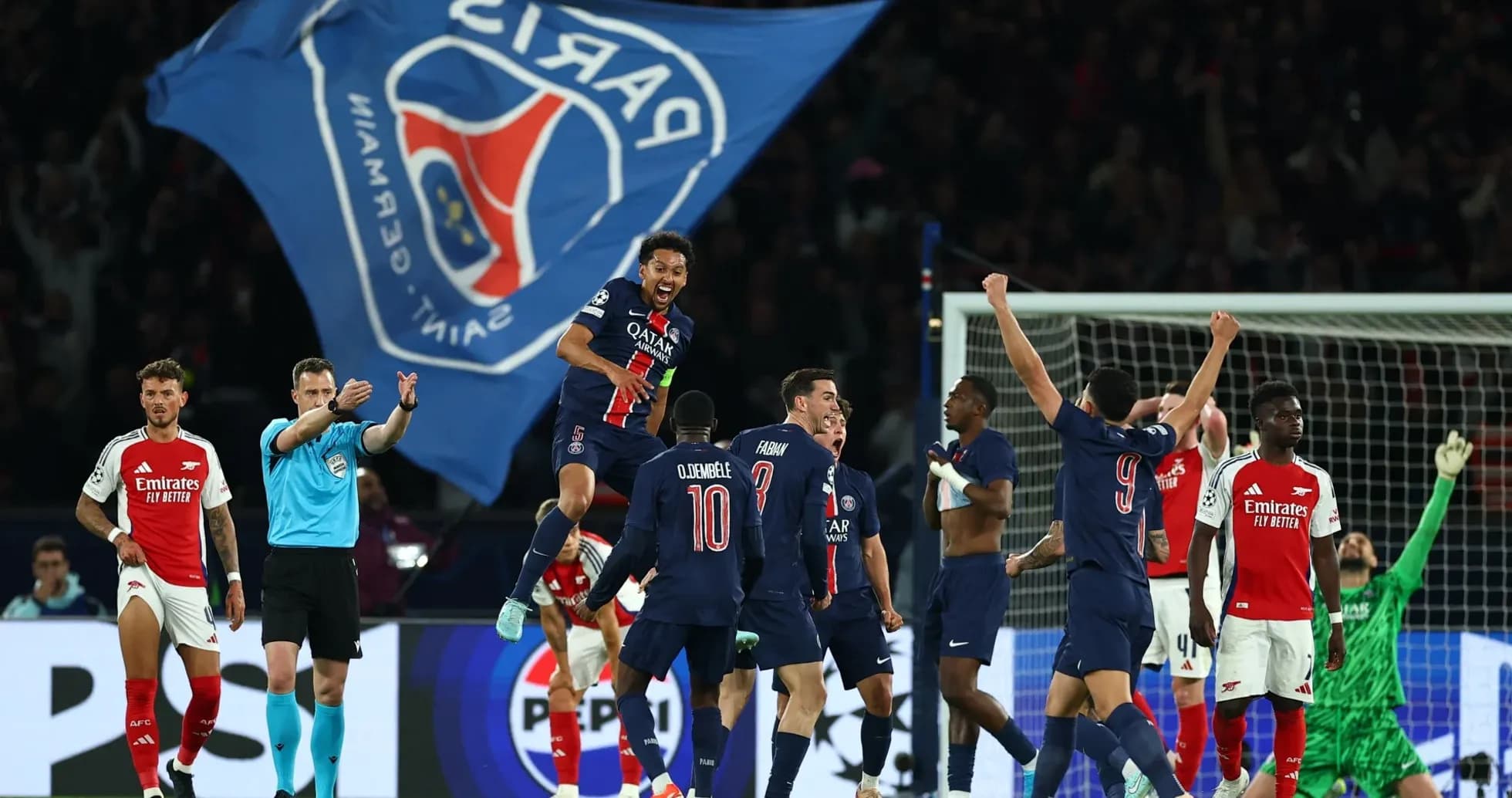
UEFA Champions League Final: Arsenal vs Paris Saint Germain
At Puskas Arena in Budapest, Paris Saint Germain and Arsenal meet in the UEFA Champions League Final, a one-off game that will define their entire 2025 campaign. In the league phase, Arsenal arrived as the dominant force, ranked 1st with 24 points and a 23:4 goal record, while Paris Saint Germain came through as rank 11 with 14 points and a 21:11 goal record. This final is therefore both a validation test for Arsenal’s near-perfect league phase and a chance for Paris Saint Germain to overturn the hierarchy and convert a solid but not dominant league phase into the ultimate prize.
Head-to-Head Tactical Summary
The recent head-to-head pattern is finely balanced but with distinct tactical swings. In the 2025 UEFA Champions League Semi-finals, they played a two-legged tie: on 29 April 2025 at Emirates Stadium in London, Arsenal lost 0-1 at home to Paris Saint Germain (HT 0-1), showing PSG’s capacity to control an away knockout tie. The return on 7 May 2025 at Parc des Princes in Paris ended 2-1 to Paris Saint Germain (HT 1-0), confirming PSG’s edge over two legs in that phase.
Earlier in the 2024 UEFA Champions League League Stage (Round 2) on 1 October 2024 at Emirates Stadium, Arsenal beat Paris Saint Germain 2-0 (HT 2-0), a match that underlined Arsenal’s ability to front-foot PSG in a more open league-stage setting. Beyond the Champions League, on 28 July 2018 in the International Champions Cup at The National Stadium (Singapore), Arsenal defeated Paris Saint Germain 5-1 (HT 1-0), an extreme scoreline in a pre-season context but still a marker of what happens when Arsenal’s attack flows and PSG’s defensive structure collapses. On 23 November 2016 at Emirates Stadium in the UEFA Champions League Group Stage, the sides drew 2-2 (HT 1-1), a more balanced contest that reflected relatively even attacking quality on both sides.
Global Season Picture
- League Phase Performance: In the league phase, Paris Saint Germain finished rank 11 with 14 points from 8 games, scoring 21 goals and conceding 11, a profile of a strong but not dominant side with a positive goal difference of +10. Arsenal, by contrast, topped the league phase at rank 1 with 24 points from 8 games, winning all matches and posting 23 goals for and only 4 against, for a goal difference of +19. This underscores Arsenal’s near-flawless defensive and attacking balance in the league phase.
- Season Metrics: Scope detection shows team_statistics games played (PSG 16, Arsenal 14) exceed the league-phase played totals (8 each) by more than 2, so these describe performance across all phases of the competition. Across all phases, Paris Saint Germain have scored 44 goals and conceded 22, averaging 2.8 goals scored and 1.4 conceded per match, which points to a high-output attack and a defense that can be exposed. Arsenal, across all phases, have 29 goals for and 6 against, averaging 2.1 scored and 0.4 conceded, indicating a very efficient attack supported by an elite, low-variance defense. Card data shows PSG accumulating a notable share of yellow cards late in games (42.86% of yellows in minutes 76-90), hinting at stress under late pressure, while Arsenal’s bookings cluster between minutes 61-75 (31.82%), reflecting intensity spikes in the period where they often close games down.
- Form Trajectory: In the league phase, Paris Saint Germain’s form string “DLDWL” shows inconsistency: only two wins in their last five league-phase fixtures, with two draws and one defeat, suggesting volatility in performance. Arsenal’s league-phase form “WWWWW” is a perfect five-game winning streak, reflecting momentum, tactical clarity, and a team that has repeatedly translated control into results without slip-ups.
Tactical Efficiency
Without explicit numeric Attack/Defense Index values in the comparison block, the closest proxies come from the scoring and conceding patterns in the team_statistics data across all phases of the competition. Paris Saint Germain’s attacking efficiency is high, with 44 goals in 16 matches (2.8 per game), indicating that when they commit to forward play, they regularly convert possession into chances and goals. However, conceding 22 goals (1.4 per game) signals that their defensive index is weaker relative to their attack; they can be described as attack-led (44 scored vs 22 conceded) and vulnerable in transitions or when defending sustained pressure.
Arsenal’s tactical efficiency profile is more balanced and structurally superior. Scoring 29 goals in 14 matches (2.1 per game) while conceding only 6 (0.4 per game) points to a side that couples a strong attack with one of the most efficient defenses in the competition. The low goals-against rate suggests that their defensive index is elite, allowing them to manage game states with control and reduce variance in knockout scenarios. Compared directly, PSG’s higher scoring rate suggests a more open, risk-tolerant attacking model, while Arsenal’s lower concession rate indicates a system built to suffocate opposition attacks and protect leads, which is typically decisive in a final.
The Verdict: Seasonal Impact
This final is season-defining for both clubs but carries different structural implications. For Paris Saint Germain, coming from rank 11 in the league phase, winning here would transform a solid but unspectacular league-phase campaign into a historic triumph, overriding concerns about inconsistency and defensive leakage. A defeat, however, would confirm the league-phase pattern: a high-ceiling but unstable side that falls short when faced with the competition’s most complete team.
For Arsenal, who dominated the league phase as rank 1 with a perfect 24-point haul and a 23:4 goal record, this match is about validation and legacy. Victory would cement them as the benchmark team of 2025, aligning their flawless league-phase data with the ultimate trophy and reinforcing a model based on defensive control and steady attacking output. A loss would significantly reframe their season: from potentially era-defining dominance to a campaign remembered for statistical superiority without the ultimate reward, raising questions about their ability to convert structural strength into titles at the very highest stage.
Looking forward, the result will influence squad-building and tactical evolution. A PSG win would encourage them to double down on their aggressive attacking profile while selectively reinforcing the defense. An Arsenal win would likely consolidate their current tactical framework as the reference point for future campaigns. Either way, this final will be the primary lens through which both clubs’ 2025 seasons are judged, outweighing all league-phase metrics in historical memory.