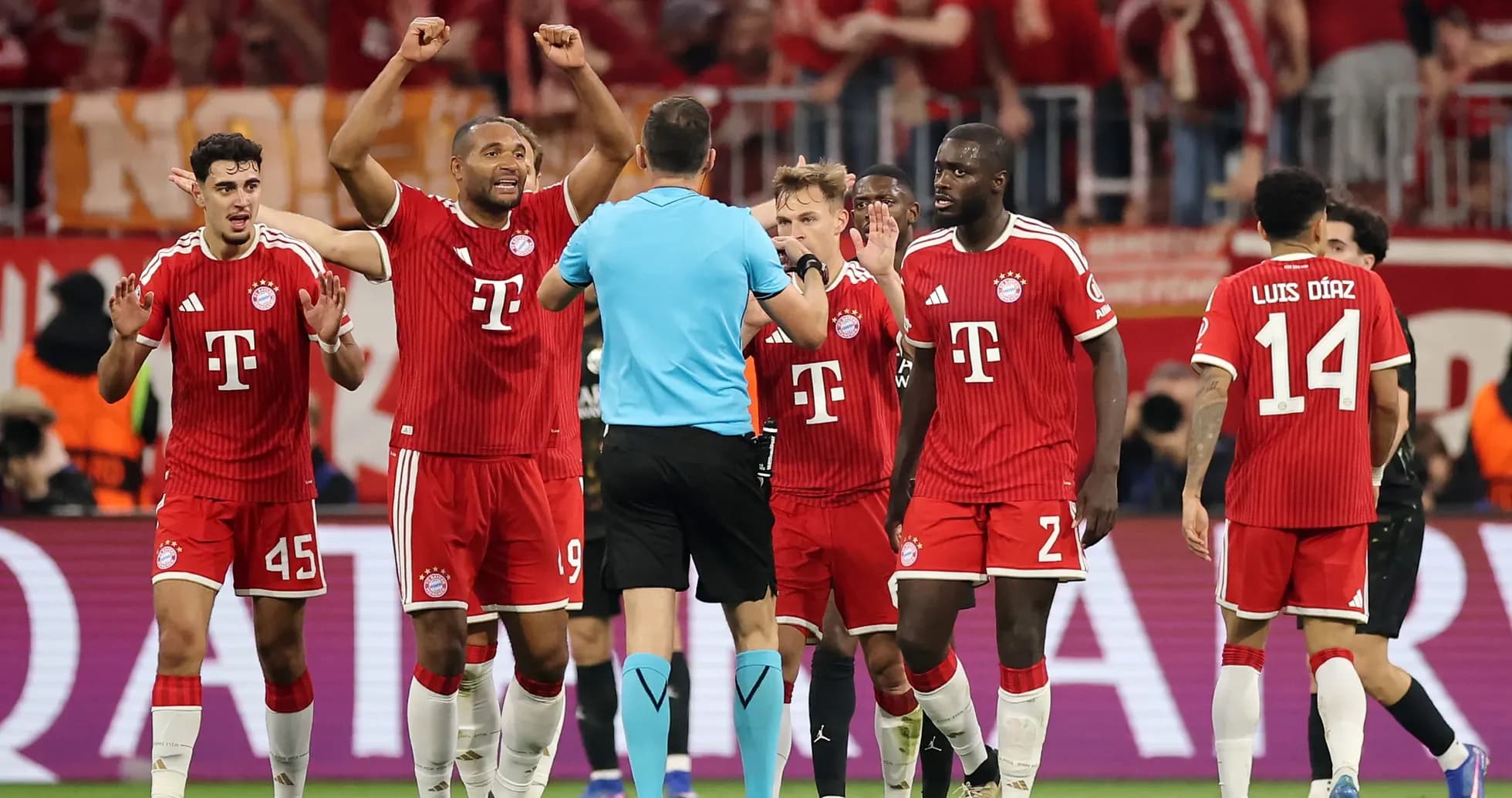
Bayern München vs Paris Saint Germain: Champions League Semi-Final Analysis
Under the lights of the Allianz Arena, a 1–1 draw between Bayern München and Paris Saint Germain felt less like a stalemate and more like a first chapter. In the UEFA Champions League semi-finals, this was a meeting of two attacking superpowers whose seasonal identities are written in goals, risk, and late‑game drama.
Heading into this game, Bayern’s campaign had been defined by relentlessness. Overall they had played 14 Champions League fixtures, winning 11, drawing 1 and losing just 2. At home they were a machine: 7 matches, 6 wins, 1 draw, 0 defeats. The numbers behind that dominance are stark. At home they averaged 3.0 goals for and 1.0 against, with 21 home goals scored and 7 conceded. Overall that produced a goal difference of 23, built on 43 goals scored and 20 conceded.
Paris Saint Germain arrived with their own heavy artillery. Overall they had played 16 Champions League matches, winning 10, drawing 4 and losing only 2. On their travels they were quietly ruthless: 5 away wins, 2 draws and just 1 defeat, averaging 2.4 away goals for and 1.0 against. Across the campaign they had scored 44 and conceded 22, a total goal difference of 22 that mirrors Bayern’s offensive ambition with a slightly looser back line.
I. The Big Picture – Structures and Season DNA
Vincent Kompany stayed loyal to Bayern’s season-long blueprint: a 4‑2‑3‑1 that has started all 14 of their Champions League fixtures. M. Neuer behind a back four of K. Laimer, D. Upamecano, J. Tah and J. Stanisic gave Bayern a physically imposing but mobile defensive line. In front, J. Kimmich and A. Pavlovic formed the double pivot, with M. Olise, J. Musiala and L. Díaz supporting H. Kane.
Enrique Luis mirrored PSG’s season-long identity: a 4‑3‑3 that has been used in all 16 European matches. M. Safonov was protected by W. Zaire-Emery, Marquinhos, W. Pacho and N. Mendes. In midfield, F. Ruiz, Vitinha and J. Neves formed a technically gifted trio, while D. Doué, O. Dembélé and K. Kvaratskhelia made up a front line built to attack space and win duels.
Both sides came into this semi-final as high-scoring, high-variance sides. Bayern’s overall average of 3.1 goals for and 1.4 against per match, and PSG’s 2.8 for and 1.4 against, promised a tie decided more by execution in the final third than by caution.
II. Tactical Voids – Absences and Discipline
The absences subtly reshaped both squads. Bayern were without S. Gnabry, M. Cardozo, C. Kiala, W. Mike and B. Ndiaye. Gnabry’s absence in particular removed a rotational weapon in wide areas; he had produced 2 goals and 5 assists in this Champions League campaign and usually offers vertical running and secondary pressing from the flank. Without him, Kompany leaned fully into the creative axis of Olise, Musiala and Díaz.
For PSG, the loss of A. Hakimi and L. Chevalier, along with Q. Ndjantou, trimmed options in defence and goal. Hakimi’s absence was tactically significant: he had delivered 6 assists in this Champions League season, providing width, deep runs and progressive passing from right-back. W. Zaire-Emery, listed as a defender here, brought energy and ball-carrying, but PSG lost some of the overlapping, final-third precision Hakimi usually offers.
Discipline loomed in the background. Bayern’s season card profile shows a clear late-game edge: 37.04% of their yellow cards arrive between 76–90 minutes, underlining how aggressive their press becomes as matches stretch. PSG are similar: 42.86% of their yellows also fall between 76–90 minutes. Both teams therefore tilt towards risk as the clock runs down, and in a semi-final context that trend threatens to spill into decisive suspensions.
Among individuals, J. Kimmich and K. Laimer are Bayern’s disciplinary lightning rods, each with 4 yellow cards in this competition. Laimer’s 20 fouls committed and 25 tackles speak to a defender who lives on the edge in duels. For PSG, I. Zabarnyi and L. Hernández, both red-carded earlier in the campaign, sit on the bench as reminders of how quickly their back line can cross the disciplinary line if exposed.
III. Key Matchups – Hunter vs Shield, Engine Room
The headline duel is unmistakable: H. Kane versus the PSG defensive block. Kane has been Europe’s most ruthless centre-forward in this campaign, with 14 goals and 2 assists in 13 appearances. He has attempted 36 shots, 25 on target, and drawn 23 fouls. Inside the box, his duel profile (111 total, 63 won) shows how often he pins centre-backs and opens lanes for runners.
That threat meets a PSG away defence conceding 1.0 goal per match, anchored by Marquinhos and W. Pacho. PSG’s clean-sheet record on their travels – 3 away clean sheets overall – suggests a unit comfortable defending deeper spells. Yet Kane’s penalty record adds another layer: he has scored 4 spot-kicks but also missed 1, so any penalty awarded is high probability but not automatic.
On the other side, K. Kvaratskhelia is PSG’s creative hurricane. With 10 goals and 6 assists, 30 shots (18 on target) and 51 dribble attempts with 29 successes, he is both finisher and facilitator. His duel volume (163 total, 82 won) shows a winger who relentlessly attacks his full-back. Against Bayern’s right side of Laimer and Olise, his capacity to drag defenders out and combine with Vitinha and D. Doué is central to PSG’s plan.
The “engine room” battle is equally compelling. Vitinha has quietly been one of the tournament’s most complete midfielders: 6 goals, 1 assist, 1,553 completed passes with 93% accuracy, plus 25 tackles and 17 interceptions. He is PSG’s metronome and shield in one. Opposite him, Kimmich is Bayern’s organiser and risk manager, with 1,117 passes at 90% accuracy and 30 key passes. His 4 yellow cards underline how often he has to break transitions at source.
M. Olise, second in the assist charts with 6, is the creative bridge for Bayern. His 34 key passes and 45 successful dribbles from 75 attempts make him the player most likely to destabilise PSG’s compact midfield block. When he drifts inside, he tests the defensive awareness of Vitinha and J. Neves; when he stays wide, he forces N. Mendes into repeated one‑v‑one defending.
IV. Statistical Prognosis – Margins, xG Logic and Defensive Solidity
Even without explicit xG data, the shot and goal profiles suggest a tie of fine margins rather than chaos. Bayern’s overall average of 3.1 goals for per match, combined with PSG’s 1.4 goals against, points to Bayern creating enough volume to generate a strong expected goals figure at home. PSG’s away average of 2.4 goals for, against a Bayern defence conceding 1.0 at home, hints at their capacity to carve out high-quality counter-attacking chances rather than sheer volume.
Defensive solidity may ultimately hinge on concentration in the final quarter-hour. Both sides’ late yellow-card surges reflect an increase in pressing intensity and tactical fouling, which in xG terms often correlates with matches becoming stretched and chance quality rising. Bayern’s lack of home defeats in this campaign, combined with 2 home clean sheets, suggests their structure holds under pressure. PSG’s 3 away clean sheets and only 1 away defeat show they are equally comfortable surviving hostile environments.
Following this result, the semi-final feels perfectly poised. Bayern’s structured 4‑2‑3‑1, powered by Kane and Olise, has not yet broken PSG’s away resilience. PSG’s 4‑3‑3, orchestrated by Vitinha and illuminated by Kvaratskhelia, has shown it can score and suffer in equal measure. The numbers say the second leg will again tilt towards attacking football, but it may be the side that best manages late-game discipline and midfield control that ultimately bends the expected goals curve in its favour.