Tuchel's Future Secure Despite England's World Cup Exit
England’s World Cup dream died in Atlanta on Wednesday night, but Thomas Tuchel’s job survived the fallout.
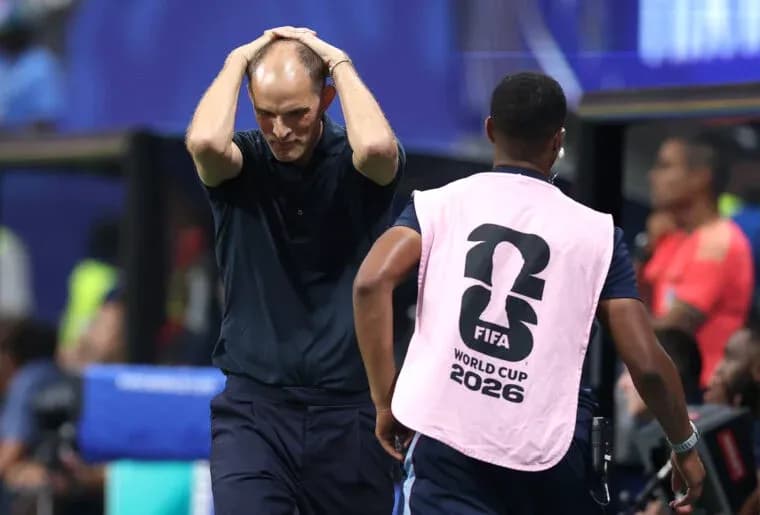
A 2-1 defeat to Argentina at the Atlanta Stadium ended hopes of a place in the final and triggered a familiar inquest into England’s big-tournament psyche. This time, though, the fury centred less on missed chances and more on the man in the technical area.
Tuchel under fire, but backed to stay
Anthony Gordon’s breakthrough on 55 minutes should have been the moment England stepped on Argentina’s throat. Instead, Tuchel’s response dragged the spotlight onto himself.
The German coach, hailed for his tactical acumen when he took the job in January 2025, chose to retreat. England dropped deeper, lines compressed, full-backs held. The initiative, and eventually the match, slipped away.
Fans raged. Pundits piled in. A team that had arrived at this World Cup as one of the favourites, that had finally started to play with conviction in the knockout rounds, shrank into its shell with a place in the final in sight.
Yet behind the noise, the Football Association has made its stance clear. According to BBC Sport, Tuchel retains the full backing of the FA and is expected to lead England into Euro 2028.
His position, for now, is not up for debate.
Tuchel’s contract had originally been set to run only until the end of this World Cup. The FA moved early, though, tying him down in February to a two-year extension through to Euro 2028. That decision, made months before a ball was kicked in this tournament, now carries real weight. It signals trust in the broader project rather than a reaction to one bruising night.
A campaign that caught fire late
England did not arrive in this semi-final by accident. They came into the World Cup as one of the top favourites and opened with a statement win, a 4-2 dismantling of Croatia that seemed to justify the hype.
Then came the wobble.
Performances against Ghana and Panama sagged. The results were acceptable, the football less so. England got through, but the questions about Tuchel’s approach started to surface. Was this team too cautious? Too rigid? Too reliant on moments of individual quality?
The knockout stages rewrote that narrative.
Against DR Congo, England found a cleaner rhythm, managing the game with a control that had been missing in the group. At the Estadio Azteca, they produced their standout performance of the tournament, dismantling Mexico with a display that blended structure, intensity and attacking flair. That night felt like a turning point – the kind of performance that makes a country believe again.
Norway posed a very different problem, a tricky, awkward opponent who refused to be swept aside. England handled it. Not with fireworks, but with authority. They came through with something more valuable than a highlight reel: resilience.
By the time they walked out to face Argentina in Atlanta, Tuchel’s side looked hardened, battle-tested, and on course for something special.
The lead, the retreat, the regret
For 55 minutes against Argentina, the path to the final looked clear enough. Gordon’s goal crystallised it. England had control, a platform, and a South American giant rocking.
That should have been the cue to twist the knife.
Instead, the game turned into a study in hesitation. England retreated, Argentina advanced. Attacks that had flowed in earlier rounds dried up into hopeful breaks. The defensive structure that had underpinned their progress became a cage they could not escape.
Tuchel’s blueprint, which had carried England through Mexico and Norway, suddenly felt like a straitjacket. The criticism that followed was inevitable: too cautious, too quick to protect what they had, not ruthless enough when it mattered most.
The final slipped away, and with it, the chance to end decades of waiting on the biggest stage of all.
Euro 2028 on the horizon
Yet the story does not end in Atlanta.
Tuchel, 52, remains the man chosen to reshape England’s identity, and the FA’s commitment to him runs to Euro 2028. The World Cup exit hurts, but it does not erase the strides made: a deep run, a high-profile scalp at the Estadio Azteca, and a squad that showed, in flashes, it can live with the elite.
The question now is not whether Tuchel stays. That has been answered.
The question is what he does with this scar, and whether England can turn a night of regret in Atlanta into the foundation for something more ruthless, more fearless, when Euro 2028 arrives.