Golden Boot Race: Messi vs Mbappe in World Cup 2026
“Sometimes in football, you have to score goals.”
Thierry Henry tossed that line out in 2008 with a shrug. In 2026, with only four games left at this World Cup, it feels like the only law that matters.
The trophy is the obsession for the four teams still alive. But running just beneath that, like a heartbeat you can’t quite ignore, is the race for the Golden Boot. It has become its own drama, often detached from the final winner. No player from the champions has taken it home since Ronaldo’s eight goals powered Brazil to glory in 2002.
No one has hunted down Just Fontaine’s mythical 13 from 1958, and even in this bloated, goal-heavy edition — 16 more teams, 40 more matches than Qatar 2022 — that mark remains untouched. Still, the numbers at the top of the chart are starting to look serious.
And the two biggest names in the sport are staring each other in the eye.
How the Golden Boot is decided
The rules are simple enough until they aren’t.
If players finish level on goals, the first tiebreak is assists, a system in place since 1992. It decided the 2010 award, when David Villa, Diego Forlan and Wesley Sneijder all finished on five goals alongside Thomas Muller. Muller walked away with the Golden Boot because he had three assists; the others managed just one each.
In 2006, FIFA added another layer. If goals and assists are still tied, the award goes to the player who needed fewer minutes on the pitch to score them. Ruthlessness, quantified.
With that in mind, the current picture at this World Cup is laced with tension.
1. Lionel Messi (Argentina) – 8 goals
(4 assists – 712 minutes)
Messi’s final World Cup has turned into a running catalogue of finishes.
He thought he had opened his account against Algeria in Argentina’s first game, only to see an early strike ruled out for offside. No matter. When the ball came to him 20 yards out later in the half, he wrapped his left foot around it and sent it curling in, the kind of goal that feels inevitable the moment he shapes to shoot.
The second that night was opportunistic. Luca Zidane spilled a low shot from Alexis Mac Allister and Messi, alive to the mistake, rolled in the rebound. The third was pure theatre: a trademark bending effort from the edge of the box, shaped as though he was sliding a pass to a teammate behind the goal. Zidane never got close.
His fourth arrived against Austria after a missed penalty, a reminder that even his missteps are usually brief. Facundo Medina slipped a pass his way and Messi, first time, guided it home to become the outright leading scorer in men’s World Cup history. He added a fifth late on in the same match, reacting quickest after his initial effort had been blocked.
He rested from the start against Jordan in the final group game, then stepped off the bench to whip an 80th-minute free kick into the net. Goal six. In the round of 32, he struck again against Cape Verde. Seven.
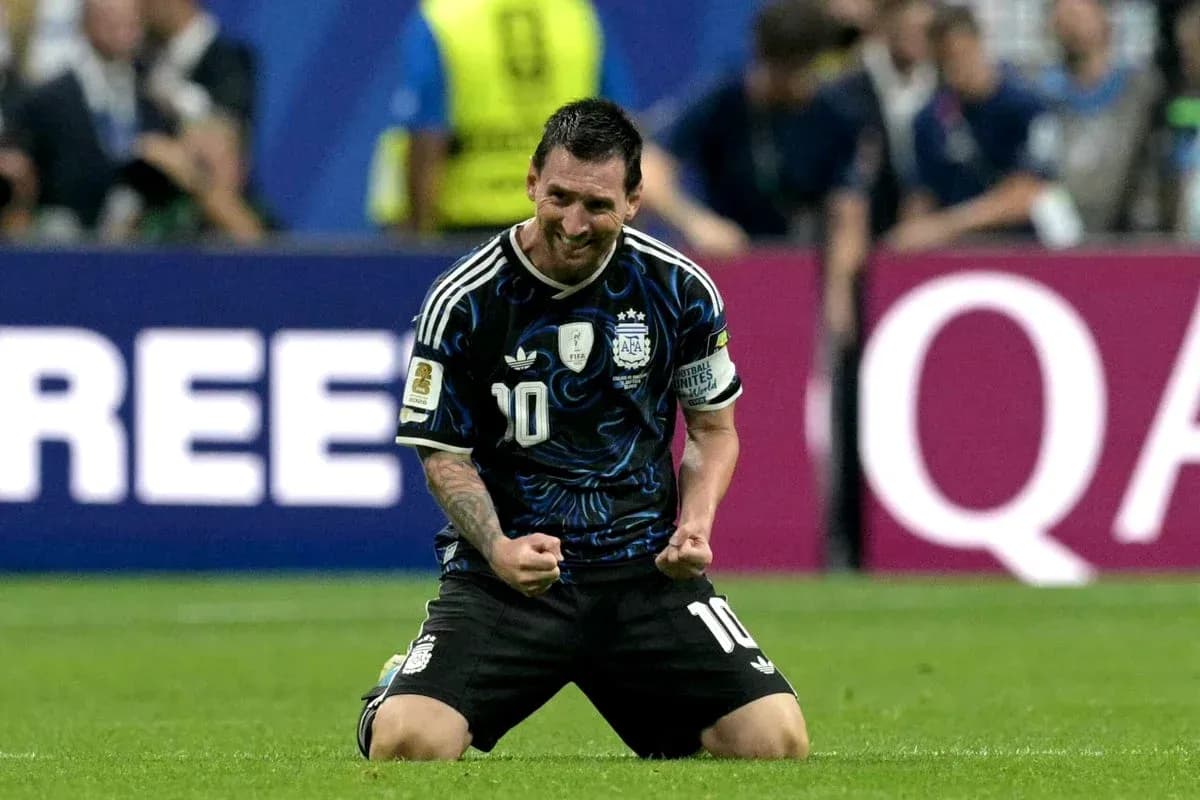
The eighth came with the kind of cold drama only he seems to summon on command: a late equaliser against Egypt in the following round, Argentina’s campaign hanging in the balance, the ball falling to the one man the stadium expected to score — and he did.
Eight goals. Four assists. A body of work that would normally end the argument. But not this time.
2. Kylian Mbappe (France) – 8 goals
(3 assists – 666 minutes)
Mbappe has matched Messi stride for stride.
He opened France’s campaign with two goals in a 3-1 win over Senegal, a statement that the 2022 Golden Boot winner had no intention of easing off. Against Iraq, he struck first from distance, then returned after a long weather delay in Philadelphia to double the lead, unfazed by the disruption, locked into his own tempo.
The knockout rounds brought more of the same. Two fine finishes against Sweden in the round of 32. A penalty converted against Paraguay. Another goal, this time against Morocco in the quarter-final, his movement and acceleration again too sharp to handle.
Spain finally stopped him. In the semi-final, France were turned back 2-0, their attack blunted, Mbappe unable to find a way through. That defeat means his final chance to tilt the Golden Boot race will come in Saturday’s third-place play-off.
He stands level with Messi on eight goals, one assist behind, but with a crucial advantage if it comes to the final tiebreak: fewer minutes played. If they finish dead even, those 46 minutes could decide everything.
3. Erling Haaland (Norway) – 7 goals*
(0 assists – 537 minutes)
Haaland’s first World Cup ended early, but not quietly.
He arrived as the purest finisher in club football and played exactly to type. Two goals in his debut as Norway beat Iraq 4-1 — one a sliding, six-yard-box special from David Moller Wolfe’s low cross, the other forced in after he closed down the goalkeeper and bullied the ball over the line.
Against Senegal, he swept in a composed third of the tournament, then added a fourth with a sharp, volleyed finish. It looked mechanical, almost routine, which is the frightening part.
His fifth might be the one Norway remembers longest: the late winner in the round-of-32 tie against Ivory Coast, a close-range strike in the dying minutes of a 2-1 victory.
Then came Brazil. Norway stunned them, and Haaland scored twice more, his sixth and seventh of the competition, the second a surprise effort that underlined how little space he needs to change a game.
Norway are out. Haaland is frozen on seven. For now, he watches.
4. Jude Bellingham (England) – 6 goals
(1 assist – 574 minutes)
Bellingham has turned this World Cup into a stage for his full repertoire.
From midfield, he scored in both of England’s group wins: a 4-2 thriller against Croatia and a more controlled 2-0 victory over Panama. The timing of his runs, the composure of his finishes — it all looked like he had been doing this on the biggest stage for a decade.
In the last 32 against Mexico, he scored twice. Same story in the quarter-final against Norway. Four knockout goals, all in high-pressure moments, all delivered with an air of inevitability.
He sits ahead of his captain Harry Kane by a technicality: fewer minutes played. If the two end level, that could matter. For now, it simply underlines how efficient he has been.
5. Harry Kane (England) – 6 goals
(1 assist – 627 minutes)
Kane’s World Cup has followed a familiar pattern: slow-burning, then suddenly decisive.
He started with a brace in the 4-2 win over Croatia, leading the line with the authority England now take for granted. He struggled, like the rest of the side, in the goalless draw with Ghana, then reappeared on the scoresheet with England’s second against Panama.
The knockout phase is where his reputation lives. Against DR Congo in the round of 32, he struck twice in the second half, dragging his team over the line. Against Mexico, he added another from the penalty spot, that familiar routine of pause, focus, strike.
Six goals, one assist, slightly more time on the pitch than Bellingham. The margins at the top are fine.
=6. Ousmane Dembele (France) – 5 goals
(2 assists – 492 minutes)
Dembele arrived at this tournament with a curious record: 19 major tournament appearances, no goals.
That statistic is gone. Shredded.
He scored his first in France’s second game, their third goal in a 3-0 win over Iraq. Then he exploded, hitting a first-half hat-trick against Norway, a blur of direct running and sharp finishing that finally matched his talent with end product.
His fifth came in the quarter-final against Morocco. Five goals, two assists, and a reminder that France’s attack is far more than just Mbappe.
=6. Mikel Oyarzabal (Spain) – 5 goals
(1 assist – 519 minutes*)
Spain started with a stumble, drawing with Cape Verde, but Oyarzabal helped reset their campaign.
He scored twice in a 4-0 win over Saudi Arabia, the Real Sociedad forward drifting into dangerous spaces and punishing loose defending. He repeated the trick in the round of 32, another brace in a 3-0 win over Austria.
His fifth was the most significant: a cool penalty to open the scoring in Spain’s semi-final against France. On this stage, that kind of nerve counts for as much as any volley or curler.
=8. Vinicius Junior (Brazil) – 4 goals*
(1 assist – 505 minutes)
Vinicius Jr’s World Cup began with a rescue act.
Brazil trailed Morocco in their opener when he cut across the box and lashed in an emphatic equaliser, the kind of whipped finish that screams confidence. Against Haiti, with Brazil already in control thanks to two Matheus Cunha goals, he added his second, the swagger returning to the Seleção.
He made it three in three games against Scotland, capitalising on a mistake from Scott McKenna and sliding past Angus Gunn to open the scoring. His fourth was a simple back-post header from a teasing Bruno Guimaraes cross, a poacher’s finish from a winger who usually does his damage out wide.
Brazil are gone. His tally stops at four, but his impact on the group stage will linger.
=8. Ismaila Sarr (Senegal) – 4 goals*
(1 assist – 419 minutes)
Sarr lit up Senegal’s Group I campaign.
Against Norway, he scored twice in a 3-2 defeat, the first an improvised clipped finish while tumbling to the turf, the second a more orthodox, well-taken strike. Those two goals showcased both his unpredictability and his composure.
He added a third against Iraq in the final group game, then scored again versus Belgium in the round of 32. Four goals, and a reminder of just how dangerous he can be when given space to run.
=8. Julian Quinones (Mexico) – 4 goals*
(1 assist – 440 minutes)
Quinones wrote his name into this World Cup from the very first whistle.
He scored the opening goal of the tournament as Mexico beat South Africa 2-0, then struck again in a 3-0 win over Czech Republic. In the last 32 against Ecuador, he once more broke the deadlock, a habit of scoring the first goal that coaches dream about.
He added another in the last-32 defeat to England, a final flourish in a campaign that confirmed what his club numbers had already suggested. Thirty-three goals in 31 Saudi Pro League games were no fluke.
The chasing pack
Behind them, 11 players sit on three goals, their tournaments either over or in need of a late surge. For those whose teams have gone home, the Golden Boot race is now a spectator sport.
The award itself has a long lineage. Officially introduced as the Golden Shoe in 1982, its winners stretch back in the record books to the 1930s. Mbappe’s eight goals in 2022 made him only the second man to score a hat-trick in a World Cup final, matching Ronaldo’s single-tournament haul from 2002 but, unlike Geoff Hurst in 1966, he finished on the losing side.
Four years before that, Kane’s six goals carried England to a semi-final before Croatia stopped them. This time, both he and Mbappe are back in the conversation, but they are chasing a 39-year-old genius who refuses to fade quietly.
Four matches remain. The World Cup will crown a champion.
It might also settle one last question: whose name will this tournament truly belong to?