Thomas Tuchel's Gamble: England's World Cup Semi-Final Mistake
Thomas Tuchel came to this World Cup as England’s gambler-in-chief. He picked a squad few others would have dared to select, rode out a backs-to-the-wall win over Mexico, and started Morgan Rogers in a World Cup semi-final because of, in his own words, “a feeling from the coach”.
For a while, the bet looked inspired. Then one more roll of the dice went wrong.
A plan that was working
The stage was set for England to write a new chapter. When Anthony Gordon arrived at the back post to turn in Rogers’ cross, it felt like the first lines of it were already on the page. Tuchel’s instinct, again, had been rewarded.
Argentina wobbled. England had their lead. The world champions were chasing.
History, though, has a habit of intruding on English optimism. This is a country that has now gone ahead in seven of the 13 knockout games they have lost in the last 30 years. The only team this century to lead a World Cup semi-final and still fail to reach the final. They have now managed that twice.
Even so, this was not a siege from the moment Gordon scored. England saw only 17 per cent of the ball and had nine touches in the Argentina half in the 15 minutes that followed his goal, but Jordan Pickford remained largely untroubled. Nico Gonzalez’s header aside, Argentina were probing, not pummelling.
The tension was rising. The freeze was beginning. But England were still holding.
The hinge moment
Then came the 71st minute.
Gordon’s number went up. Ezri Konsa came on. England dropped into a back five against the reigning world champions with more than 20 minutes to play.
It is easy to savage that decision with the benefit of hindsight. The truth is it felt wrong in real time. Removing Gordon stripped England of their most direct outlet, the one player stretching Argentina and pinning them back. It also sent a clear message to the opposition and to England’s own players: protect what we have, retreat, survive.
The numbers are damning. From the moment of Konsa’s introduction to Lautaro Martinez’s winner, England’s share of possession fell to 7.2 per cent. They managed eight touches in the Argentina half. Not one cross.
Rogers, shifted into a nominal role behind Harry Kane alongside Jude Bellingham, touched the ball once in that entire spell. Once.
Tuchel appeared to be reaching for a familiar blueprint. A 3-4-3, with Djed Spence and Reece James surging forward as aggressive wing-backs, has underpinned much of his club career. If that was the vision, it never materialised. Between them, James and Spence had a single touch in the Argentina half for the remainder of the game.
England had invited Argentina on and then removed their own escape routes.
Messi gets the ball he craved
The consequences were brutal. With fewer English shirts high up the pitch, Argentina’s defenders and midfielders could recycle possession without real pressure. The ball kept finding its way to the one man who had been waiting all night for that kind of rhythm.
Lionel Messi did not need an invitation. He took control, drifting into pockets, dictating the tempo, turning the game into his.
Wave after wave of Argentina attacks followed Konsa’s arrival. England, pinned deep, could not keep the ball long enough to breathe. Even in pure defensive terms, the change did not deliver. Konsa failed to win possession back once and lost it five times.
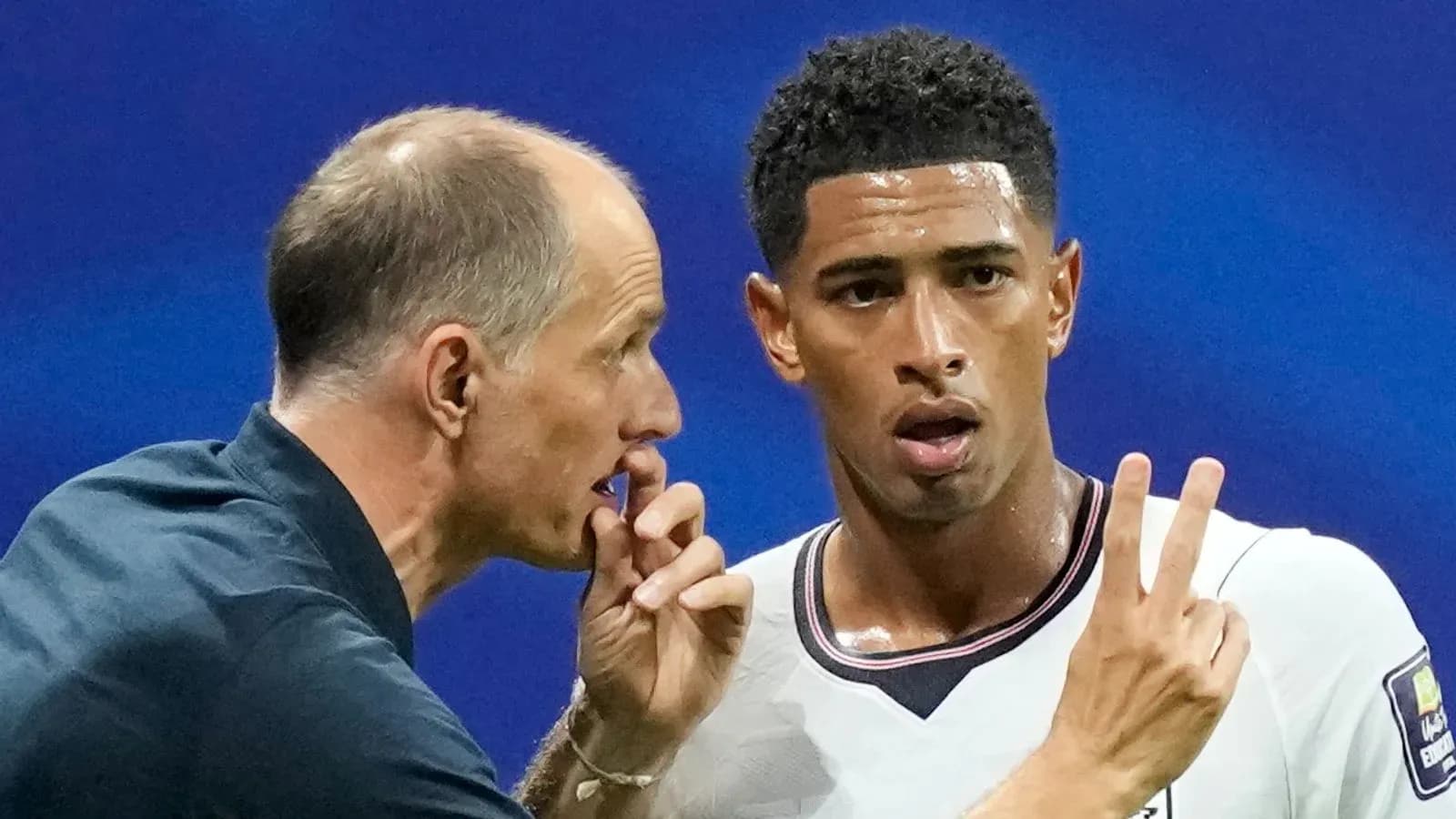
Tuchel, so often the restless tactician, stayed locked to his choice. This is a coach who has previously recognised when a plan is failing and had the courage to rip it up mid-game. Not here. As Argentina surged, he doubled down on caution, sending on Dan Burn and Nico O’Reilly instead of unleashing attacking alternatives that might at least have pushed Argentina back 10 yards.
The game was slipping away and England’s response was to shrink further.
Lessons unlearned
Perhaps Tuchel drew too much confidence from the Mexico game, when England clung on with 10 men and emerged with a heroic, defiant win. That night, the opponent’s intentions were obvious: cross after cross, high balls into the box, a test of aerial resolve.
Argentina were never going to play that game. A side built on passing, on angles, on Messi’s orchestration, was always going to ask a different question. By sitting off and surrendering territory, England handed the ball to the best player of all time and asked him to solve a puzzle he has cracked for nearly two decades.
He did. Twice, as provider.
Tuchel had been hired to move England beyond the plateau of the Gareth Southgate years. Under Southgate, England beat the teams they were expected to beat and faltered when cast as underdogs. Tuchel was supposed to change that storyline, to add an edge in the biggest games, to manage moments better.
For a while, it looked like he might. The rousing half-time intervention against Croatia. The bold attacking tweaks. The perfectly judged defensive reshuffle at the Azteca against Mexico. All of it hinted that in-game management, Southgate’s great flaw, might now be England’s hidden strength.
Then came this semi-final. Then came the 71st minute.
Tuchel has already committed to seeing out his two-year extension, with Euro 2028 on the horizon. There is time to reshape, to learn, to prove this was a misstep rather than a pattern.
But the irony will linger. On the night England needed bravery with the lead, they got a retreat. On the night Tuchel promised to move away from defence-first football, he reached for it at the worst possible moment.
One substitution, one tactical lurch back into old habits, and a World Cup final slipped from England’s grasp. The question now is whether this was a one-off gamble gone wrong, or the moment that defines his reign.